














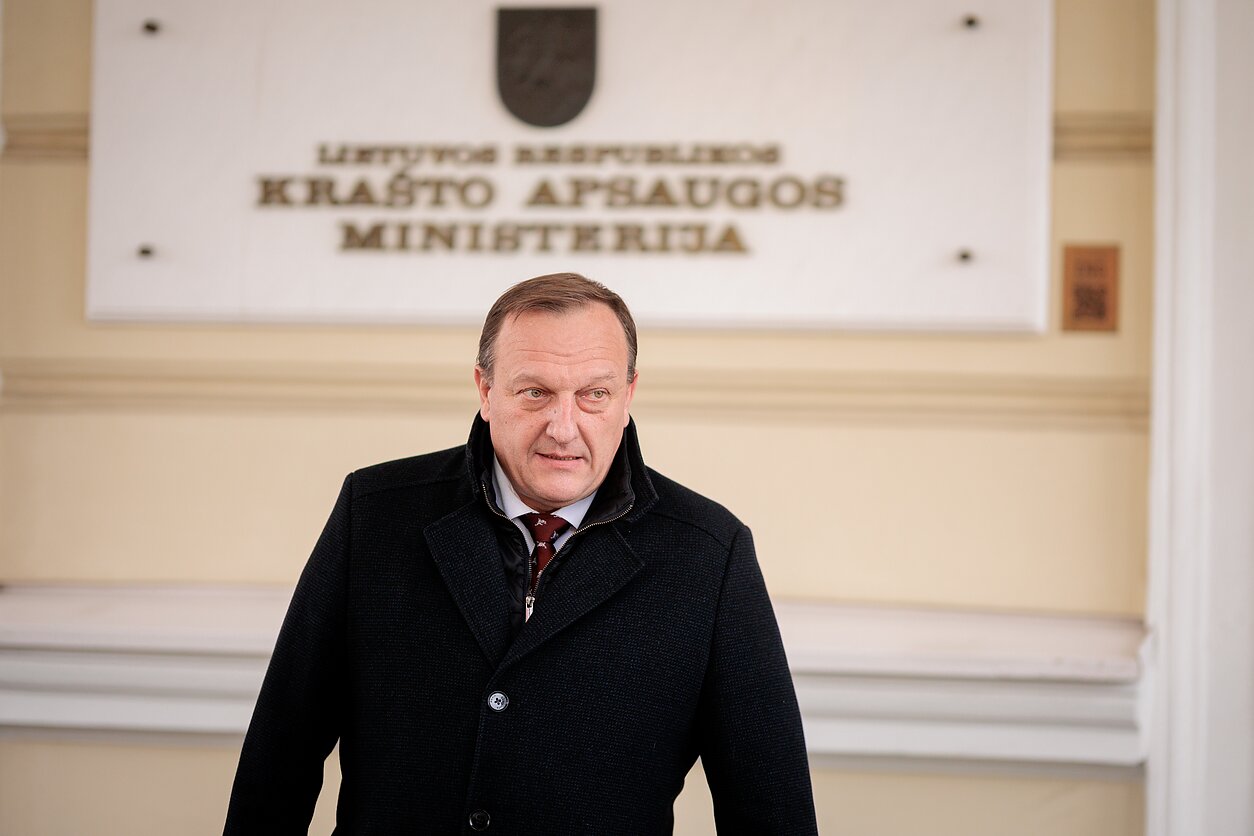
Lithuania will accept half of the migrants allocated to it under the European Union’s solidarity mechanism next year and pay a financial contribution for the remainder, the government decided Wednesday.
“We propose a proportional model that demonstrates Lithuania’s solidarity as an EU member state and acknowledges the help we received when we faced large flows of instrumentalised migration,” Interior Minister Vladislav Kondratovič told a cabinet meeting.
Lithuania will be required to begin meeting its relocation commitments in June 2026.
Prime Minister Inga Ruginienė said the government would prefer to take in fewer than half of the assigned migrants.
“Our likely negotiating position will be to accept a certain number of people from June, but we would ask to lower the figure to no more than 40, because […] our institutions must be able to screen them and integrate them safely,” she said.
Under the EU’s Migration and Asylum Pact adopted in May 2024, Lithuania is required each year to take in about 158 migrants arriving in the bloc or pay €3.28 million. The Interior Ministry said the final size of each member state’s contribution will be determined once the European Council adopts its decision.
Kondratovič said Lithuania’s contribution could end up lower than earlier estimates. The ministry added that Lithuania will receive €10,000 for each relocated person from the EU Asylum, Migration and Integration Fund.
Lithuania would have to make its payment in 2027, meaning funds will have to be earmarked in next year’s state budget.
The solidarity mechanism is intended to ease pressure on EU countries that serve as primary points of entry, including Greece, Cyprus, Spain and Italy. The European Commission’s first annual asylum and migration report also listed 12 countries – among them Poland and Lithuania – as being at risk of migratory pressure.
Lithuania has been cautious about accepting relocated migrants, arguing it has already sheltered large numbers of people fleeing Ukraine while also dealing with irregular migration via Belarus. Interior Ministry figures show Lithuanian border guards have prevented people from crossing the border more than 24,000 times since 2021.
In October, the Migration Department reported that more than 211,000 foreign nationals held valid residence permits in Lithuania.

Newsletter
Every Friday morning.