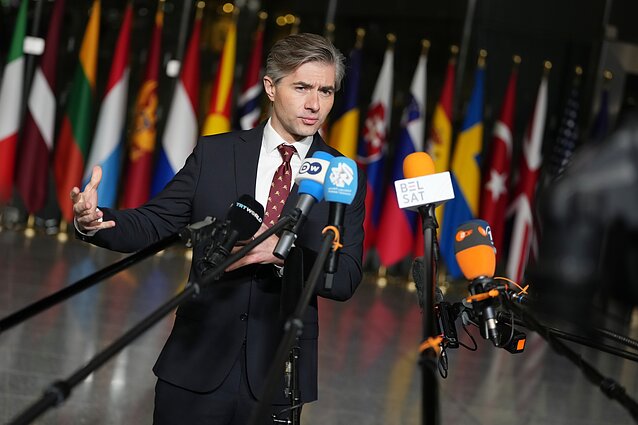








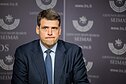
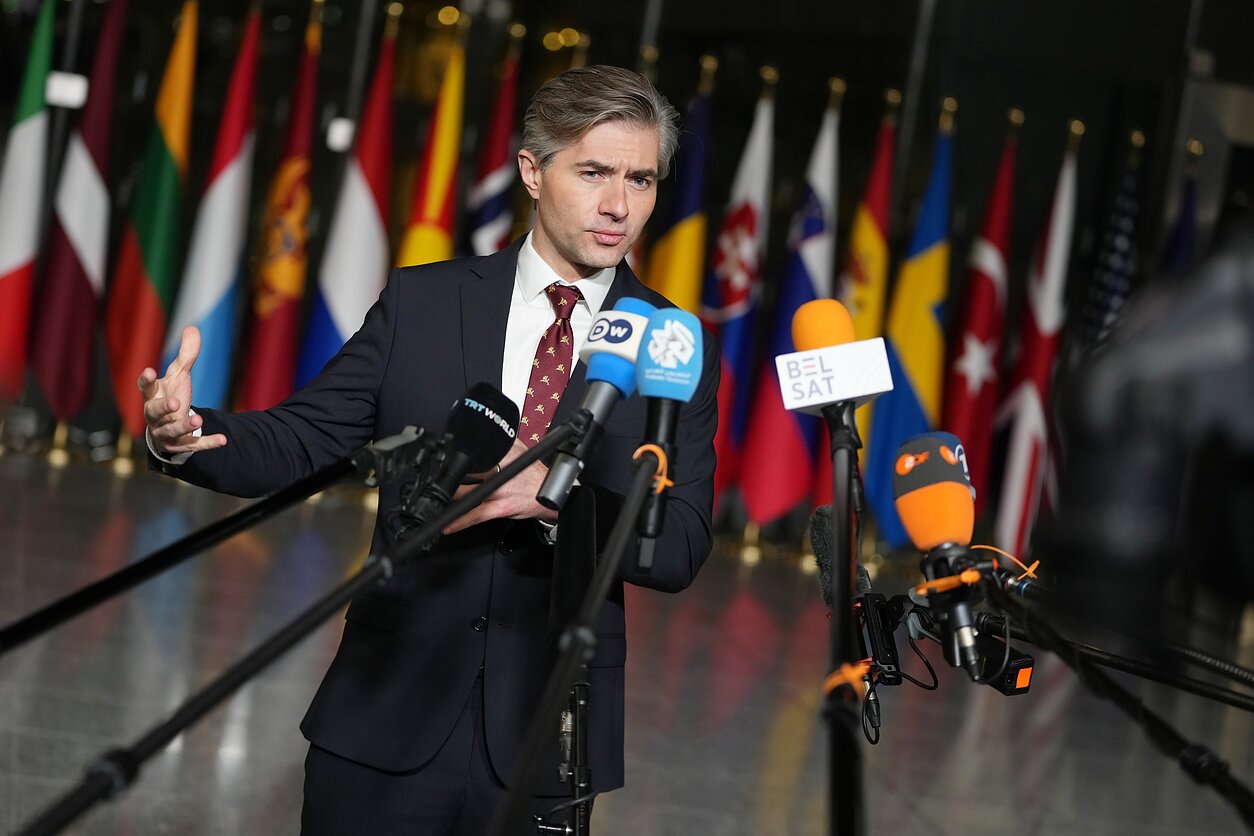
Lithuania’s Foreign Minister Kęstutis Budrys insists that Russia will continue to pose a direct military threat to NATO even if peace is achieved in Ukraine, urging allies to increase defence spending to deter Moscow.
“Russia is and will remain a direct military threat to NATO, whether there is a ceasefire or, one day, peace in Ukraine. We must be ready to counter this threat,” Budrys told reporters ahead of a NATO foreign ministers’ meeting on deterrence measures and the alliance’s response to growing hybrid threats.
Budrys said Lithuania is already facing “hybrid attacks” from Russia and its ally Belarus, including GPS jamming and spoofing as well as contraband balloons disrupting civil aviation and threatening critical infrastructure.
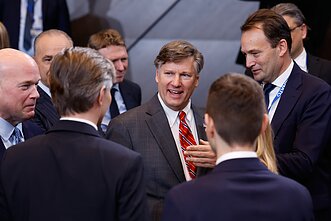
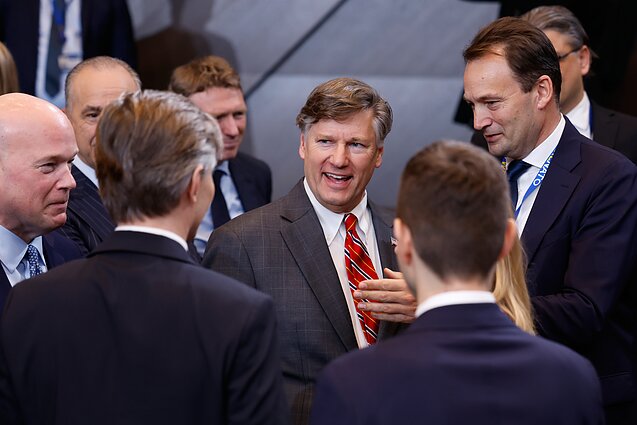
The minister also said the absence of US Secretary of State Marco Rubio from the talks “does not send the strongest message”. The United States is represented by Deputy Secretary of State Christopher Landau.
“Of course we would like him to be here with us. I would not view this as a review or reduction of US commitments; his deputy, Christopher Landau, will attend, and I also hope to speak with him today,” Budrys said. “But we see that everything else happening on the ground is not changing on the US side; those commitments remain. Of course, in terms of political attention, especially when such processes with Russia are unfolding, this is not the strongest message from the alliance.”
Budrys called for faster implementation of air defence plans agreed at NATO’s summit in The Hague in June. Lithuania plans to increase its defence spending to nearly €4.8 billion, or 5.38 percent of GDP, next year.
“I hope to hear the same from our allies. Otherwise our commitments will be tested, and that is something we want to avoid,” he said.
He also urged NATO members to share the burden of supporting Ukraine, whose defence needs exceed €50 billion. “We cannot continue leaving this burden on the shoulders of the Nordic and Baltic countries, Germany, Poland and a few others. The whole alliance must share this burden. That is my message to the allies,” Budrys said.
Lithuania has pledged to support Ukraine over 10 years with 0.25 percent of its GDP. Budrys said if all European countries did the same, Ukraine’s defence needs would be covered. He also called on the European Commission to accelerate a proposal to use frozen Russian assets for Ukraine’s defence, warning that EU leaders have “less than two weeks” before the next European Council meeting on December 18–19.
Under a declaration adopted at the June summit in The Hague, NATO members committed to spending at least 5 percent of GDP on defence-related needs by 2035.

Newsletter
Every Friday morning.