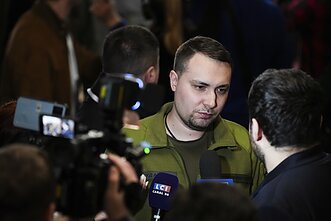












Members of the Seimas National Security and Defence Committee (NSGK) say Lithuania should tighten rules for incoming migrant workers, both on language requirements and security screening, as this year’s work permit quota is set to be exhausted by the end of November.
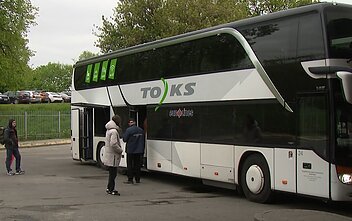
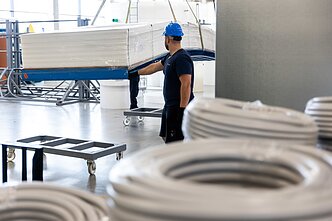
Nearly 25,000 foreign workers have arrived in Lithuania this year, most from Central Asia, to fill jobs in the transportation, logistics and construction sectors.
Although November is only halfway through, the annual quota for third-country workers has nearly been reached.
According to Migration Department Director Evelina Gudzinskaitė, the department’s current verification procedures are insufficient given rising security risks.
“Some may genuinely come here without bad intentions, but once in the country, they can begin forming networks and engaging in activities hostile to the state,” Gudzinskaitė said. “Of course, this is monitored mainly by other agencies, but the Migration Department conducts control measures within its area of competence.”
Further reading
There have been no incidents or public reports suggesting migrant workers are involved in any hostile activities.
Still, while business representatives are calling for higher migrant quotas, committee members argue that cheaper foreign labour already has negative consequences, including potential threats to national security.
Among the proposals under discussion are tougher Lithuanian-language proficiency requirements, expanded data analysis to assess migrants’ economic contributions, and stricter vetting procedures.
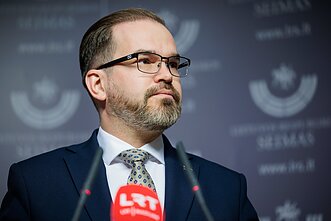
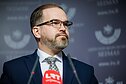
Committee vice chair Laurynas Kasčiūnas, leader of the conservative Homeland Union party and a former defence minister, insists on the need of “pragmatic approaches” to reduce long-term risks, such as restricting migrants’ possibilities to change jobs or stay in the country.
“A foreign worker comes under contract, works, and leaves. There’s no integration, but it’s temporary – we avoid social and cultural risks,” Kasčiūnas said. “There’s a clear timeframe, clear safeguards, and a clear understanding of which sector they’re coming to work in.”
Currently, the largest number of foreign residents in Lithuania are Ukrainians, with about 80,000 living in the country and roughly 200 more arriving each month. The number of Belarusians has fallen sharply, while there are more than 10,000 Russians and a similar number of Uzbeks. Lithuania is also home to nearly 8,000 Indians, and between 4,500 and 6,500 citizens of Kyrgyzstan and Tajikistan.

Committee chair Rimantas Sinkevičius, a Social Democrat, asserts that growing migration from Central Asia poses increasing challenges because of their religion or culture.
“The threat is growing because the flow of migrants from certain regions keeps increasing,” Sinkevičius said. “People come with different beliefs and levels of aggression. If we do nothing, we will face a much bigger problem in the future.”
Lithuania’s Tatar community has recently raised concerns that some Muslim migrants are seeking to take over Tatar prayer houses and establish new religious communities. Politicians say that freedom of religion and human rights must be upheld, but argue the government must also address emerging “security threats”.

Newsletter
Every Friday morning.