











Lithuanian President Gitanas Nausėda's chief national security advisor Deividas Matulionis on Monday urged the use of kinetic measures to bring down balloons used to smuggle cigarettes from neighboring Belarus, describing the situation as a crisis.
Matulionis told LRT Radio that shooting down the balloons – which fly at altitudes of between four and six kilometres – with firearms was “an almost impossible mission”.
“That’s why we need to look for effective kinetic means to bring those balloons down,” he said, adding that the issue would be a key topic at Monday’s government meeting.
Lithuania’s National Security Commission is holding emergency talks following repeated disruptions at the country’s airports last week caused by the balloons. A similar meeting will take place at the presidential palace on Tuesday.
“We are in a crisis – and a serious one,” Matulionis said. “It’s no longer just a matter for the government. It requires collective action.”
His comments came after Lithuania's airports were closed four times last week due to weather balloons launched from Belarus to carry contraband cigarettes, disrupting more than 140 flights and affecting over 20,000 passengers.
"It's becoming increasingly clear that this is not ordinary smuggling. Smuggling is being used as cover for what is actually a hybrid psychological operation, possibly also involving the dropping of contraband into Lithuania," the advisor said.
On Sunday evening, Lithuania again closed its Šalčininkai and Medininkai border crossings with Belarus. The National Security Commission is expected to decide how long the closures will remain in place.
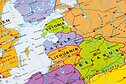
President Nausėda’s office has proposed considering a long-term closure of the border with Belarus and restricting transit to Russia’s Kaliningrad exclave.
"We really need to close the border crossing points for a long time, and I come back again to the railway crossing," the presidential advisor said, stressing that he was not talking about a halt to transit.
Last November, the Lithuanian parliament approved amendments allowing officers to shoot down weather balloons, drones and other aerial objects. However, officials admit that firearms are largely ineffective against high-altitude or fast-moving targets.
According to the National Crisis Management Center, radar systems monitoring Lithuanian airspace detected 66 objects flying from Belarus toward Lithuania last night, roughly twice as many as the night before.
So far, one balloon from the latest wave has been found, while searches for the others are still underway.

Newsletter
Every Friday morning.