







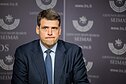
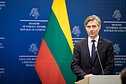

Lithuanian President Gitanas Nausėda on Thursday called the new US sanctions against Russia a “game changer”, saying the measures will have far-reaching consequences for Moscow and global markets.
“Recently, the US administration’s rhetoric toward Vladimir Putin has been much tougher, but in my opinion, this decision is a game changer, and we are already seeing the consequences,” Nausėda told reporters in Brussels.
“We are already seeing countries such as India adapting to the US decision, and reactions on the stock markets. I have no doubt that hysterical reactions from the Kremlin will soon follow,” he added.
Earlier this week, US President Donald Trump announced sweeping sanctions targeting Russia’s two largest oil companies, Rosneft and Lukoil. The measures freeze all their assets in the United States and prohibit American firms from doing business with them.
Nausėda argued the Russian economy is already struggling and predicted that the latest measures would deepen the crisis.

“This comes on top of the 19th package of EU sanctions, which was agreed this morning. The Russian economy is in poor shape, and if it takes this blow, they will really have to think seriously about what the future holds,” he said. “It’s possible to ignore reality, but even figures like Putin won’t be able to do so for long when it begins to affect every person in Russia – and affects them very painfully.”
The EU’s latest sanctions package moves up the bloc’s ban on Russian liquefied natural gas imports to early 2027, one year sooner than planned. It also blacklists more than 100 tankers from the so-called “shadow fleet” of aging oil vessels and imposes travel restrictions on Russian diplomats suspected of espionage. Under the new rules, Russian diplomats must inform host countries about any trips abroad.
Nausėda reasoned that sanctions are most effective when coordinated across the Atlantic. “It is only possible to truly impact the Russian economy when sanctions are imposed in a coordinated and simultaneous manner,” he said. “If a breakthrough were also achieved on the issue of frozen assets, I believe we would really force the Kremlin regime to come to its senses.”
A major topic for EU leaders meeting in Brussels on Thursday is a proposed €140 billion “reparation loan” for Ukraine, to be financed from Russian central bank assets frozen in the EU. Belgium, which holds most of the funds through the Euroclear clearinghouse, has sought guarantees that other EU members will share any legal risks if Russia sues.
“I believe the European Commission, which is responsible for finding legal solutions for the use of frozen assets, will certainly not leave Belgium alone,” Nausėda said. “I hope the Belgian prime minister will feel the solidarity in this room.”
Nausėda also expressed support for diversifying Europe’s energy imports, noting that Egypt, whose president met with EU leaders on Wednesday, could play an important role in future energy cooperation.

Newsletter
Every Friday morning.