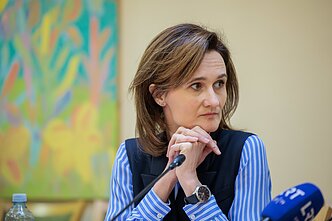














Lithuanian Defence Minister Dovilė Šakalienė resigned Wednesday, citing fundamental disagreements with Prime Minister Inga Ruginienė over how to strengthen the country’s defence.
“I am stepping down from my position as defence minister. My resignation was submitted this morning at 10:00,” Šakalienė wrote on her Facebook page.
“Just a month ago, I had hoped we could work together, but unfortunately, we cannot. We have different fundamental views on how to strengthen defense. I believe every institution, in the face of current threats, must find resources to strengthen its area in the context of national defence. In contrast, the prime minister sees this as something that must be funded solely from the Defence Ministry budget,” she said.
Šakalienė said next year’s defence budget should be no less than 5.5% of GDP. The government’s draft 2026 budget, however, allocates 5.38% of GDP to the Defence Ministry.
She said the current figure was achieved only after last week’s meeting at the Defence Ministry with journalists and opinion leaders – a meeting that soured her relations with the prime minister.
Šakalienė shared internal government documents showing that the initial budget proposal allocated less than 4% of GDP to defence, rising to 4.87% during an October 1 government session, and finally reaching 5.38% on October 14.
“Still, funding remains insufficient, and some planned Defence Ministry acquisitions will have to be cancelled. I will continue to monitor and actively participate in the defence budget process for this and future fiscal years,” Šakalienė said.
She criticised previous ministers for yielding to prime ministers and finance ministers in reducing defence budgets and said military leaders often did not resist. She said the current geopolitical situation makes such concessions unacceptable.
“The defence and security industry cannot be transferred from the Defence Ministry to the Economy or Finance ministries,” she said, emphasising that resources, investment authority, and defence needs assessment must remain centralised.
Prime Minister Ruginienė recently announced that oversight of defence industry matters would be moved from the Defence Ministry, citing questions about Šakalienė’s connections to defence contractors. Šakalienė was supported in the last parliamentary elections by representatives of defence industry companies that participate in Defence Ministry procurement.

Newsletter
Every Friday morning.