









The Lithuanian government on Thursday approved the Finance Ministry’s draft budget for 2026, which includes a significant increase in spending and a record allocation for defence, before submitting it to the Seimas, the parliament, for debate.
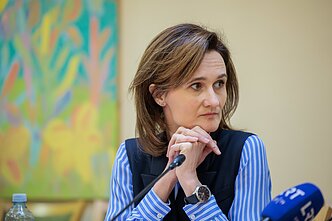
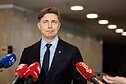
Finance Minister Kristupas Vaitiekūnas said Lithuania’s strong revenue growth this year allows the government to boost expenditures while maintaining fiscal discipline.
“We are seeing rapid growth in revenues across all budgets, which enables us to increase certain expenditures and ensure consistent national development and defence financing,” Vaitiekūnas told a Cabinet meeting.
Under the proposal, the general government deficit is projected to reach 2.7% of GDP next year, while public debt is expected to rise to 45.1% of GDP in 2026.
The draft budget earmarks €4.79 billion for defence, equal to 5.38% of GDP, reflecting Lithuania’s commitment to strengthening its military amid regional security threats.

Revenue and spending
Total state budget revenues, including European Union funds, are forecast to reach €21 billion, a 16.8% increase from this year, while expenditures are projected at €27.5 billion, up 18.9%. Net government spending is set to grow 5.2%.
Recently approved tax changes are expected to generate an additional €278.5 million in state revenue in 2026.
Budget priorities
Vaitiekūnas said the key priorities are social needs, defence, infrastructure, and maintaining fiscal sustainability.
“Next year we can afford relatively rapid wage increases while also meeting the major challenge of generously funding our defence,” he said.
The budget includes €438.4 million in additional funding for public sector wage increases.
- Teachers, higher education staff, and sports coaches will receive €148.8 million in raises.
- Medical workers will get an additional €148 million.
- Uniformed officers – including firefighters, police, prison, probation, and customs staff – will receive €24.1 million more.
- Cultural and arts sector employees will get €12 million in added funding.
Social measures
The minimum monthly wage will rise by €115, or 11.1%, to €1,153 before tax.
The average old-age pension will increase by 12%, reaching €750, and €810 for those with full contribution histories.
“This will affect more than one-fifth of our country’s population,” Vaitiekūnas said.
Various social benefits, including child payments, will grow on average by 5.4%.
Infrastructure and local budgets
The government plans to allocate €815.5 million for road projects, slightly more than this year, with additional borrowing possible to support infrastructure investments.
Municipal revenues are projected to grow 10.4%, exceeding €7 billion.
The government typically submits the budget to parliament by October 17, with final approval expected in December.

Newsletter
Every Friday morning.