












The United Nations (UN) human rights chief has expressed serious concern over the decision by several countries, including Lithuania, to withdraw from the Ottawa Convention prohibiting the use, stockpiling and production of anti-personnel mines.
“I am gravely alarmed by the steps taken or being considered by Estonia, Finland, Latvia, Lithuania, Poland and Ukraine to withdraw from the Convention on the Prohibition of the Use, Stockpiling, Production and Transfer of Anti-Personnel Mines and on their Destruction,” Volker Turk said in a statement published on Wednesday.
According to him, the Convention, with over 160 state parties, is a crucial tool in “responding to the devastating impact of anti-personnel mines on civilians”.
“These weapons kill and maim civilians and combatants indiscriminately and affect people’s freedom of movement, access to agricultural land, and right to development, even decades after the end of hostilities,” Turk pointed out.
According to him, the persistent and long-term risks of serious harm to civilians, including children, caused by these weapons far outweigh any military advantage that could be obtained by their use.
“Like other international humanitarian law treaties, the Ottawa Convention was principally designed to govern the conduct of parties to armed conflicts. Adhering to them in times of peace only to withdraw from them in times of war or for newly invoked national security considerations seriously undermines the framework of international humanitarian law,” the UN human rights chief noted.
He also called on all states that had not yet ratified or acceded to the Ottawa Convention to do so as soon as possible and said that countries should refrain from leaving any international humanitarian law treaty, and should immediately suspend any withdrawal process that might be underway.
Last week, Lithuania officially handed over its formal notice on its withdrawal from the Ottawa Convention to the United Nations secretary general.
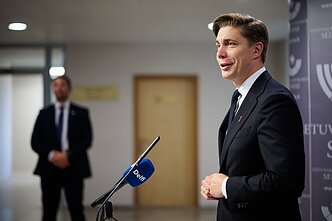
Commenting on the move, Lithuanian Foreign Minister Kęstutis Budrys said that Lithuania would take all necessary measures to defend the country and that its commitment to responsible defence and international humanitarian law remained firm.
In March, the defence ministers of Lithuania, Latvia, Estonia and Poland issued a joint statement calling on their countries to exit the Ottawa Convention. They were later joined by Finland.
In late April, the Estonian government approved a proposal to withdraw from the convention, while the Latvian president signed into law a bill on the country’s exit from the treaty.
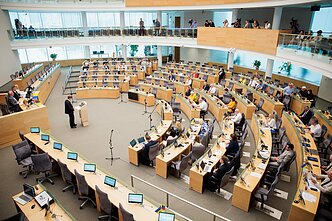
In early May, the Lithuanian parliament voted to exit the Ottawa Convention, which prohibits the use, stockpiling and production of anti-personnel mines.
President Gitanas Nausėda called it a logical step and a show of leadership, while Defence Minister Dovilė Šakalienė said that Lithuania, together with its allies, plans to begin producing and purchasing anti-personnel landmines.
All European Union member states are currently parties to the Ottawa Convention, while China, Russia, the United States, India, and Pakistan are not.

Newsletter
Every Friday morning.