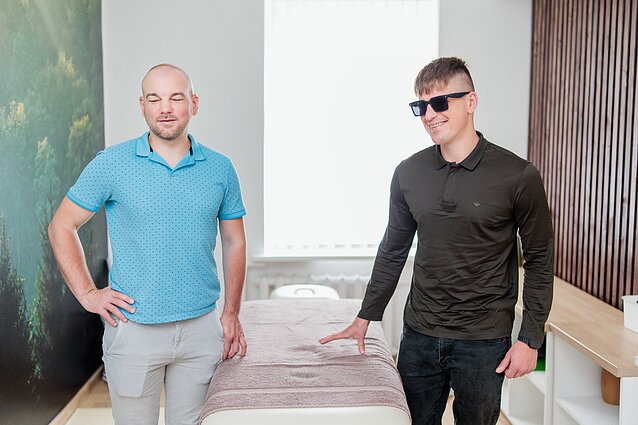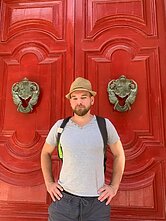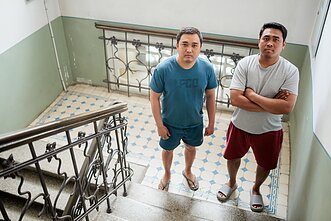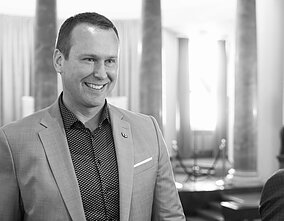
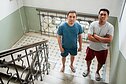


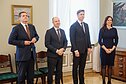

Marius Maželis and Mindaugas Suchovejus are more than lifelong friends – they are united by the shared experience of losing their sight and a mutual determination to live life to the fullest. Friends since their university days, the two recently launched a massage business together in Vilnius.
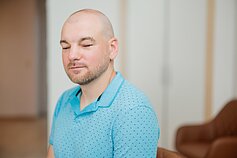
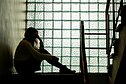
Both men were born with sight but lost it later. Marius' sight deteriorated after a head injury sustained while playing on a construction site. At first, he thought nothing of it, but as time went on at school, letters began to blur. By the time he turned 20, he could barely make out silhouettes; not long after, he lost all sight.
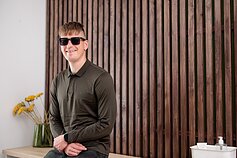
Mindaugas, on the other hand, lost his vision at seven due to a congenital eye condition. He recalls that before going blind, he was able to see well enough to remember colours, buildings, and the streets of Klaipėda, where he lived at the time. That same year, his mother died. With his father absent and his grandmother overwhelmed, he was sent to the Lithuanian Centre for the Education of the Blind and Partially Sighted (LASUC) in Vilnius.
Dance, sports, and the road to recovery
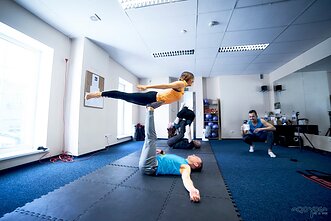
After losing his sight, Marius fell into depression. What lifted him out was dance. Facebook ads kept offering dance classes, which eventually enticed him enough to begin calling dance studios. Some places turned him down. After all, Marius couldn’t see and had no partner, but dancer Jurgita Česnavičiūtė-Jančorienė invited him to try.
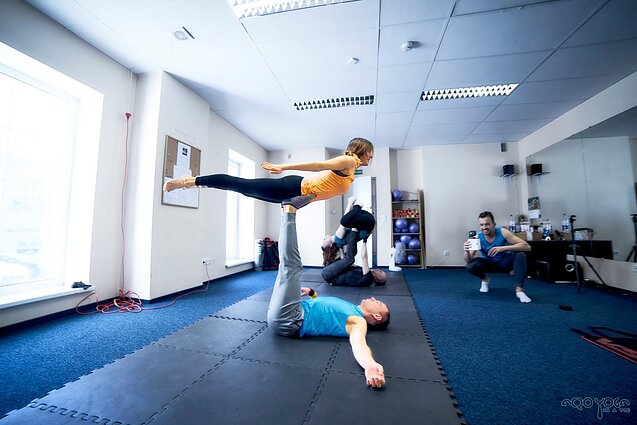
The result: Marius has now been dancing salsa, cha-cha, rumba and tango for over a decade. If he could dance blind, he realised, he could travel – he could even skydive. He has done both.
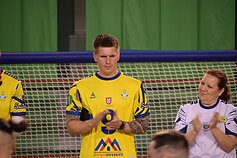
Mindaugas turned to sport for healing. “I lived in Vilnius without a family – it was tough. But sport became my escape from pain, and eventually my path in life.” He began playing goalball, a sport for the blind, at LASUC, eventually making Lithuania’s national team. The team achieved many victories across the globe, the biggest one being a gold medal at the 2016 Rio Paralympic Games.
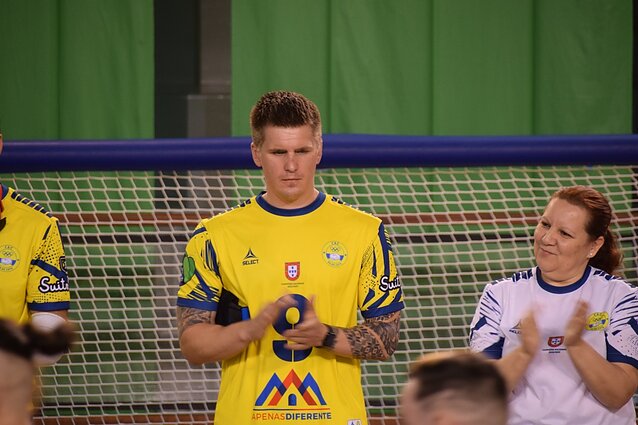
In 2019, Mindaugas stepped back from professional sports after a series of injuries. He now trains others and runs to stay fit, sometimes covering over ten kilometres a day.
But how does one run without seeing the path? “I run with my girlfriend – now fiancée – or with friends. We use a special rope about 30 centimetres long, and they guide me,” Mindaugas explained. “My fiancée says she enjoys running with me, though some friends think it’s a challenge. People sometimes ask if I’m not worried about tripping or getting hurt. I tell them – of course, there’s a risk. But the same goes for anyone, sighted or not.”
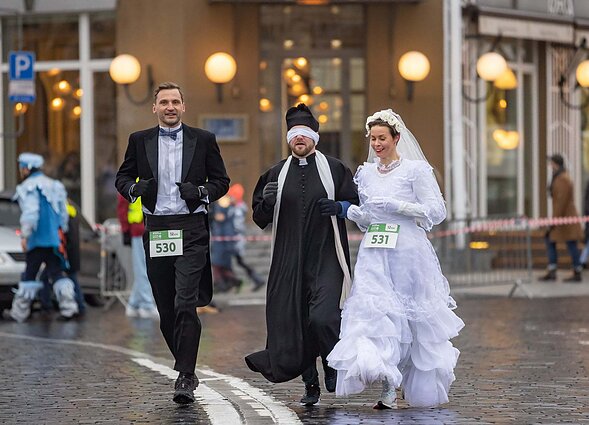
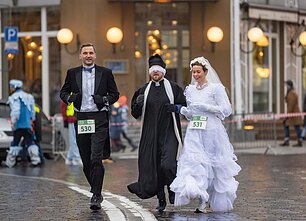
Though unlike Mindaugas, Marius never became a professional sportsman, he decided to challenge himself and after training for months, ran a marathon.
Dreaming about business
The pair met at LASUC but became close while studying massage therapy at Vilnius College. They even lived on the same dormitory floor.
Marius has worked as a massage therapist for years; Mindaugas began by treating teammates and also has professional experience.
They’re not alone – massage therapy is a popular career path for blind people in Lithuania. But both say it’s genuinely fulfilling.
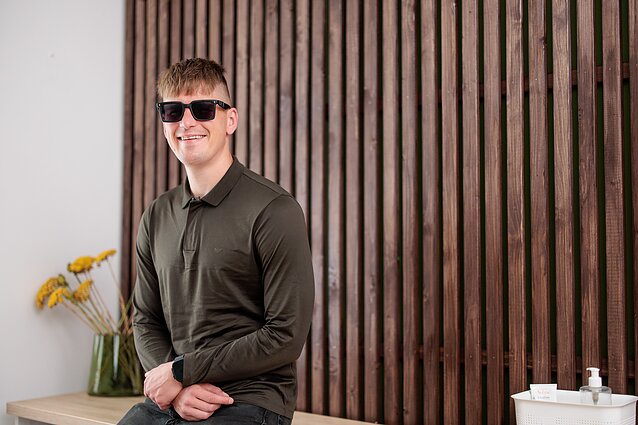
“Massage is linked to sport. You're working with muscles, and that’s why I enjoy it,” Mindaugas explains. Marius adds, “It’s rewarding to hear clients say they feel better afterwards. Even if life hasn’t been easy, I can still be useful to others.”
Marius had long dreamed of running his own massage studio but was hesitant, having been part of a failed business venture.
“I remember getting a job after the 2009 crisis. The salon owner was full of promises. I asked for a modest salary, he said I’d earn triple that. But it was hard to gain a foothold – back then, only wealthy clients or those with serious neck pain sought out massage therapists. I ended up working unpaid for a long time,” Marius recalled.
Still, Marius holds no grudge against the salon owner – in fact, he feels sympathy for him. It was a tough time.
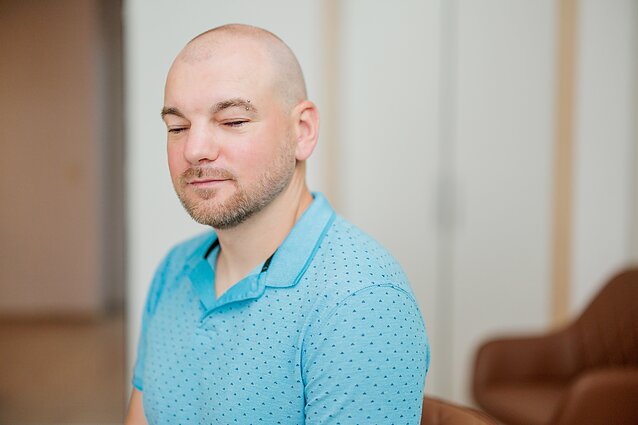
Despite that, Marius kept the dream alive, even naming the salon in his mind. But he was hesitant to take the risk – tried saving up for a launch, but it always seemed like prices were rising twice as fast as he could set money aside.
If not now, then when?
One day, Marius shared his plans with Mindaugas, who was immediately supportive and happy to join him in the venture. That conversation gave Marius the final push. “I’m turning 40 this July,” he said. “So one day I told myself, enough putting it off. If not now, then when?”
That’s how Kurmio SPA, a massage studio run by blind therapists, opened in the Lithuanian capital this spring. But setting it up wasn’t easy, Marius admits.
“Doing it alone would’ve been very hard. There’s a lot of paperwork, and staff at government institutions can be helpful – or not, depending on the day... But we’re a team. A few more people joined us – one knows law, another handles management – and together we managed to set up a small company in just a few months,” Marius explained.
But how do you find a suitable location if you can’t see them? “We were very lucky,” said Marius. “I think it was the third listing we looked into that turned out to be suitable. It was like a grain for a blind hen,” Marius joked.
Of course, after getting a feel for the place on Šeimyniškių Street in central Vilnius, Marius and his colleagues also asked sighted friends to help evaluate it – all gave a thumbs-up.
As for the name Kurmio SPA (Mole’s SPA), Marius says it came from a bit of affectionate self-irony. “We blind folks sometimes jokingly call each other ‘moles’. You meet a friend and say, ‘How’s it going, mole?’ So the name seemed light-hearted to me – moles might be blind, but they can still be charming.”
Why travel blind?
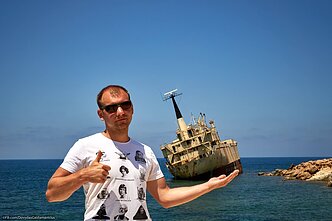
Though busy with their new venture, both men still travel, albeit separately. This summer, Mindaugas will ride a tandem bike along the Curonian Spit with a sighted friend, and in autumn will head to the Bavarian Alps. Marius is off to hike in the Italian mountains. Between them, they’ve visited dozens of countries – not just in Europe.
“Some people ask, ‘Why do you blind people travel? You can’t see anything anyway.’ And I always want to reply – if they can see, then why not just look at photos of different countries online and never go anywhere?” Marius said. “Travel isn’t only about what you see – it’s the sounds, the smells, the tastes, the people you meet. It’s the combination of all those things that makes travelling worthwhile.”
Mindaugas agrees. “Some people think if you’re disabled, you should just sit at home and be miserable. That’s one option – but you can live differently.”
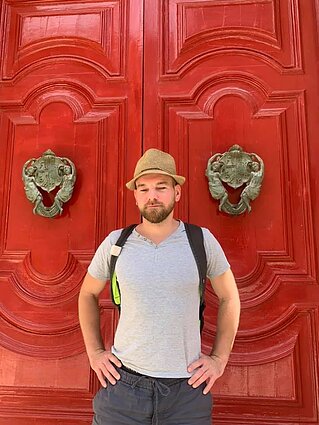
When he travels, he experiences the world through his senses – but he also frequently asks friends to describe the views around him. “Then I imagine the surroundings myself. I don’t know – maybe I’m getting it wrong, but the images they paint are convincing,” he said.
He was especially taken with the atmosphere, nature, and overall spirit of Brazil, which he visited as part of the Lithuanian national sports team. He has also travelled to Jamaica, Vietnam, Canada, and the United States. Now, he dreams of visiting Peru and Machu Picchu, inspired by childhood books about Native Americans.
Mindaugas has also travelled solo – once to visit his cousin living in the United Kingdom. “It was simple,” he said. “I’d take a taxi to the airport, flight assistants would help me in flight, and my cousin would be waiting when I landed.”
On other trips, he travels with friends. While occasional mishaps happen, they don’t dampen his spirits. “Last year, we visited Naples, which turned out to be extremely chaotic – crowded streets full of people darting around, and no traffic lights. So I took out my white cane. People began to react, and it suddenly became possible to move through. Drivers even stopped to let us cross,” he recalled.
Marius, too, has his share of memorable travel stories involving kind strangers. In Morocco, he once walked through the streets with a bearded friend. Locals shouted after them, “Ali Baba! Ali Baba!”
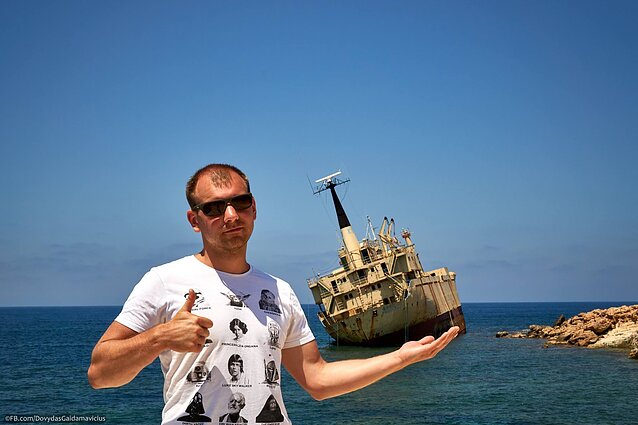
He recalled another trip, in Georgia, where he visited a local family for a feast. “The table was overflowing, there was wine, and everyone had to give a toast. I was about the fifteenth person, and all the toasts for family, health and homeland had already been taken. So I said, ‘To our driver Kostas, who has taken us safely everywhere.’ He was so moved he almost teared up – and later offered to take us to the best wine shop in town,” Marius said.
On another occasion in Thailand, the travellers stayed for a few nights at a small family-run hotel in the jungle. “I told the waitress how much I’d enjoyed the meal and asked her to pass on my compliments to the chef,” Marius recalled. “She came out from the kitchen with a huge bowl of ice cream for me. After that, every morning, I’d get a little ‘bonus’ from the kitchen.”
He also admitted that he’s afraid of flying – but he pushes through the fear because he knows the experience will be worth it. His advice to others? Don’t be afraid to try the things you want to do. And if you ever feel like everything’s falling apart – just remember: there’s always a way forward.”

Newsletter
Every Friday morning.