















A newly approved tax on residential real estate will reduce tax revenues despite the reform’s stated goal of expanding the taxpayer base, says a representative of the Bank of Lithuania.
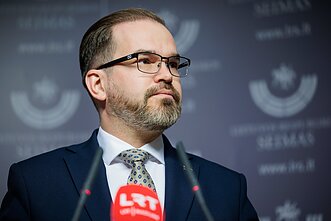
Jokūbas Markevičius, head of the central bank’s Economics Department, said Friday that revenue from the property tax may fall short of €10 million under the new rules.
“From the initial proposal, which aimed to broaden the property tax base and collect more revenue, we have now ended up with a version that narrows the base and will actually generate less income than before,” Markevičius told LRT RADIO.
He noted that revenue from the current real estate tax amounted to just €15 million last year.
The current real estate tax of between 0.5% and 2% applies to property over €150,000. Under the reform passed by the parliament this week, only a tiny fraction of primary residences – those valued over €450,000 euros – will be subject to the tax at a rate to be set by municipalities. Subsequent properties, meanwhile, will be taxed between 0.2% and 2% on value in excess of €50,000.
According to Markevičius, the potential of the property tax remains “entirely untapped”.
“If we changed nothing, we would have collected €75 million next year. Expanding the tax would have yielded €150 million. Now, after this reform, we are unlikely to collect even €10 million,” he said.
Further reading

Newsletter
Every Friday morning.