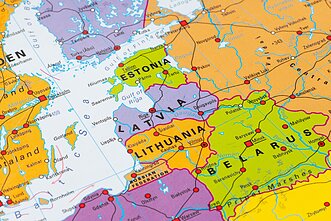

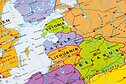












Forests along Lithuania’s southeastern border with Belarus are being clearcut, prompting public outcry in local communities. In the Lazdijai District – part of a region that borders the authoritarian-ruled Belarus – residents have reached out to LRT expressing concern over the scale of the logging.
Lithuania’s State Border Guard Service (VSAT) maintains that the trees and shrubs growing along the border strip must be removed, claiming they obstruct surveillance.
"You can see they've cut down about five kilometres in Lazdijai District, then it continues into Druskininkai Municipality – it's all been cleared in that direction," a local resident told LRT.
Ričardas, a resident of the village of Varviškė, expressed alarm as he watched trees disappear from the banks of the River Nemunas, which marks part of the frontier with Belarus. He fears that deforestation could destabilise the sandy riverbanks.
“We were outraged. We spoke with the foresters – these are trees, pines, over 200 years old. We wanted to preserve them. One solution could have been thinning them out, leaving them spaced every ten metres. It might have been done differently, not so desperately, not so brutally,” he said.
The resident was able to reach an agreement with border officials over a small forest plot near his homestead. As birds nest in the tree hollows, the trees have been spared – at least temporarily – until autumn.
He also questioned why in some places the border strip is being cleared so broadly. While the official border strip is defined as 13 metres wide, in practice the cleared area can span up to 100 metres, with VSAT arguing that wider visibility is necessary to combat smuggling and illegal migration.

“It all depends on the terrain and the situation on the ground, the presence of water. Everything is coordinated with the leadership of the Kapčiamiestis Border Station of the Varėna Frontier District. There is no specific width that applies across the board at this point,” said Laura Jurgelevičiūtė, spokesperson for the Varėna Border Unit of VSAT.
In 2024, Lithuania’s State Forest Enterprise issued 12 permits allowing logging in border forest zones across three forestry districts. This year, felling has continued in the Ančia area – another part of the border region.
“The State Forest Enterprise received a letter from the Border Guard Service requesting the clearcutting. Permission was granted to cut 3,000 solid cubic metres. The forest was cut according to requirements provided by border officials – only the trees they deemed necessary were removed,” said Tomas Bazevičius, head of the Varėna regional division of the State Forest Enterprise.
The ongoing clearance is being carried out by a small private firm, Bush Hunter, which signed a three-year agreement with the VSAT. Under the contract, the company receives no payment from the state.
“Free of charge – means that the State Border Guard Service does not pay for this work,” said Jurgelevičiūtė.
“It’s partly charity, partly not. The profit comes from the timber. But I don’t just cut and sell the wood – we also agreed to maintain the patrol paths,” explained Bush Hunter director Mindaugas Baliukonis.
Baliukonis said the felling is carried out under close supervision from forest officials.
“Before starting work, we drive through with foresters and representatives from the forest enterprise. They tell me, ‘God forbid you go where you’re not supposed to.’ They show me where to leave trees, and what areas to avoid. We only cut what’s agreed,” he said.
Nevertheless, the logging has sparked concern and misunderstandings, leading to an investigation by Lithuania’s Environmental Protection Department.
According to Deputy Environment Minister Ramūnas Krugelis, no legal violations were identified.
“I know some of the work may have been delayed or not entirely in line with the rules. There were doubts – we asked for a second inspection. But I want to emphasise that Lithuania’s security is the priority. And even if there were accidental breaches, the legal framework would need to be adjusted,” Krugelis said.
In response to the controversy, the Environment Ministry has prepared a proposal to ban clearcutting within 20 kilometres of the border in forest stands larger than 1.5 hectares.

Newsletter
Every Friday morning.