













A bear that had been roaming near residential areas in Vilnius for several days appears to have moved on, with hunters confirming it is now deep in forested, less-populated areas outside the Lithuanian capital.
The Lithuanian Hunters and Anglers Association (LMŽD) told the media that although they were granted a permit to shoot the animal, they refused to use it.
The group acknowledged that public safety is a priority but insisted that a wild animal posing no threat and outside the capital deserves the same right to life and protection as any Lithuanian citizen.
“Paradoxically, one hopes that if no lessons have been learned from Vilnius’ moose, perhaps they’ll be learned from Vilnius’ bear,” said LMŽD director Laimonas Daukša, referencing a moose that wandered into the capital less than a month ago. “We’ve been tracking bears in Lithuania for years now and have repeatedly urged the creation of a functioning response system. But yesterday we witnessed the same default – issuing a permit to kill and shifting responsibility onto hunters, instead of safeguarding the animal and managing its migration.”

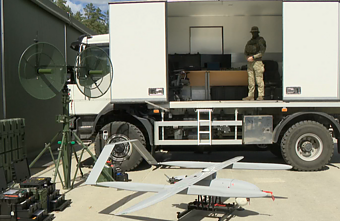
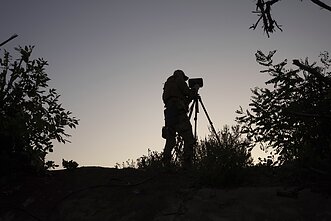
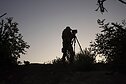
According to Daukša, on Monday LMŽD and Environmental Protection Department officers deployed eight professional drones with thermal cameras to track the bear around Vilnius, which had been spotted in the capital over the weekend.
Surprised by the Environment Ministry’s approach
LMŽD said they were somewhat taken aback by what they described as the Environment Ministry’s immediate inclination to eliminate the animal, rather than allow it to be fitted with tracking equipment.
“It’s strange when a wild animal’s life is so undervalued and the simplest, most banal solution is chosen. I can almost guarantee this would not be the case if those managing such situations included people who not only know and understand nature and wildlife, but who can also help the state prepare for these scenarios,” Daukša said. “So one question remains – hunters are ready to help, but is the state capable and mature enough to accept that help and choose the professional path instead of the bureaucratic one?”
Daukša added that LMŽD plans to propose legislative and procedural reforms, not just for managing wildlife sightings but also the long-neglected issue of road accidents involving wild animals.

“For three decades, no real steps have been taken to ensure they [injured animals] don’t suffer needlessly for hours, or to spare the public from witnessing their pain” he notes.
Deputy minister: shoot permit was precautionary
Responding to criticism, Deputy Environment Minister Ramūnas Krugelis clarified that the shoot-to-kill permit had been issued only as a precaution in case of an unusual or dangerous situation – such as the bear returning to urban areas.
“No one asked the hunters to shoot the bear. A permit was simply obtained in case it was necessary,” Krugelis explained. “A permit was also issued to tag the bear with a collar. Which option would be used depended entirely on the situation”.
He added: “It was simply a contingency measure”.

Krugelis described the bear’s behaviour as an isolated case of disorientation but stressed that tagging and tracking would be essential if it returned to populated areas.
Bear moves towards Pabradė
According to LMŽD’s drone teams, the bear has moved away from Vilnius and is heading northeast toward the Pabradė area.
“Here are the first images – the beautiful animal is calmly walking through forest and meadows, moving toward Nemenčinė. Things are calmer now in Riešė and Vilnius,” LMŽD representatives said.
By Tuesday morning, the bear reportedly advanced further toward the villages of Sužionys and Danilava.
LRT reported the bear was spotted around Vilnius throughout the weekend, including near residential neighbourhoods.
Experts criticised the apparent lack of institutional preparedness, warning the public was left facing a potentially dangerous animal without clear guidance.
Amid mounting criticism, officials held a press conference on Monday to address the incident. Deputy Minister Krugelis acknowledged the lack of timely communication.
“This wasn’t news to the authorities – we’ve been tracking the bear since the very first report on Saturday. The animal’s movements were monitored, and we have a map of its path. But we admit that clearer communication from our institutions was lacking,” he said.

Newsletter
Every Friday morning.