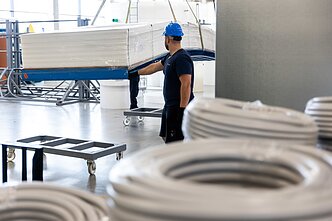














A new defence infrastructure park dubbed the Vilnius Shield has been unveiled in the Lithuanian capital. According to Mayor Valdas Benkunskas, the site contains anti-tank barriers and other equipment that could create up to 55 roadblocks, intended to help the military in the event of a conflict.
One possible route for an attack on Lithuania is a direct thrust from Belarus into Vilnius, according to the country's military leadership. While inspecting the newly acquired engineering equipment, Mayor Benkunskas underlined a clear objective: the road to Vilnius must not resemble a highway – it must be riddled with obstacles.
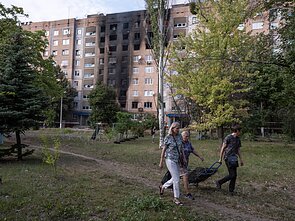
“In 2022, the mayor of Kharkiv advised us: ‘Have your own counter-mobility infrastructure. That way you’ll help the army stop a physical invasion’,” said the Vilnius mayor.
Worth 762,000 euros, the equipment comprising the Vilnius Shield may also be used in peacetime – for example, to block traffic. Some of the gear will al be tested in autumn military drills.
“We’ve calculated we’ll need 55 roadblocks across the eastern part of the city. One road might need up to three checkpoints,” said Benkunskas.
Last autumn, the Lithuanian company Gelmesta became the country’s primary producer of defensive engineering equipment. However, the growing stockpiles soon became a problem: many municipalities were not ready to receive and store the equipment. Deputy Defence Minister Aleksa stressed that with planned investments exceeding a billion euros, municipalities must swiftly resolve such logistical issues.
“We’re talking about 27, potentially up to 50 engineering infrastructure points across Lithuania. The goal is to have them ready by next year,” said Aleksa.

Another concern is the Suwalki Gap – a narrow corridor between Lithuania and Poland sandwiched between the Russian exclave Kaliningrad and Belarus. Alytus, a city near the area, has already received government funding for defence measures, noted Alytus Mayor Nerijus Cesiulis. Next week, reconstruction will begin on one of the city's bridges.
“We’re preparing pits in front of one bridge where anti-tank devices could be installed. I can’t go into detail, but our bridges – let’s say, certain ones – will be laid with mines if needed so that if enemy forces attempt a push, the bridges can be blown up,” said Cesiulis.
Yet another possible axis of attack is on Lithuania’s western coast, where defence preparations are also underway in Klaipėda and Neringa – a thin stretch of land between the Baltic Sea and the Curonian Lagoon. Neringa’s Mayor Darius Jasaitis said military is in regular contact with the region's administration, conducts training exercises, and has laid out clear evacuation procedures.
Some counter-mobility equipment has already been delivered, though there are concerns about whether there’s enough heavy gear to move them if need-be. Jasaitis says he’s urged the military to position everything in advance.
“I’ve suggested, and continue to suggest, that we pre-position everything now, [...] we could temporarily block the road even now, just for peace of mind. That seems to be the direction we’re heading,” said Jasaitis.
Experts say that while anti-tank obstacles are important, mines are essential to forming a serious defensive line. Lithuania plans to spend around 800 million euros on anti-tank mines. Together with Finland, Poland, and the other Baltic states, the country is also leaving the Ottawa convention, which prohibits anti-personnel mines. Legal withdrawal from the Convention is expected to conclude early next year.

Newsletter
Every Friday morning.