












All NATO member countries have agreed on Ukraine’s membership, NATO Secretary General Mark Rutte said in Vilnius on Monday, adding that it cannot be part of peace talks between Kyiv and Moscow.
His comments came in response Russia’s demand for NATO to stop its eastward expansion as a condition for peace.
“When it comes to Ukraine, in Washington, there was a clear commitment by all 32 allies that it is an irreversible path for Ukraine to come into NATO. Not with an end date, not understanding this as part of a peace settlement, but clearly as a longer-term commitment by 32 allies, and we are building that bridge as we speak,” he said.
While numerous NATO communiques have mentioned Ukraine’s membership in the alliance, the commitment was put into question last February when US Secretary of Defence Pete Hegseth suggested it was unrealistic.
“The United States does not believe that NATO membership for Ukraine is a realistic outcome of a negotiated settlement,” Hegseth said on February 12.
“Instead, any security guarantee must be backed by capable European and non-European troops,” Hegseth continued. “To be clear, as part of any security guarantee, there will not be US troops deployed to Ukraine.”

According to Rutte, Ukraine will be on the agenda during the upcoming NATO summit in The Hague.
“We’ll make sure that Ukraine has what it needs to stay in the fight, to be able to bring this terrible Russian war of aggression against Ukraine to an end,” he said.
Military spending commitments
NATO members will have to commit to spending more on defence at the upcoming meeting in The Hague, Rutte said, without giving a specific figure.
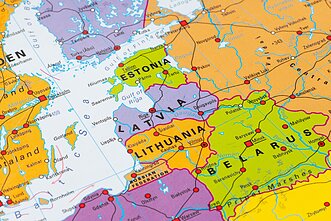
“We are focusing on defence spending. [...] We know that Russia, China, North Korea, and Iran are working together, and Russia has been a long-time threat to NATO. It is crucial that in The Hague, when it comes to spending and when it comes to industrial production, we take necessary decisions,” the NATO chief said in Vilnius on Monday as he arrived to attend a summit of the leaders from NATO’s eastern and Nordic member countries.
With the United States pressing allies to allocate 5 percent of their GDP to defence, diplomats say NATO countries will seek to agree on this commitment by splitting it into two parts at the upcoming summit in The Hague later in June.
The proposal is to increase direct defence spending to 3.5 percent of GDP and to allocate additionally 1.5 percent to defence-related needs such as dual-use infrastructure.
Rutte did not specify what percentage of GDP NATO countries should commit to.
“This is something that we are discussing now among allies. I am not mentioning numbers now, but I can assure you that 2 percent, which we agreed on in 2014, is not nearly enough. [...] It will be considerably more than 2 percent,” he said.