













Dozens of Lithuanian volunteers flocked to Ukraine to enlist in the country’s armed forces fighting back against Russia’s invasion. However, there has been at least one reported case of a Lithuanian volunteer joining the Russian side – and there could be more.
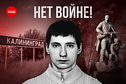
In August, information spread on social media showing Kęstutis Kvietkus, a Lithuanian national, fighting among Russian forces. He was previously active on social media in praising Moscow and Vladimir Putin.
Following the revelation, a Lithuanian military instructor and head of the “Gyvačių sala” humanitarian aid organisation in Ukraine, Sigitas Maliauskas, said he would pay over 1,000 euros for anyone who could locate Kvietkus on the battlefield.
“Kvietkus is not the only one serving in the Russian army. There is also a former policeman from Kaunas,” said Maliauskas.
According to him, it is difficult to estimate the exact number of those who have joined Russian forces. Lithuanian prosecutors also fail to investigate until there is public pressure, Maliauskas added.

“I can say that there is definitely more than one,” Lithuanian Defence Minister Laurynas Kasčiūnas said on Wednesday about Lithuanians fighting on the Russian side.
According to the 15min news website, at least five Lithuanian citizens are fighting on the Russian side against Ukraine.
Asked how long they have been doing so, Kasčiūnas said that “times vary”, but there is no information about the number of dead. These persons are known to Lithuania's law enforcement authorities, the minister said.
“Let’s leave it to the authorities,” he said when asked whether efforts would be made to bring the Lithuanian citizens fighting on the Russian side back to Lithuania.
The country’s Prosecutor General’s Office has now launched a probe surrounding Kvietkus but has not yet gone public with the information.
According to the former defence minister, Arvydas Anušauskas, Lithuania lacks legal instruments to respond – the country did not take any legal action against those who fought for Russia against Ukraine in 2014.
Lithuania’s intelligence agency, the State Security Department (VSD), also does not disclose whether it has information about the country’s nationals who may have fought on Russia’s side.
“If these people are identified, the Prosecutor’s Office should in any case launch investigations against them,” said Anušauskas. “Lithuania has committed to Ukraine to investigate war crimes committed on its territory.”
According to Dainius Gaižauskas, the vice chairman of the parliamentary Committee on Security and National Defence (NSGK), the country’s military intelligence is collecting and analysing information on citizens fighting on the Russian side. The gathered information will only be used when the people will be within the reach of the country’s law enforcement, Gaižauskas said.

Meanwhile, the Migration Department is considering stripping Kvietkus of his Lithuanian citizenship.
Vilnius ratified a UN Convention in 2013, which allows for revoking a person’s citizenship if they had served in a foreign army without explicit permission. In such cases, the person can lose his passport even if he does not have another citizenship.
Political analyst Nerijus Maliukevičius argues that Lithuanians fighting on the Russian side could pose a serious security risk.
“In the event of potential military aggression, such people [...] could carry out operations on our territory,” Maliukevičius said.
According to him, the Kremlin is trying to attract people for its war in Ukraine. Europe’s intelligence agencies have also warned of Russia using social networks in its radicalisation attempts.

Newsletter
Every Friday morning.