














Up to 1,000 people gathered in Vilnius on Wednesday for a rally and march organised by trade unions to mark International Labour Day, demanding fewer restrictions on strikes.
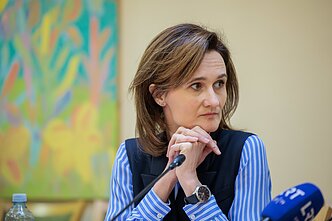
“Recently we have seen that it is becoming more and more difficult to defend workers because of the inhuman resistance of employers, because of the pressure and the use of various repressive measures,” Inga Ruginienė, chairwoman of the Lithuanian Confederation of Trade Unions, told BNS.
She said that trade unions feel that changes in legislation are too slow and that workers’ rights to strike are limited.
According to Ruginienė, crucial changes to the Labour Code are needed to establish rules that would make it easier for workers to strike. At the moment, she says, the possibility only exists on paper.

“The aim is to remind our government that they have not complied with the recommendations of the International Labour Organisation on the rights of workers to defend their rights, which are strikes,” Regina Dvaržeckytė, the chairwoman of the Lithuanian Trade Union of Communication Workers, told BNS.
She said it is difficult to organise a strike – once a union decides to do it, it takes a year before workers can begin the action.
Paulius Šalna, a programmer and game developer from Kaunas, agreed that organising strikes is an unreasonably long and complicated process.
“The most annoying thing is that you cannot change your demands during the whole process [...] even though the situation can change,” he said.
Sonata Samoškienė, chairwoman of the Oil Workers’ Union from Mažeikiai, also said the right to organise a strike should be less restricted.

“There are many companies where it is difficult to do it, although our laws allow it, but the whole procedure is complicated,” she said.
Social Security and Labour Minister Monika Navickienė later said that trade unions should present their proposals for any legislative changes.
“I think we can certainly discuss all the conditions, and we have repeatedly asked the trade unions themselves to submit their proposals to the Ministry of Social Security and Labour on how and what changes should be made so that they can better fulfil their functions,” Navickienė told the radio Žinių Radijas on Thursday. “We don’t have any concrete proposals from the trade unions on the table right now.”
She added that any proposals should be discussed and agreed on in the Tripartite Council comprising representatives of trade unions, employers, and the government.

Newsletter
Every Friday morning.