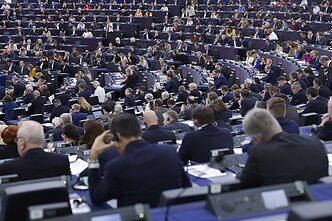
















Lithuanians remain one of the most pro-EU nations, according to the latest Eurobarometer survey. Confidence in the EU is growing across Europe, even though more people are concerned about the economic situation, which could bring increasingly radical political forces to power.
Lithuania tops the list of supporters of the European Union, a trend that is visible across the community, according to the pollsters.
“Five years ago, some countries where a significant proportion of Europeans live were not assured of the benefits of the EU. Now the situation is different,” says Jaume Duch Guillot, a spokesman for the European Parliament (EP).
Brexit, the Covid-19 pandemic and the war in Ukraine have made people realise the importance of membership, says the EP spokesman. That is why he expects a higher turnout for next year’s European Parliament elections.
“More than 70 percent of people now say they know that the decisions made in this building make a difference to their lives,” says Duch Guillot.

Around half of Lithuanians say that the European Parliament elections on June 9, 2024, are important. It is not clear how many will actually turn out to the polls, as the vote will be held separately from the presidential election.
Lithuanians would like Brussels to focus more on fighting poverty, addressing health and economic issues, defence and border protection.
But the Eurobarometer shows that Europeans are increasingly pessimistic about the future. Three out of four respondents think their lives will get worse next year.
As a result, far-right narratives are increasingly loud in Europe.
“What can we see in Europe today? Hell!” said the Romanian far-right politician George Simion at an event hosted by Italy’s Matteo Salvini. “Hell because we have illegal migrants, hell because we have deindustrialization, hell because we are facing the destruction of natural identity and the decline of Christianity. They want to ban us from using words like mother, father or fatherland.”
Such rhetoric is becoming the main rallying cry for the far right.
“Support for the far right is growing. Look at the elections in the Netherlands, France, Italy, Sweden, Finland. I predict that these parties will do well in the June elections,” says Gilles Ivaldi, political analyst at Sciences Po.

Scaremongering about migration is widespread, but there is also discontent about the economic situation, says the analyst. Support for Ukraine is also becoming a dividing issue.
“Far-right parties, especially those linked to Marine Le Pen, used to support Putin, although they’ve changed the image since the war. So the more power they have in the European Union, the more problems we’ll have in continuing to support Ukraine,” says Ivaldi.
Even now, Hungarian Prime Minister Viktor Orbán is threatening to block Ukraine’s membership talks at the European Council.
But Brussels says its support for Ukraine remains strong.
“Citizen support is still very strong. This, I think, in the 22nd month of the war, is impressive", says EP spokesman Duch Guillot.
A Eurobarometer poll shows that half of Europeans support the EU’s efforts to expand in the face of the war in Ukraine. The number of Lithuanians who support it is even higher.

Newsletter
Every Friday morning.