
















Following the optimism of post-Cold War Britain, dubstep eventually became the dark, moody sound of London in its transition from the 90s “rave utopia” to the post-financial crash austerity era. One of the producers at the spearhead of this early scene was Steven Goodman, known as Kode9.
“The mood of early dubstep was kind of ominous,” says Goodman, who is also the founder of the Hyperdub label that brings together The Bug, Burial, and other seminal acts. “There was like a sense of the future closing, things were feeling a bit more ominous, of something looming on the horizon.”
Part of this sound could be explained using Mark Fisher and his writings on hauntology, as well as what he called capitalist realism – the idea that it’s impossible to imagine a different reality than the current dominance of neoliberalism.
With the concept of hauntology in mind – which he defined as the yearning and nostalgia for a lost future – Fisher wrote about the early dubstep producer Burial and his music capturing the nostalgia that he wrote about.
Part of that was, arguably, captured by other dubstep producers at the time, including Kode9.
“There was a lot going on in the mid-noughties. I do think, retrospectively, that dubstep had captured that somehow,” he said.
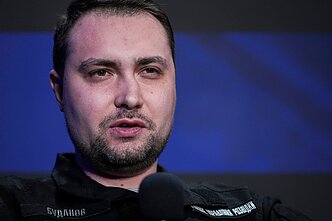
Goodman came to play Escapology – an audiovisual set to a non-existent video game about escaping to an otherworld as a metaphor for Brexit and other political currents – at the Audra festival in Kaunas, Lithuania’s second-largest city, where he sat down for an interview with LRT.
Although Goodman has since moved away from dubstep, the topic of the conversation was centred on Britain’s early dubstep scene, as well as the intersection between his work, Hyperdub, Escapology, and Fisher’s writings.
Parts of the conversation were later broadcast at the Protesto Garsas (Protest Sound) radio programme at LRT Opus, which you can find here (in Lithuanian).
What was your mood in Britain in the early 2000s when you began experimenting with the dubstep sound?
I can give you a more biographical musical picture of the 90s. I had been into jungle and in the mid-90s that felt like the most amazing music ever invented. And then, as usual with music you get into, it has less and less of an effect on you. Also, the rate of evolution in the music slows down. So, by the time I moved to London in the late 90s, I [discovered] UK garage.
It felt exciting to me again in a way that jungle had done in the early 90s, but I wasn't necessarily into the clubbing side of the culture, because I didn't want to dress up to go to a club and I wasn't into that.
That wasn’t me, but I loved the music and I think a lot of people who had been into jungle and drum and bass, felt something in UK garage that they could connect to rhythmically – the basslines, the MCs – but they wanted a different atmosphere in the music.
And so out of the UK garage came grime and early dubstep which had the MC side of things from early jungle and had the darkness and the basslines from early drum and bass. And when the Dot-com bubble burst around 2000, and then going forward, like 2005 when there were terrorist incidents in London, the mood changed and I think the music resonated with that, coincidentally maybe. Or maybe it was the zeitgeist that swept away the music, or maybe it was the premonition of the financial crash a couple of years later [in 2008], but there was a sense of deceleration.
There was like a sense of the future closing, things were feeling a bit more ominous, of something looming on the horizon, [and] the mood of early dubstep was kind of ominous.
There was a lot going on in the mid-noughties. I do think, retrospectively, that dubstep had captured that somehow.
When I lost interest, dubstep went to America and it became something else. I think the obnoxiousness of American dubstep was like a premonition of Donald Trump and the whole culture of the obnoxious, alt-right, in-your-face leeriness. When I listen to American dubstep, that's what I hear. I don't know if it's true, but that's what I hear and that's why I was never interested in it musically. But by the time it got to 2009 or something, I thought this had nothing to do with what I like musically.
What is your relationship between you, Hyperdub, and hauntology? How is it different from escapology?
Hauntology is a concept that Marc Fisher developed. Mark wrote about hauntology as an idea of a lost future, about recovering a lost future and reconnecting with a future that got buried somehow. He wrote a lot about the artist Burial on Hyperdub as somehow signifying the death of rave, or like the lost future of rave utopianism which crashed.
I get it, but it's not necessarily how I saw Burial’s music. The melancholy in it wasn't necessarily about the death of rave.
What was it for you?
For me, it was more textural. There was something special about the use of textures in his music. The melancholic mood is part of what tapped into a lot of people's structure of feeling.
Partly, you could see that as mourning the rave utopia, but it also connected with several new generations who had never experienced that sense or wouldn't experience that sense of nostalgia for a past that has gone by.
So I think the hauntology captures a bit of Burial’s music. But I think where we, Hyperdub, and I slightly diverge from hauntology is because it’s based on the idea that there's nothing else, that there's nothing new going on. I feel that it's a bit rooted in the 90s and it's a bit rooted in the idea that anything new must come from Britain or America. So, it's a bit parochial in that sense.
As opposed to hauntology, I would say that there's lots of digital, modernist music that has happened in the last 15 years. It could be anything like [...] Arca, which has gender politics to it. I don't know if the politics goes much wider than that, but it definitely is political in a gender sense and there's a huge amount of exciting dance music coming from Africa and South America, Central America. So it's not the usual Europe and America-centrism, or even worse than that, Britain and America-centrism.
So for me, hauntology was a bit too narrow. Although, Mark's ideas helped give birth to Hyperdub as a label. We did PhD together in the mid-90s and we were very close friends.
We were also in a research unit called the Cybernetic Culture Research Unit. Since we didn't see each other too much from 2002 onwards, we were always in a virtual conversation. I was influenced by his ideas, which affected my musical worldview. Then I would sign an artist like Burial, whom he would write about, and then he would write about Darkstar or DJ Richard or another number of other Hyperdub and related artists. I always read his writing and I was very influenced by his writing. So, there was like a telepathic conversation going on [Mark Fisher passed away in 2017].
Is escapology different from hauntology, which says there’s no future, but escapology is trying to escape this current cycle?
I haven't specifically thought about the relationship between hauntology and escapology, but it's an interesting one because it is about reclaiming a bit of utopia in the future, not just in the past.
Haunology sometimes is a sense of a lost future and there's an overwhelming sense of melancholy for something, or mourning for something gone past, but also a yearning for a future, but not an ability, almost an inability, to get to the future.
Whereas escapology, which for me means something quite specific – we need to work out a way of getting out of here, however bleak things look.
We're trapped or chained up like Houdini, and we need to work out a way, a strategy to break out specifically the escapology I'm talking about in this album and the Astro-Dariae [a 2022 album by Kode9 “about the break-up of Britain narrated by synthetic Scottish voices and framed as an eponymous video game” story that goes along with it].
It is specifically to do with Brexit and the pandemic, and about escaping England, about escaping English nationalism, about Scottish independence and the end of the UK by breaking up the UK [which is framed like] a fiction about escaping to an orbital space habitat, which is like a surrogate for a utopia.

Newsletter
Every Friday morning.