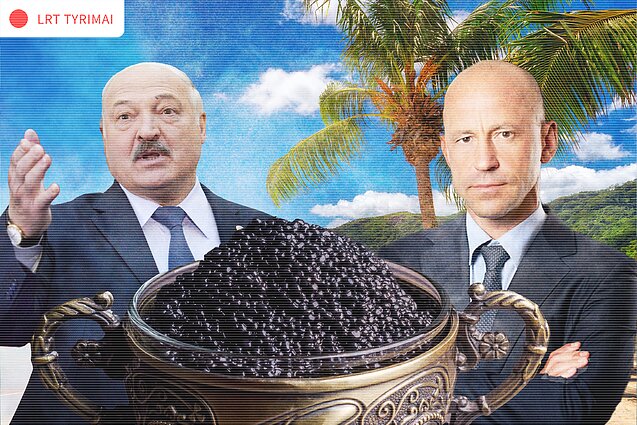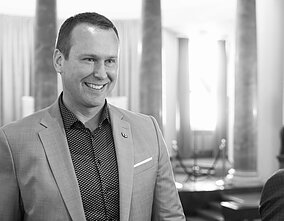












Alexander Moshensky, a Belarusian oligarch close to the country’s dictator Alexander Lukashenko, has devised a scheme to pay less tax in Europe, supply raw materials to a factory in Belarus, and rack up tax-free profits in the tax haven of Seychelles, the LRT Investigation Team and its partners have found.
After Russia launched its full-scale invasion of Ukraine, Lithuanian supermarket chains announced the removal of Russian and Belarusian products from their shelves. This includes products of Santa Bremor, a large Belarusian fish processing concern, linked to Belarusian oligarch Moshensky.
But despite Lithuania’s strained relations with Belarus, Santa Trade, a Lithuanian subsidiary of Santa Bremor, shipped a record amount of frozen fish and caviar to Belarus via Lithuania last year. The revenue of the Klaipėda-based company amounted to almost 139 million euros and its profit was 3.2 million euros last year.
“The profit is not because of the volume. Look how the dollar rate is jumping. We are increasing our transit turnover. That’s it,” Robertas Vansevičius, director of Santa Trade, told LRT.
Santa Trade is registered in an apartment in a high-rise building on Baltijos Avenue in Klaipėda. When LRT journalists went to the address of the company, the administrator of the premises said she had not heard of such a company.
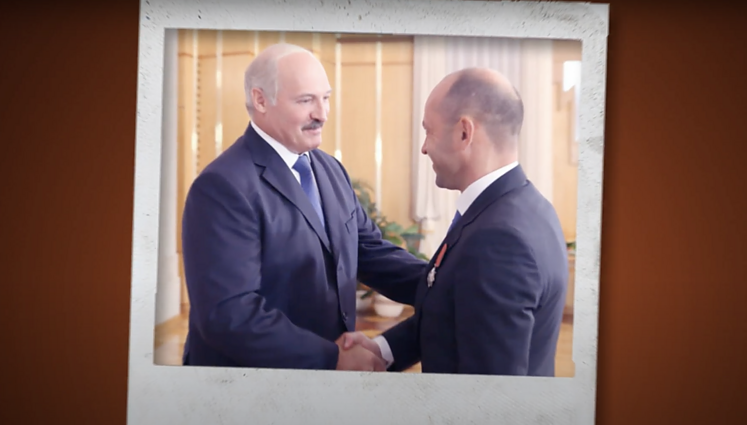
Vansevičius said, however, the company was operating on the premises on Nemuno Street. The handwritten name of Santa Trade on the mailbox is the only sign that the company is located here.
“We are engaged in transit. We do not produce anything. Transit is automatic, and I’m just an employee who deals with regulation,” Vansevičius explained his role at the company.
Santa Trade has only three employees and does not produce or sell products in Lithuania. Despite generating hundreds of millions of euros in revenue every year, it is not among the top 100 companies in terms of the amount of taxes paid to the Lithuanian budget.
An investigation by LRT and partners from Heimildin (Iceland) and the Belarusian Investigative Center (Belarus) shows that Moshensky, an oligarch close to Belarusian dictator Alexander Lukashenko, has devised a scheme to provide raw materials to Belarusian factories by reducing taxes in Europe.
Small contributions
Santa Trade was established in 2016 by the Belarusian concern Santa Bremor. The choice of Klaipėda was not accidental – Belarus is landlocked, and fish from Norway, Iceland, South America, and Asia are shipped to the country via the ice-free Lithuanian port. From Klaipėda, it is transported to Brest in Belarus, where the Santa Bremor fish processing plant operates.
In Brest, Santa Bremor operates in a free economic zone (FEZ) and enjoys tax breaks. In Lithuania, Santa Trade’s tax contributions to the state budget are also modest. According to the data provided by the State Tax Inspectorate (VMI), Santa Trade has paid 964,000 euro in taxes since 2016. However, the company recovered 637,000 euros for VAT paid last year. This year, according to preliminary data, it may get back almost 1.2 million euros.
Santa Trade has also been operating with negative capital since it was founded in 2016 until now. This is not in line with Lithuanian law.
“If the equity is negative, the company should close or the shareholders should cover the loss,” explained Daiva Čibirienė, President of the Lithuanian Association of Accountants and Auditors.

According to VMI, a negative capital indicator can raise questions about whether a company is really carrying out activities and seeking to obtain economic benefits.
Three independent financial experts, who have reviewed the financial statements of Santa Trade and its related companies in the UK and Cyprus, confirmed to LRT that the business raises suspicions of possible financial manipulation.
Oligarch’s loan carousel
To explain these possible manipulations, let’s switch focus to the tax haven of Seychelles.
The businessmen like this archipelago in the Indian Ocean not only because of its favourable tax environment but also because of its complete secrecy – the ownership of companies is not disclosed in commercial registers.
It is home to the Alpha Mar Foundation which has links to the Belarusian businessman Moshensky. The foundation was the ultimate beneficiary of two companies in the UK – Gordon Trade and Management and Max Credit Investment – until 2020 through an intermediary company in Cyprus.
Moshensky himself has not confirmed his links to the Seychelles-registered Alpha Mar Foundation, but there are several indications of his connection to it.
For example, the Seychelles-based foundation managed companies in the UK through a Cypriot company Alpha Mar Limited. The latter’s documents indicate that Moshensky was its final beneficiary between 2014 and 2019.
Gordon Trade and Management, owned by a shareholder in Seychelles, is engaged in the international trade of frozen fish. This company acted as an intermediary for the resale of raw materials from suppliers to companies of the Santa Bremor Group.
The available import documents show that fish was also transported to Belarus via Lithuania through the intermediary of this British company. Such schemes, where products are not bought directly from suppliers but through interconnected intermediary companies, drive up prices.
The money from the fish resale to the related companies eventually ended up with the final beneficiaries in Seychelles. The financial records of the British company show that over 89 million euros in dividends were paid to shareholders between 2014 and 2018.
Another company, Max Credit Investment, owned by the Alpha Mar Foundation, gave out huge loans to companies linked to Santa Bremor. These loans were used to finance Santa Bremor’s expansion in Russia, Ukraine, Belarus, and Lithuania for over a decade.
Santa Trade, which was newly established in Lithuania, received a loan of 28.7 million euros in 2016 and 37.6 million euros in 2017. Santa Trade was paying 2 percent interest annually on the loan.
According to the financial experts, who advised LRT, the usual rate in the UK is 4 percent. But the Klaipėda-based company treated the interest as expenses, thus reducing the taxable income.
According to Santa Trade’s financial statements, it has paid almost 3.6 million euros to the British company for interest since 2016. Last year, the remaining loan amount of 27.9 million euros was repaid in full.
However, the British Max Credit Investment does not resemble a reliable financial institution: it has only one employee and is registered at an address where up to 1,000 other companies operate. From 2011 to 2020, the final beneficiary of this company was the aforementioned Alpha Mar Foundation in Seychelles.
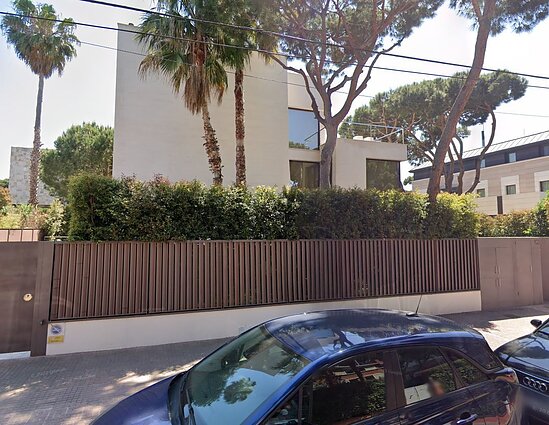
So, the scheme is simple: a British company with one employee distributes huge loans to companies linked to a Belarusian fish-processing concern. These loans become the property of the shareholders in Seychelles. The borrowing companies use the money not for investment but to maintain their solvency, and the profits earned are repatriated to another country through the loan and the interest.
Asked whether the loan was used to move money out of Lithuania, Vansevičius, head of Santa Trade, said: “I have no idea. It’s not my area of expertise. I’m an employee. I know that the loan has been repaid and that is enough. I have put a lot of effort into making sure that the loan is repaid. The business doesn’t belong to me.”
The VMI said it had carried out six control actions on Santa Trade since 2016. The company has corrected the discrepancies and is currently not under investigation, according to the tax inspectorate.
Protecting businesses
The Belarusian oligarch Moshensky did not answer the questions about his links with Lukashenko sent to him by LRT’s colleagues from the Belarusian Investigative Centre. In his reply, he said he would not answer questions about himself and his family.
“Also questions that are aimed at harming me and other people. I can only clarify that all the companies I am involved with have been founded and are operating in accordance with the law,” Moshensky wrote.
But the data gathered suggests that the businessman took steps to protect his businesses in the face of sanctions.
In May 2022, after Russia’s invasion of Ukraine, the shareholder of the Lithuania-based Santa Trade changed. The Cypriot company Newride Services Limited took over all the shares from Belarusian Santa Bremor. A few days after the start of the war, Moshensky’s daughter, Yana Moshenskaya, became a shareholder in Newride Services Limited. Until then, the Cypriot company had been owned by the Santa International Foundation, registered in the tax haven of Jersey Island.
Since July this year, 28-year-old Yana Moshenskaya has been managing the Klaipėda-based company Santa Trade directly.
Part of inner circle
Moshensky is one of the ten most successful and influential businessmen in Belarus. He is known as the “fish king” of Belarus.
Outside Belarus, Moshenky is known not only for his business success but also for his links with Lukashenko.
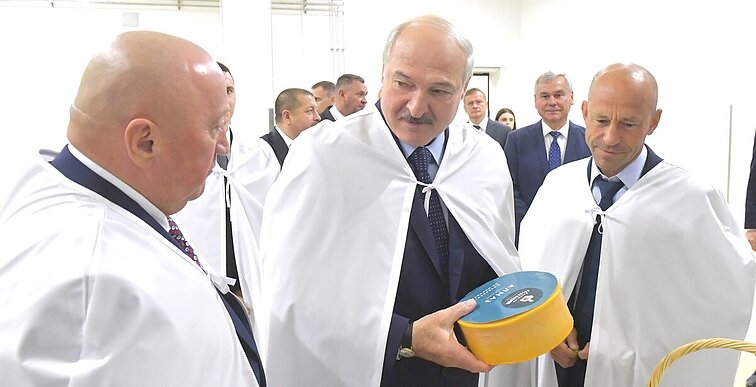
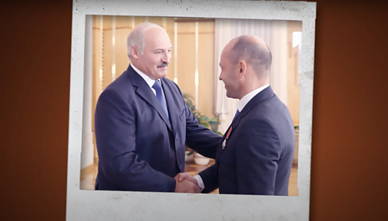
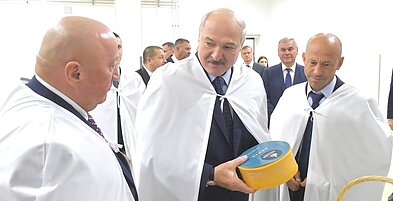
In June 2013, Lukashenko awarded him the Order of the Fatherland. He is also on the central board of the Presidential Sports Club, which is headed by the dictator’s son Dmitry Lukashenko.
In 2010, Moshensky openly supported Lukashenko’s presidential election campaign, and in 2020, he attended the dictator’s “secret inauguration”, despite the mass protests following the rigged presidential elections.
The businessman has also repeatedly enjoyed exclusive privileges reserved for Lukashenko’s inner circle. According to data obtained via CyberPartizan, over the last decade, Moshensky has flown more than thirty times to various countries on Belarusian state planes.
In 2019, he travelled with the dictator’s family to Pisa, Italy. In 2016, he also flew on Lukashenko’s presidential plane from Minsk to Doha. Alongside Lukashenko’s sons, assistants, security and press service, several businessmen were present, including Moshensky, Alexander Shakutin, and Sergey Teterin. Unlike the latter two, Moshensky has not been sanctioned by the EU.

Newsletter
Every Friday morning.