











It is becoming evident that Lithuania must have an indigenous defence industry capable of producing equipment, armaments, and providing services to the Lithuanian Armed Forces. Donatas Palavenis of the Baltic Institute of Advanced Technology gives an overview of available resources.
The success of a small state in this sector could be ensured by offering innovative and functional solutions on the global market, which requires significant expenditure on research and development (R&D). The good news is that such opportunities are available, so it is recommended for Lithuanian entities to look not only for national but also for EU and NATO programs that would foster their R&D potential in the field of defence applications.
EU programs
On June 22, the European Defence Fund officially invited bids from the participants of EU defence industry ecosystem. Lithuanian participants can submit project applications together with consortium partners until November 22.
A total of 1.2 billion euros is planned for this year’s 32 calls. Small and medium-sized enterprises (SMEs) are also invited to participate in two open calls.
Lithuania, proud of its competence in the field of lasers, also has opportunities to participate in scientific research activities to develop laser weapons. The country’s Ministry of National Defence is eager to co-finance national participants who have won invitations to carry out development projects.

Besides the European Defence Fund, the EU is initiating the Defence Innovation Scheme to have an incubator for developing dual-purpose goods, to encourage innovation networking, organise technological challenge competitions, and to create conditions for weapons testing.
When evaluating other EU programs, one can find invitations related to R&D in the field of defence and security, eg HORIZON, DIGITAL, CEF.
Particular attention is paid to the space sector, where R&D can be supported through HORIZON calls and the CASSINI accelerator, whose activities will be implemented by 2027, with 1 billion euros already planned.
NATO initiatives
On June 20, the NATO Defence Innovation Accelerator for the North Atlantic Region (DIANA) published a call for a three-challenge program (energy resilience, secure information sharing, sensing and monitoring).
In each area of the challenge, up to ten startups will be selected in the first stage, each of which will receive 100,000 euros. In the second stage, two startups will be selected and receive up to 300,000 euros for technology demonstration..
A similar number of invitations in the context of DIANA is expected in 2024 and 2025. Participants will be given access to more than ten accelerators and 90 specialised research centres in NATO countries.

Lithuania joined the NATO Innovation Fund, with the total value of 1 billion euros, in 2022. The fund’s activities should be officially announced during the Vilnius NATO summit.
The NATO Innovation Fund will provide venture capital to 23 NATO members, will operate for up to 15 years, and will seek to invest in dual-use technologies that fall into the areas of emerging disruptive technologies defined by NATO.
According to Invega representatives, the fund will benefit Lithuania, as its contributions will be proportional to the size of the country (Lithuania’s contribution over 15 years will total 28.8 million euros). In contrast, gains can be more significant, ie allocated not according to quotas but according to projects proposed by national participants. The NATO Innovation Fund will prioritise projects that successfully pass the DIANA selection stages.
National initiatives
Currently, preparatory work is underway to implement national risk capital measures, which will aim to promote R&D and innovative activities in the field of defence and security in Lithuania.
Venture capital funds ScaleWolf Accelerator and ScaleWolf VC will implement the 13.5-million-euro financial instrument MILInvest. ScaleWolf Accelerator will run pre-acceleration and acceleration programs that include training, consulting, lectures on company building, team building, law, fundraising and other issues, and will make investments in small amounts. Meanwhile, ScaleWolf VC will invest in existing SMEs that develop, manufacture or provide defence and dual-use products or services.

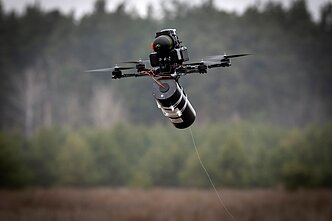
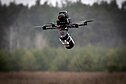
We are still waiting for the announcement about R&D projects ready to be directly financed by the Ministry of National Defence. Last year, one funding call was announced (up to 300,000 euros), which invited national companies to develop loitering UAVs.
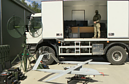
In March, a procedure was established for Lithuanian manufacturers developing defence products to apply for their testing in the Lithuanian Armed Forces. The Defence Resources Agency is responsible for organising the testing.
Other aspects
In addition to financial incentives, there is an opportunity for Lithuanian researchers to participate in the activities of the working groups of the European Defence Agency and the NATO Science and Technology Organization, offering excellent networking conditions, opportunities to coordinate and participate in scientific activities and to share research results.
In June, the Lithuanian Armed Forces signed cooperation agreements with the Center for Physical and Technological Sciences, the Baltic Institute of Advanced Technologies, and the Lithuanian Defence and Security Industry Association, thus enabling these institutions to familiarise themselves with research relevant to the Lithuanian Armed Forces, new technologies, and the needs for improving the available weapons and equipment.

The Lithuanian Armed Forces remain open to identical cooperation with other defence industry firms in the country, which would allow them to grasp the actual needs of Lithuanian or NATO armies and create the necessary solutions.
Concluding notes
There’s a growing number of long-term R&D programs financed from various sources, focused not only on larger companies but also on SMEs and start-ups. Lithuanian defence firms can thus enjoy favourable conditions to reorient their activities to defence R&D and receive the necessary support.
The participants in EU and NATO programs will be allowed to act independently, deepen their competencies, accumulate knowledge, join consortia and create products according to the rules in the invitations.
It is necessary to strive for as many national participants as possible to become more actively involved in programs in the field of defence R&D, which would allow consistent growth of knowledge and attract more significant investments to participate in larger-scale defence programs in the mid-term perspective.
Last but not least is the financial aspect, so it is necessary to encourage national participants from NATO and EU initiatives to attract bigger sums than Lithuania pays into them. Consulting the Lithuanian Armed Forces also remains essential in order to ensure that the developed projects are relevant to the end user.
Donatas Palavenis is junior researcher at the Baltic Institute of Advanced Technology (BPTI).