











The Lituanian parliament is intent on addressing declining population with a “national agreement”, while opposition parties are sceptical it will give any push towards real solutions.
Kęstas, who lives in the village of Bizieriai, picks lime blossoms alone. He would like a companion, but finding one is not easy.
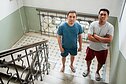
According to Euromonitor, one in three households in Lithuania are like Kęstas, made up of single people living alone. In the last twenty years, the number has almost doubled.
“Single-person households are diverse. They are seniors, probably many of them women, as the difference in life expectancy between men and women in Lithuania is 10 years. Almost twice as much as in Western European countries,” Ramunė Verikaitė, of Euromonitor International, told LRT TV.
Another significant part of single-person households are young people who have recently started their independent life and are in no rush to move in with someone and procreate. Euromonitor estimates that one in three households worldwide will have children by 2040.
In Lithuania, the population is projected to fall from 2.8 million today to 2 million in 2045. Among other things, this will have significant implications for the country’s economic development.

The problem was initially addressed by a special working group in the parliament, Seimas, which presented recommendations in January on how to tweak family policies and to stabilise the labour market.
One of the most controversial proposals – put forward by conservative MP Justas Džiugelis – was to ease immigration. It has not attracted much support from either within the working group or Džiugelis’ fellow conservative MPs.
“The majority of the working group members do not support more immigration from third countries to Lithuania, even though the population is constantly declining,” says another member of the group, Andrius Bagdonas. “Especially as we are already seeing how many foreigners are working in the service sector without knowing the Lithuanian language.”
Now, the parliament is seeking to work out a “national agreement” among the major political parties – both in the ruling coalition and the opposition – setting out a long-term plan how to address demographic issues.
“This is essentially a work in progress, and I am glad that my colleagues have opened their eyes to the existence of the problem, recognising that a national agreement among the parties is necessary to address the problem in the long term,” says Džiugelis, chairman of the parliament’s Committee on Social Affairs and Labour.

However, the opposition is sceptical whether this can really help solve the problems. “Will members of one party have fewer children and those of the other have more? I don’t really believe that can be achieved,” says Algirdas Sysas, a social democratic member of the Committee on Social Affairs and Labour.
However, there is a consensus that measures are needed.
“If we want Lithuania to survive, we have to do everything we can to ensure that young people do not leave Lithuania, that they find jobs here, start families and feel comfortable,” insists Sysas.
“If we take a consolidated, comprehensive approach, including family policy, more active participation of older people in the labour market, even more active participation of pensioners in the labour market, which is encouraged in Europe, we will see that the labour market is much more diverse than importing or transporting people to the country,” believes MP Linas Kukuraitis, vice-chairman of the Committee on Social Affairs and Labour.
Džiugelis says that politicians will have to also discuss the controversial topic of immigration.
“What we can agree on is that demographic challenges are in principle a threat to our national security and to us as a country, I think that is the essence of the matter, while concrete plans of measures will be the subject of discussion with parliamentary parties,” he explains.
The committee has until October 1 to prepare the proposal for the national agreement on demography.

Newsletter
Every Friday morning.