













After Berlin confirmed it would deploy 4,000 troops to Lithuania, Vilnius officials said it showed that the pressure on Germany has worked.
"We have received some criticism that we have taken a very hard line, that maybe it's not nice and we should not do that, maybe we cannot defend our interests. Clearly, it's not only possible, but it’s also necessary to defend one's interests," said Prime Minister Ingrida Šimonytė.
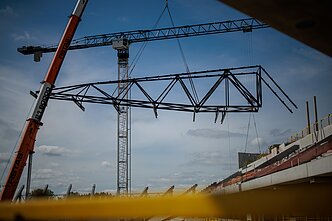
"We have always said that we are ready to put the infrastructure in place to host a full brigade and we will do so regardless of the ongoing negotiations," she said at the parliament on Tuesday.
In the wake of Russia's full-scale invasion of Ukraine, Vilnius and Berlin agreed to assign a German brigade to Lithuania.
However, it later emerged that the two countries had different positions on the issue, with Vilnius seeking a permanent presence and Berlin saying that part of the brigade would be stationed in Lithuania and the rest would stay in Germany.

Foreign Minister Gabrielius Landsbergis was particularly active on the issue, publicly pressing Berlin and suggesting that Germany "probably regrets" having made such a commitment. This rhetoric was criticised by Lithuania’s President Gitanas Nausėda and parliamentary opposition parties.
During his visit on Monday, German Defence Minister Boris Pistorius announced that Berlin was “ready to permanently deploy a brigade in Lithuania,” conditional on the necessary infrastructure.
Vilnius aims to have the brigade in place by 2026.
"I will be happy if it’s done sooner,” the prime minister said.
Speaker of the Lithuanian parliament, Viktorija Čmilytė-Nielsen, also said that Lithuania’s efforts to convince Berlin paid off.
“One can ask if this good decision was taken because we were very active," she said. "Maybe that helped too".

However, Kęstutis Budrys, adviser to the Lithuanian president, downplayed the decision’s importance, saying he did not consider it to be a change in Germany’s position.
"First of all, we did not have an answer on the date. Second, we had no information on the size of the brigade that will be deployed in Lithuania, what it will look like and what it will consist of,” he said. “We didn't have that answer, [but] now we have that answer.”
“That's why I disagree with those who say there was a change of position yesterday, something happened in Germany, something new happened," Budrys added.
Nausėda previously defended the joint communique signed between him and his German counterpart, Olaf Scholz, in June last year, saying the two countries agreed for troops to be deployed in Lithuania in due time.

Newsletter
Every Friday morning.