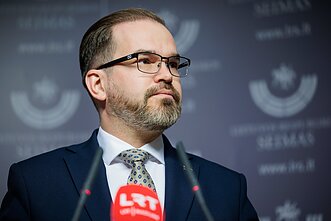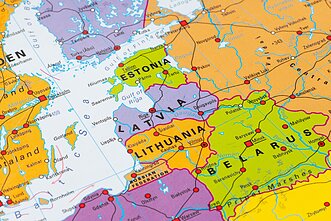















Lithuania’s parliament has set salaries for local government politicians to replace the existing allowances for office needs that have recently sparked a misuse scandal.
On Tuesday, 116 MPs voted in favour of the changes, two were against and nine abstained. Once signed by President Gitanas Nausėda, the changes will come into force in July.
Under the bill, local council members will get payments equivalent to one fifth of the salary of the mayor in their specific municipality. Moreover, the new law scraps the existing provision allowing councillors to get reimbursements for expenses covering office, postal, telephone, internet, transport, office lease, and other activities linked to their municipal duties.
Audrius Petrošius, a member of the parliament’s Committee on State Administration and Local Authorities, estimates that councillors’ net salaries will range from 640 to 805 euros, depending on the size of their municipality. They will also receive bonuses depending on the working experience and other factors.
Further reading
The debate on councillors’ use of money allocated for office needs has recently sparked a scandal in Lithuania after it turned out that some local politicians had used the maximum possible amounts without providing proper evidence.
Education Minister Jurgita Šiugždinienė, who had formerly served in the council of Kaunas, had to do some explaining of her undocumented expenses and was eventually forced to resign. Finance Minister Gintarė Skaistė and Culture Minister Simonas Kairys, both former Kaunas councillors, have also received questions on the use of their allowances.
In response to the crisis, the ruling conservative Homeland Union–Lithuanian Christian Democrats (TS-LKD) proposed to hold an early general election, but the parliament, Seimas, voted the motion down. The TS-LKD argued that the election would have allowed to “reset” the entire political system.
Further reading

Newsletter
Every Friday morning.