














Lithuania has welcomed a political agreement in Brussels to establish an Anti-Coercion Instrument, which would help against China’s de facto trade sanctions.
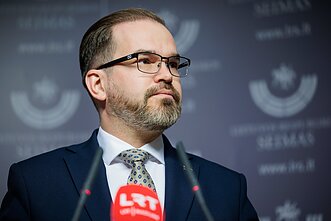
“The EU will now have an instrument to defend against dictators who impose informal sanctions against the EU. Lithuania has stepped up the EU’s legislative process by resisting China’s special trade operation,” Lithuanian Foreign Minister Gabrielius Landsbergis said in a press release.
Relations between Lithuania and China nosedived after Vilnius allowed Taipei to open a representative office in 2021. In response, Beijing downgraded diplomatic ties and imposed de facto trade sanctions against Lithuania.
On March 28, the European Parliament, the Council of the European Union, and the European Commission reached a provisional political agreement on shielding member states from economic coercion by third countries.
The tool, which needs to be adopted by the European Parliament and the Council, would allow retaliation with trade, investment, and funding restrictions.
Landsbergis called it a “vital instrument to deter economic intimidation and defend EU interests”.

Newsletter
Every Friday morning.