











The war in Ukraine, waged by Russia, has forced over 8 million people to seek refuge outside the country. Looking through the lens of people of different ages, professions, and statuses helps to understand how, persevering through personal tragedies, they return to some sense of “normality”.
More than 80,000 Ukrainians have sought asylum in Lithuania. Despite the language barrier and psychological trauma, Ukrainians such as Alexander, Iryna, and Svitlana are successfully integrating into society with unprecedented support from local communities. While grieving for the ongoing war in their homeland, these Ukrainians are grateful for the great empathy they have received from Lithuanians.
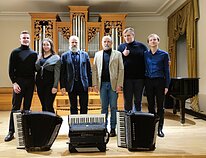
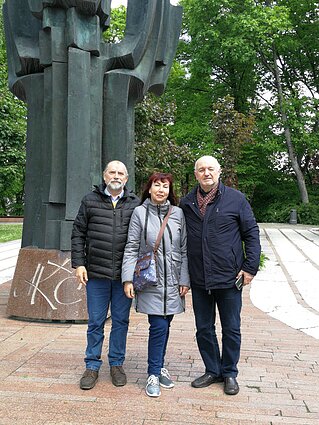
Alexander Soroka is a 69-year-old musician who arrived in Lithuania from Mariupol in early April 2022.
“We put our hopes in our defenders. But the enemy turned out to be insidious and we witnessed a real hell,” Alexander recalls.
Cut off from water, heating, electricity, and communications, the city was under constant shelling, making it life-threatening to leave home. “However, we could not do without it – the water supplies were dwindling, and we had to cook outside. We drew water with buckets from a huge tank in the bread factory yard. It became riskier and riskier, and two of our neighbours did not return from that mission,” Alexander says.
“We learned to distinguish high-altitude bombers from fighters by their pitch.
“Decision to flee the besieged city on foot came after we saw the fragment of a missile, flying through a small ventilation hole in the basement, kill our neighbour just in front of our eyes.
“Behind us were the remains of burnt-out buildings, cars, and dead bodies. Some were wrapped in carpets; others were scattered around. It was the picture of the apocalypse.”
Due to their age, Alexander and his wife could avoid the Russian filtration camps. Finally, they came to Lithuania, where his daughter also fled from Kyiv. With the Lithuanian volunteer organization Stiprūs Kartu (Strong Together), they found peaceful shelter in the family house of Vidmantas and Alma.
Alexander is grateful for the opportunity to continue the work of his lifetime, writing a biography of a Ukrainian composer.
“All the drafts, my laptop, notes – the work of a decade – all remained in the burned house in Mariupol. I had to restore everything. One day our hosts told me about a support programme for people of art from Ukraine. Another friend of mine, Eduardas, helped me apply for it.
Alexander says the indignation towards the occupiers is unspeakable. “Our best people full of dignity perish in battles. It ignites my strong desire to join the fight. Yet I must acknowledge that at 70 years old, I would not be of much assistance. I’m trying to be useful in my own field: building stronger ties and a deeper understanding of music in particular, between Ukraine and Lithuania.”
“I feel great empathy from Lithuanians with every step I take.”
Alexander is grateful to his hosts Alma, Vidmantas, and fellow musician Eduardas.
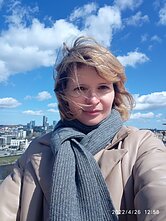
Iryna Smolyar, 48-year-old history teacher, was looking forward to February 24. The “Teacher of the year” ceremony was to take place and Iryna was to receive the award.
“When it all started, I got a panic attack: for 10 days I could not eat or drink or sleep. I decided to leave Ukraine when I heard about the rape of the girls in Chernihiv. My nervous system gave up,” Iryna confessed.
However, it was not possible to board an evacuation train. They were completely jammed, and so they drove by but did not stop.
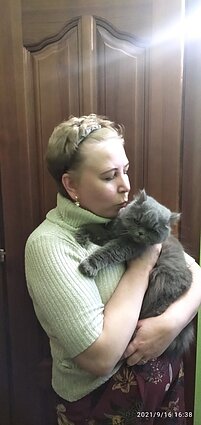
One day there was a rumour that the Red Cross would evacuate people to Lithuania by bus. Then she made up her mind to go. The air alarm was constantly on and to the sound of the siren, an explosion caught Iryna in the middle of a street. She was on the way to her friend with whom she wanted to leave her cat.
“I had the impression that it was not with me, something absolutely surreal.”
Iryna and her youngest son ended up in Vilnius. “We got to very good people, to whom I am eternally grateful,” she says.
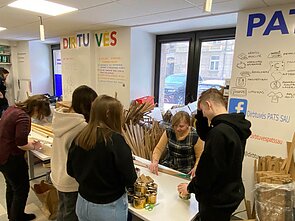
Iryna immediately got a job as a cleaning lady in a Lithuanian school. Then she worked as a dishwasher for two months.
“I tried to load myself to the fullest so that there was no time left for thoughts.” The woman continues to work with a psychologist, even though she already feels better. Since September, she is a history teacher again.
Iryna knows first-hand about the situation at the front. Her older son voluntarily went to the Ukrainian Armed Forces.
“As a history teacher, I answered my students back in December whether the Russians would attack, and I knew they would.
“But again, and I do not want my prediction to come true, I think that the nearest this war will end is in a couple of years. And certainly, with our victory.” Lots of Iryna’s friends and acquaintances stay in Ukraine. They say, Iryna shares, it is a myth one can get used to war.
“Getting used to sirens, to a constant risk to life is impossible. Everyone in Ukraine is under the crosshairs.”
Now Iryna is taking the second Lithuanian language course. “I’m discovering Lithuania as a country and an interesting cultural environment.
“Overall, I have not come across any unworthy people in Lithuania. I see honourable and kind people around me.”
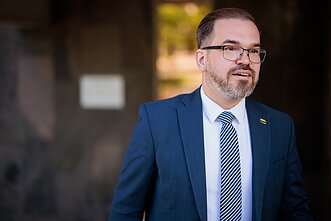
The town of Brovary is situated on the outskirts of Kyiv. Svitlana Bogachuk, 40, lived there with her husband and three children.
She fled to Vilnius with the kids on March 3. First, they managed to escape from the town to the village of her mother where they had a decent basement. On the way, they saw a burning military unit and a bunch of roadblocks all over. It was scary and dangerous to drive because of the possibility of shootings.
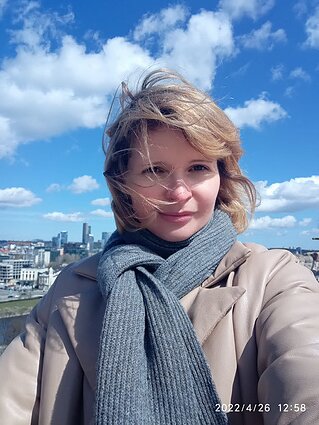
In the basement, it was a little calmer, Svitlana recalls. Still, the news of what is happening around – Bucha, and Irpin were nearby, did not let her breathe calmly. “We didn’t even know back then how to identify ours and Russian soldiers.”
“Sitting in the basement we suddenly heard a very loud noise. It turned out to be the knocked-down gate. My dad went out and saw a tank and soldiers standing in front of our house.”
Fortunately, they were Ukrainians, driving to the nearest road to block approaches to Kyiv.
On February 28, they decided to leave for the border. She was impressed with the people waiting for Ukrainians, carrying warm food and ready to take refugees to their own homes. “When we were at the border, friends from Lithuania called us and offered to help. So we went to Vilnius,” Svitlana says.
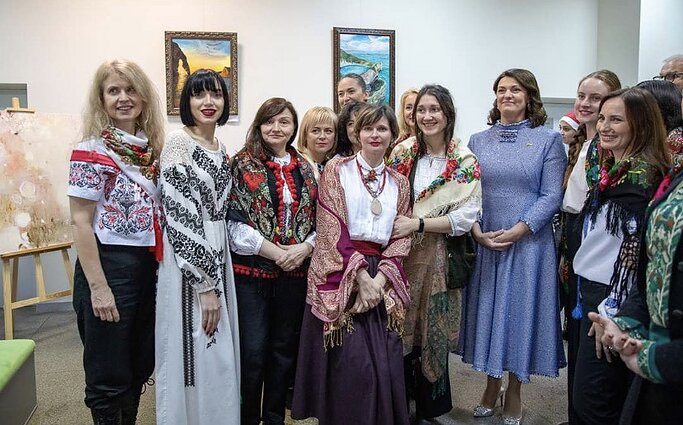
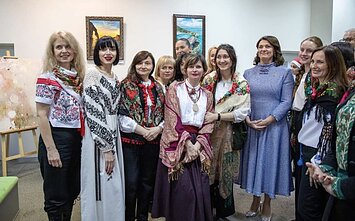
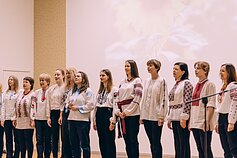
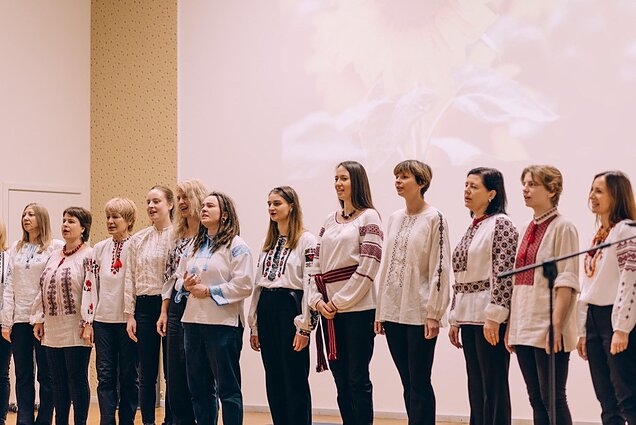
“I am a mother of three: two teenagers and a 4-year-old. Kindergarten for him lasts until 3 PM, so I can’t work full-time,” Svitlana says. “I decided to register as self-employed. Now I work at the Ukrainian Centre as an SMM photographer, it’s volunteer work and I like it. And I sing in an amateur choir of the Ukrainian Centre. We have already performed with Eurovision participant Monika Liu, and at the solo concert of Gabrielė Vilkickytė.
“In Ukraine, we are fighting for our freedom against pure evil. But it’s our country and we have to do it. We want to return home.”
Svitlana thinks the war will last for some time, and Ukrainians should be ready to face difficult times.
“I had never been to Lithuania before. But I am very grateful to Lithuanians for this important support now.
“Everyone was concerned about our feeling and surrounded us with care and support. They helped us calm down so that we started to think, not be afraid,” Svitlana says.
Lithuanians supported her children a lot, she adds. She is particularly grateful for day camps for thousands of Ukrainian children. They had the opportunity to first get accustomed to the new environment among their Ukrainian peers and then to integrate.

Newsletter
Every Friday morning.