









The Belarusian government’s pick for the new foreign minister indicates that Minsk is not shutting the door to engagement with the West, however fraught it is at the moment.
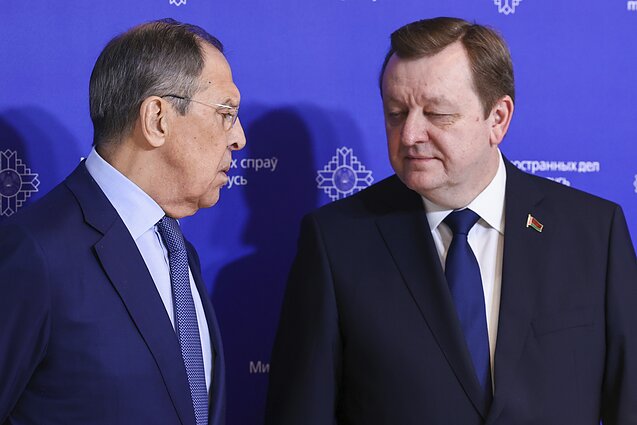
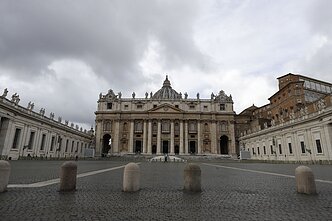
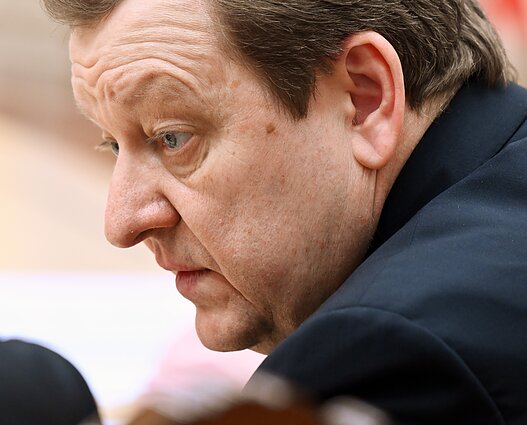
Alexander Lukashenko’s new foreign minister, Sergei Aleinik, is well known to Western diplomats, and especially to the Holy See, which is particularly important for the Minsk regime as it prepares plans to survive beyond the war in Ukraine.
With the sudden death in November of Belarusian Foreign Minister and Lukashenko’s long-time associate Vladimir Makei, Western experts said that the Minsk regime had come to a crossroads, where the choice would show how it saw its future.
In mid-December, Lukashenko announced that career diplomat Sergei Aleinik would become the new minister. Until the appointment, 57-year-old Aleinik served as first deputy foreign minister and represented Belarus at the United Nations, the Vatican and the United Kingdom. He has never openly defended the Russian invasion of Ukraine.
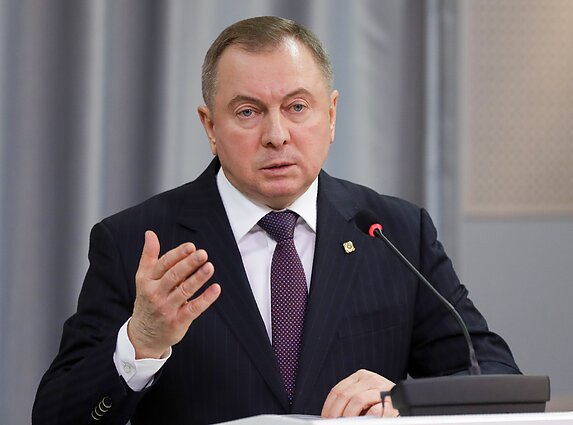
Aleinik’s appointment shows that Lukashenko does not want to close the door on relations with the West and hopes to reopen them once the situation is better, says Pavel Slunkin, a former Belarusian diplomat.
“I think the idea behind his appointment is to try to reach out again to Western countries, institutions and organisations,” he tells LRT.lt.
Vatican springboard
Aleinik spent his entire career in the diplomatic corps and was a close associate of the former foreign minister. Although he has been identified in the public sphere since 2017 as a possible successor to Makei, his position in the Belarusian political arena is not so solid.
Slunkin believes that he will now have to fight for his place, as he does not have a close relationship with President Lukashenko that his predecessor enjoyed.
Aleinik has been an ambassador to different countries and has held different positions in the Ministry of Foreign Affairs, including deputy minister. He was also Minsk’s ambassador to the Holy See.
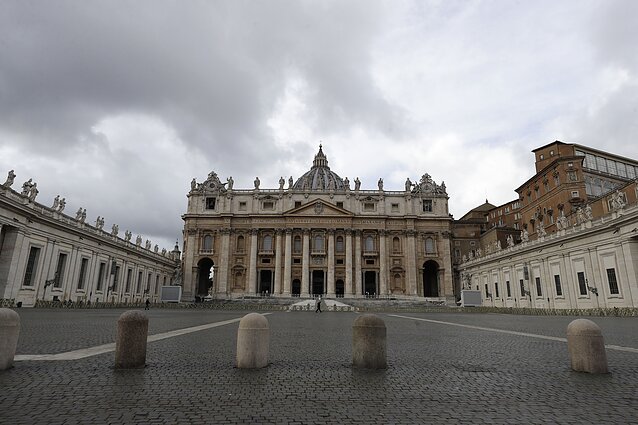
One of the first foreign delegates to meet Minister Aleinik when he took office was the Holy See’s nuncio to Belarus, the Croatian Ante Jozić. At the meeting on January 16, the Vatican “reaffirmed its commitment to continued active cooperation”, according to the Belarusian news agency BelTa. The situation in the region and possible cooperation on various issues were also reportedly discussed.
The Belarusian opposition has previously accused the Holy See of being too cautious and appeasing in its approach to the government’s crackdown on protests following the 2020 presidential election in Belarus. For example, although at least 10 priests were detained during the 2020 protests, the Catholic Church has refrained from making strong public statements.
The controversy over the refusal to allow Polish Archbishop Tadeusz Kondrusiewicz to return to Belarus has been quietly put to rest by replacing him with Archbishop Jusof Staneuski. This relationship continued after the Russian invasion of Ukraine, for example, when Makei died suddenly, and Jozić celebrated mass for him.
Lukashenko may see the Holy See as a lifeline to help Minsk, at least in some way, to return to the international stage after or even during the war. As Artyom Shraibman, an analyst at the Carnegie Endowment for International Peace, told LRT.lt, it was the Holy See that was the driving force behind Minsk’s thaw in relations with the EU.
“It is the Vatican that Lukashenko used to visit every time he started travelling to Europe. The Vatican was also the first place where he was met and welcomed in the West. Perhaps they want to start activating this channel of diplomacy to use the Vatican to engage with the West,” he tells LRT.lt.
As notes Slunkin, who has worked in the Belarusian Foreign Ministry himself, the Vatican has always tried to maintain warm relations with Belarus, and Minister Aleinik is particularly well known for his many years of experience in dealing with the Holy See and the Order of Malta.

“The nuncio said in one of his last interviews that Minsk could be a good place for talks [between Russia and Ukraine],” Slunkin stresses.
The position of a mediator is a familiar one to Belarus, and it is one that would help Belarus escape its pariah status. Belarus did not recognise the independence of South Ossetia and Abkhazia after Russia’s 2008 war with Georgia, and after 2014 it did not recognise Crimea to Russia.
Every crisis in the region gives Lukashenko a chance to “get back in the game”, says Slunkin.
“I wouldn’t put money on Lukashenko succeeding in thawing relations with the West, that’s just too bold a prediction, but if it happens, which is certainly not impossible, Aleinik will play a role,” Shraibman tells LRT.lt.
Western ministry
The Belarus government has grown particularly close to Russia since the 2020 opposition protests, but Aleinik’s appointment shows that Lukashenko does not want an entirely pro-Russian Foreign Ministry, Slunkin believes. Now, with the war in Ukraine, the ministry’s work is almost paralysed, as it has always been responsible for relations with the West.
“I think that Mr Aleinik’s main goal in such difficult conditions would be to get something and show that Belarus has another role in the war,” says the former diplomat.
Indeed, Belarus has declared 2023 the year of peace and creation, but at least for the time being, Lukashenko is only engaging in showmanship against the West.
According to Slunkin, Lukashenko is now trying to show that he does not want to go to Ukraine with his troops, but it would be naive to expect, for example, the release of Belarusian political prisoners now.
The Belarusian Foreign Ministry is not responsible for relations with Russia, but with Moscow’s near-total isolation in Europe, it could once again emerge as an important player on the international stage.
Slunkin points out that although Minsk propaganda echoes Moscow’s narratives, the Foreign Ministry has never publicly supported the war in Ukraine. Although Minsk does not maintain ties with the West, this does not mean that Belarus does not pursue its own foreign policy.
“Belarus still maintains effective diplomatic contacts: it cooperates with countries in Latin America, Africa and Asia, and their policies are certainly not dependent on Moscow,” says Slunkin.
Russia not too weak, but not too powerful
Belarus’ biggest dilemma at the moment is Russia’s war in Ukraine. Although analysts have long wondered when Belarus would join the invasion with its own troops, this has not happened in 11 months.

Analysts had hoped that the news of joining the war would be announced in December, after the meeting between Putin and Lukashenko in Minsk, but as Shraibman says, it is now clear that the Russian president did not even ask for it, and all the facts show that Moscow does not need Belarusian military involvement at the moment.
“Now that Russia has an almost unlimited number of reservists at home, why does it so desperately need an additional 20,000 Belarusians who are poorly motivated, poorly equipped, have no combat experience, and whose society does not support it, and who will certainly be reluctant to go to a war zone?” Shraibman asks.
However, Putin does feel supported by Belarus, and the visit to Belarus was more to show his appreciation for Lukashenko at a critical time when even some former comrades are not entirely behind his back.
Shraibman believes Lukashenko will try to keep his troops out of the war in Ukraine at all costs, while Putin will have to use pressure and creativity to force him to change his mind.
One of the methods could be an alleged or provoked Ukrainian strike against a target on Belarusian territory.
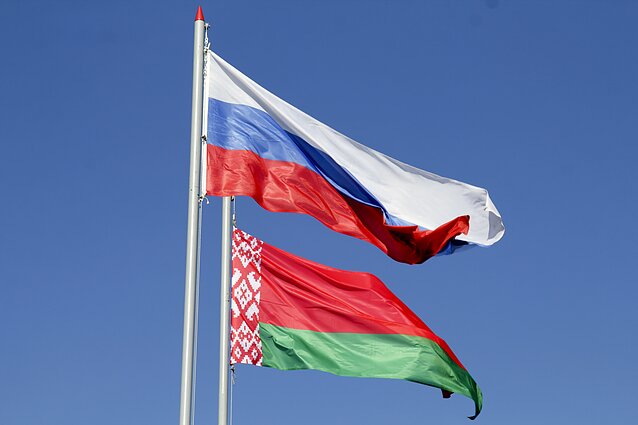
This was mentioned earlier this year by Alexei Polyshchuk, an official of the Russian Foreign Ministry, who visited Belarus. According to him, Minsk could join the war if Kyiv attacked Belarus or Russia. However, Ukrainian intelligence claims that such statements are more aimed at diverting Western attention or distracting Ukraine.
Lukashenko is now at a crossroads where both a Russian victory in Ukraine and a Russian defeat could spell the end of his regime. According to Shraibman, Putin’s defeat in the war would put him in a similar situation to that of the Polish Communists when they began to lose the support of the USSR. A Kremlin victory could mean that Belarus would be the next target after Ukraine.
“The first crisis Lukashenko will face will probably be his last,” says the expert.
This is why Lukashenko is now considering the most neutral solutions, in which Russia would be neither the winner nor the loser, and Minsk could present itself as a defender of peace, an agent of diplomacy, and still be useful to the West.
“He is interested in anything that would leave Russia neither too weak nor too powerful,” says Shraibman.

Newsletter
Every Friday morning.