















Lithuania’s 2022 GDP estimates are better than expected, although economists warn of a rocky year to come.
Statisticians have taken stock of last year’s results: Lithuania’s GDP grew, prices rose, and the average income also went up. However, real wages have fallen by almost a tenth due to inflation.
Some economists say that these results are cause for celebration, because the Lithuanian economy has remained vibrant in spite of uncertainty. Others warn that, looking ahead, a recession may kick in this summer.
Strong results
Lithuania’s industry was booming last year. It sold almost a tenth more products than the year before and for higher prices. But the cost of raw materials, gas, electricity and raw materials also rose sharply.
Lithuania’s economy, although inched down by 0.4 percent in the last quarter of the year, has maintained its annual growth of 2.2 percent. The country’s GDP totalled 67.1 billion euros.

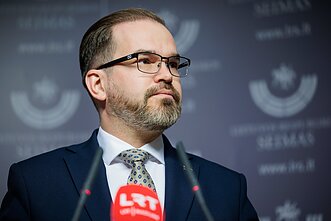
“It seems that we are in the top five most successful economies and, you know, with the highest inflation rate,” says Boguslavas Gruževskis, head of the Centre for Social Sciences. “We should be happy with the dynamism of the Lithuanian economy. Whichever indicator you take, you’ll see resilience everywhere. First of all, of course, industry.”
However, inflation has eroded the purchasing power of many. Prices were rising almost every month last year.
Record inflation
Consumer goods went up by 25.2 percent, services appreciated by 13.2 percent. But what really hit households was a whopping 34.7-percent rise in food prices.
Last year’s inflation was unprecedented in three decades.
“We all pay more. Either I have more income or less income. Of course, when I look at how much I have to pay for gas, it makes me shiver,” Gruževskis admits. “My wife says, maybe we’ll turn it all off.”
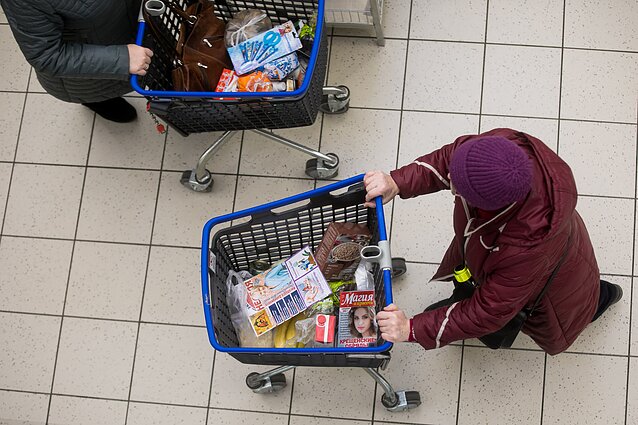
Average incomes also rose last year.
“But inflation eroded it. And real wages have fallen by 7 percent, which is not good,” says Jūratė Petrauskienė, head of the State Data Agency.
People have cut back on consumption. Although consumer optimism in December was the highest in 10 months, according to economists.
“I think that rising interest rates are actually becoming the main factor dragging down Lithuanian consumption. [...] Because data from the Bank of Lithuania show that interest rates on new household loan contracts are 5.4 percent,” says economist Aleksandras Izgorodinas.

Recession expected in summer
Interest rates are likely to rise further, which will primarily slow down the housing market.
Nevertheless, economists say this year will be hot. The first half of the year will be good, and the second half will be rocky. A recession in the US and an economic acceleration in China will be at work. Commodities, including gas and electricity, could become even more expensive.
“All in all, […] The crisis will come, but it will not come at the beginning of this year, but more towards the summer,” Izgorodinas predicts.
Inflation, however, may start to ease earlier. Around the summer, there may be months when instead of inflation, statisticians will record deflation.

Newsletter
Every Friday morning.