










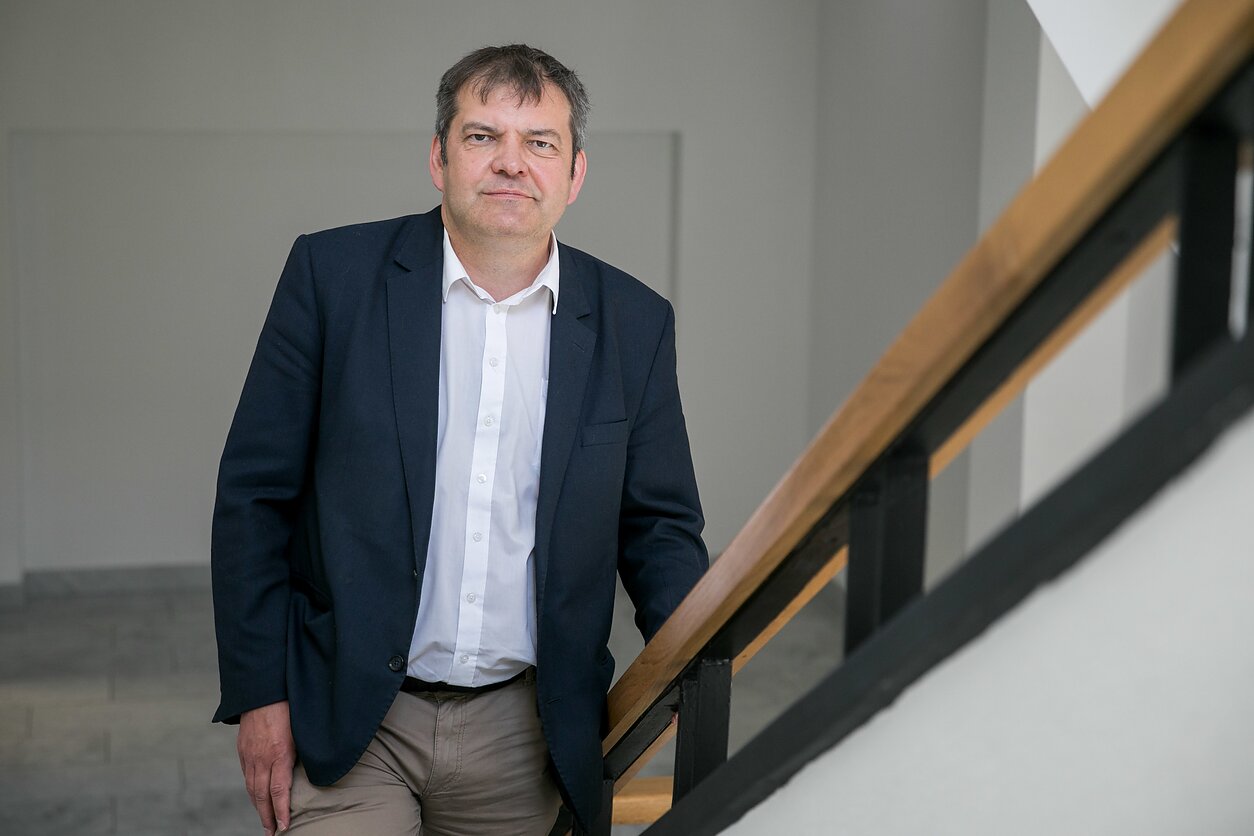
The Ukraine war has prompted a number of initiatives in Lithuania, seemingly directed against the Russian culture. Political scientist Andrzej Pukszto argues that demonising local Russian speakers for their assumed pro-Putin views is a dangerous path to take.
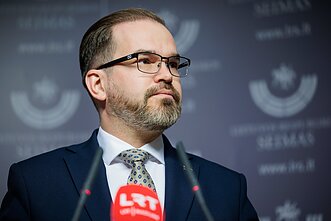
“In today’s world, language is becoming a tool and not the goal,” says Pukszto, an associate professor at Vytautas Magnus University in Kaunas, in an interview with LRT.lt.
According to him, initiatives to phase out Russian-language education will only expose the Baltic states to Putin’s propaganda as well as accusations of not taking minority rights seriously.
What do you make of the results of surveys suggesting that there’s more hostility in Lithuania not only towards Russia, but also local Russian speakers?
People are not perfect. And if we look at trends in Western Europe, we see that whenever the situation heats up, tolerance for other nations is put to great test. […]
But in this case, the change in sentiment towards the Russian-speaking population of Lithuania was quite quick and, I would say, very primitive. There is a war going on, Russia is the main aggressor, and we are looking for enemies in our own back yard. This leads nowhere.
Even if there are pro-Putin statements [in Lithuania’s Russian speaking communities], speaking about some sort of collective responsibility is unacceptable, let alone about collective global responsibility. This is, of course, a very dangerous thing.
A wave of ethnic strife – no matter what direction it takes – is always a very dangerous thing. Our [Lithuanian] political leaders, intellectuals and workers of culture, education and science play a big role here.
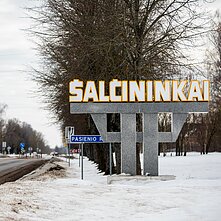
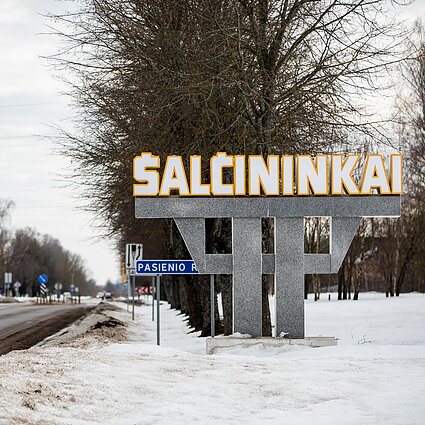
How widespread and loud these pro-Putin opinions are? Should we be worried about the situation in Russian-dominated towns, like Visaginas or Šalčininkai?
I would like to unlink this issue from ethnicity. Pro-Putin sentiments are quite horizontal and affect specific ethnic communities only slightly. They are present among Lithuanians, Latvians, Poles, as well as among Jews and Belarusians.
So framing the problem in national terms is a very dangerous road to take. […] Ethnic minorities, like religious minorities, are a very vulnerable part of society.
But if we are talking about pro-Putin views, there are enough of them among ethnic Lithuanians themselves, including those who live in emigration. […] I think we shouldn’t focus – as the media and politicians often do – on Visaginas or Šalčininkai.
Lithuania has been engaging in, if you will, symbolic fights – renaming the Russian Drama Theatre in Vilnius or the Alexander Pushkin School in Kaunas. There are calls to rename the Russian Street in Vilnius. What do you make of these initiatives? Some of them are targeting symbols that Lithuania’s Russian-speaking community is identifying with, although, remarkably, few have publicly reacted. Doesn’t that make the Russian community voiceless, unable to respond to what’s going on without the risk of being called traitorous?
Yes, I see this as a problem. But there is no magic wand to solve it.
When it comes to renaming [streets and institutions], I do not think that it will bring any dividends in the field of building civil society.
Our goal is to build civil society, to make our it stronger and more democratic. And if we want to strengthen our civil society –we certainly do – then we have to take up some far-reaching projects and reforms.
Another thing is that in today’s world, language is becoming a tool and not the goal. Nation-states, nationalism are things of the 20th century, while the 21st century is one of multinational cultural societies.
Our goal is not a national society, not a closed one-culture society, our goal is the development of democracy, of civil society. Language is only a tool, and we want to make it the goal –it seems to me that we are a little bit out of step with the times.

It is a little different in Western Europe. In Eastern and Central Europe, everybody is more sensitive, there are some old wounds that are opening. So we have problems with tolerance in all areas of public life.
But even Germany’s former chancellor, Angela Merkel, once said that multiculturalism in her country failed.
I don’t think it failed. If you went to Berlin or to the USA, you wouldn’t think it failed. Multiculturalism and tolerance are the basis of a functioning society over there.
But when it comes to our region, the mayor of Riga recently said that attempts to integrate Russian-speakers in Latvia failed. Lithuania, at least until recently, was held up as a better example in this respect though.
In my opinion, Lithuania has done two things righty. One fundamental thing is granting citizenship in the 1990s to all who wished to become citizens of Lithuania. And the second thing is preserving schools that teach in ethnic minority languages. Russian-language schools were and are preparing loyal citizens of the Republic of Lithuania.
And here language becomes, as it were, an instrument of civil society, of democratisation.
We should ask ourselves what is more important: to have a young person who speaks perfect Lithuanian, bur has doubtful loyalties (after all, one can praise Putin and aggression in Lithuanian, there are a lot of such examples), or a person with a civil position who supports democracy? Here is the tightrope we are walking on.
Still, there are calls to phase out Russian from Lithuania’s school, at least as a foreign language subject. Latvia has already made such a decision.
There are inclinations in this direction and they are quite strong. But my personal opinion is that it will not lead anywhere.
How will it backfire on us?
This is the easiest way. Because Latvia, for example, is already on its way to closing Russian schools, this will be used by Putin’s propaganda. On the other hand, the Council of Europe and EU institutions will consider it discrimination, since all Baltic states have signed the Framework Convention for the Protection of National Minorities. Protecting ethnic minorities is also part of the general system of human rights. […]
The Lithuanian authorities do not seem to be concerned about it at all. After all, the Law on National Minorities has been lying on the shelf for 10 years.
I think the goal is clear to everyone, only opinions differ on what tools to choose, what roads to take.
When it comes to the Russian-speaking environment, I see some positivity in that Vilnius is becoming a centre of anti-Putin opposition. The Free Russia Forum, for example, will be held here again.
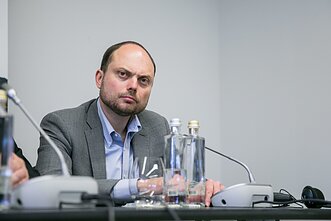
This also shows to the society that there is a Putin world, but there is also a non-Putin Russian world, a non-Putin Russia. Both [Mikhail] Khodorkovsky and [Gary] Kasparov come to Vilnius, as do political refugees from Russia.
Once again, we agree that we have a goal to overcome Putin’s aggression, but it’s all about which tools to use for that.
What tools should it be, in your view?
I think the focus should be on two issues. The first is education. I think that Lithuania needs to preserve the system of Russian-speaking schools.
And here Lithuania can present itself as a country with wonderful traditions, with an excellent system of education for ethnic minorities. We have to preserve both Russian-language and Polish-language schools, strengthen the teaching of the state language and civic society basics, and provide students with good textbooks.
The second important thing is to support media in minority languages and promote tolerance through media channels, including Lithuanian-language media.
Add to that what I mentioned in the beginning: the responsible attitude of political leaders and intellectuals is very important, they are the ones who come first.

Newsletter
Every Friday morning.