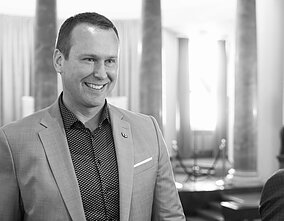








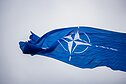
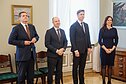
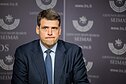
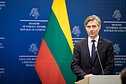


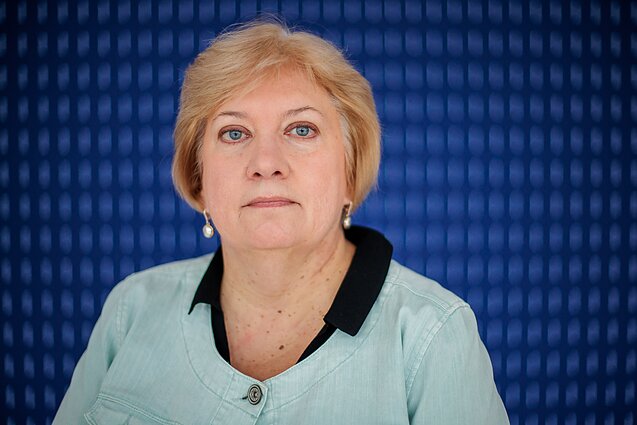
Lithuania was the first country in NATO history to appoint a woman ambassador – Gintė Damušytė-Damušis. At the time, Lithuania did not realise that it shattered the glass ceiling, the former diplomat says in an interview with LRT.lt.
According to Damušytė-Damušis, however, the most important thing is that Lithuania became a NATO member because, without it, Russian President Vladimir Putin would have already returned to the Baltic states.
Damušytė-Damušis’ diplomatic service began in 1991 and ended in 2021. During this time, she served as Lithuania’s ambassador to NATO, OSCE, Austria, Slovakia, Croatia, Canada, Denmark, and Iceland, as well as Foreign Ministry’s ambassador at large.
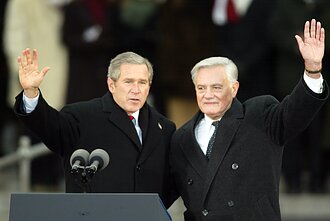
Twenty years have passed since George W Bush’s famous speech in Vilnius. At the time, you were already the Lithuanian ambassador to NATO, although Lithuania was not yet a member of the alliance. What did this speech mean to Lithuania back then?
I think Bush’s words that the enemy of Lithuania will also be the enemy of the US reflected a change in thinking that has taken place not only in the US but in NATO as a whole. For example, when I was assigned to NATO, I started a cycle of courtesy visits.
Lithuania was then a member of the Euro-Atlantic Partnership Council. I wanted to introduce myself to the ambassadors of the NATO countries and my colleagues in other partner countries. I was shocked that nobody, especially among the ambassadors of the NATO countries, wanted to talk about NATO enlargement. For us, this was one of the main strategic foreign policy objectives.

Bush’s speech certainly reflected a change in thinking because there were sceptics, especially experts, who predicted that the Baltic states would never become members of NATO or that defending them would be very difficult, which would be an obstacle to NATO membership. For the US leader to say bluntly that he was committed to defending Lithuania’s security was an extremely significant event.
Would you call this a breakthrough that opened the door to NATO for Lithuania?
I think that breakthrough happened on 9/11 because then the US realised it needed to focus on a larger coalition and not exclude small countries. It saw that the states invited to become NATO members not only exploit the security provided but also help to create that security.
After 9/11, NATO countries met separately to discuss how to respond, and Lithuania, as the leader of the Vilnius Group, convened the candidate states and said that we must also respond, we cannot remain passive. We drafted the statement [...] and read it at the next plenary session of the Euro-Atlantic Partnership Council. We expressed our solidarity with the US and suggested that, if necessary, the US could use our airspace.
The turning point was the fact that the countries that were invited were very serious about preparing for membership. At one point in the integration process, there was an idea of inviting one Baltic state to join NATO. But we then decided that it should be done in a spirit of solidary, and all those who wished to become NATO members should be invited. We pursued our Membership Action Plan with determination, ignoring the sceptics’ predictions.
And there were also sceptics in Lithuania who said that we should invest in education instead of security. We had to deal with all that scepticism with evidence that we were serious about preparing for membership, that we were not only exploiting security but also paying our dues to security. It was a turning point for us too because there was a time when we depended on others’ help. [...]

Some cases significantly contributed to the formation and strengthening of our armed forces, the acquisition of practical knowledge. For example, Denmark was the first country to include Lithuanian troops in its units for peacekeeping operations in the Balkans. This was an extremely important experience. But then we realised that we had to participate in NATO operations and missions ourselves.
How do you remember Lithuania’s journey to NATO?
I attended the Seimas session when the decision was taken to send Lithuanian troops to the Danish peacekeeping operation. Those who objected this decision were a minority. They said that we cannot take risks, that we need to take a different approach to security. Some even proposed neutrality as a possible option, but the political leadership at that time had already made up its mind.
There were also people in the political leadership who were influenced by the Soviet propaganda that NATO was an enemy, a warmonger. We also needed to educate the political leadership.
How much education was needed?
When I came to Vilnius from Brussels, I always visited the prime minister, the president, the Foreign Affairs Committee, and I informed them about the discussions taking place in NATO headquarters.
The aim was to reassure everyone that NATO is a collective defence alliance that seeks to maintain stability, that it is committed to its member states, and that it is certainly not an aggressive alliance.
When the serious discussion about NATO enlargement started, some Western analysts said that the Cold War is over, so NATO no longer has a mission, that it was time for NATO to shut down. But there was probably not a single NATO member which would have accepted that. There were also a lot of countries that wanted to join NATO and contribute to the objectives of the alliance.
You were the first female ambassador to NATO. What were the people’s reactions to this?
I think we didn’t realise that with Lithuania’s accession to NATO, we also shattered the glass ceiling with the first female ambassador. I didn’t realise that, and I guarantee that the Lithuanian leadership itself didn’t realise what it had done.
The then secretary general of NATO probably paid more attention to this than Lithuania itself. He welcomed the invitation to Lithuania to join NATO, and his office told the foreign press that another historic event was the first female ambassador.
I recall the following anecdote. The meeting of NATO defence ministers was taking place after we had already been invited to join NATO. At the reception, I was standing next to the then Defence Minister Linas Linkevičius. The first person who came up to us was Donald Rumsfeld, the US Secretary of Defence, accompanied by Ambassador Nicholas Bruns.
The secretary addressed me first and said: “You know, the ambassador told me that you are going to be the first woman ambassador in the history of NATO”. I knew that he also previously served as the US ambassador to NATO, so I asked him: “Were there no women in your time?” He just laughed and said that in his time women were not allowed in the hall.
I value Lithuania’s membership in NATO the most, and this was just a side effect of that.
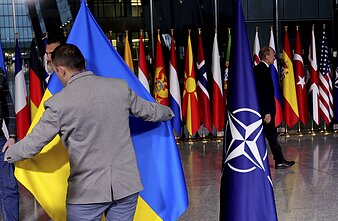
Ukraine’s desire to become a member of the European Union as well as NATO is now widely discussed. As you have seen Lithuania’s path to the alliance, how do you assess Ukraine’s chances to become a member of NATO?
When I came back from NATO, sometime in 2005-2006, I was sent by the ministry to Ukraine to talk about our path to NATO. We wanted to share our experience because we saw a similar situation in terms of public opinion. Initially, public support for NATO membership was quite low in Lithuania. But within three years, we managed to increase it from around 23-27 percent to almost 80 percent. In Lithuania, this was done consistently, with convincing arguments and with representatives of the Foreign Ministry going around the villages and educating the public.

I think that now, especially in the context of the war in Ukraine, we can see that the enlargement of NATO was particularly important for us. I’m convinced that if it had not been for NATO enlargement, Vladimir Putin would have already returned to the Baltic states.
When I went to Ukraine, I saw that the non-governmental sector was in favour of NATO membership, but the public sector, including the military, was more reserved. There was no clear decision [about NATO membership]. A clear decision came during the Maidan revolution.
Now, I think Ukraine is proving that it is determined, that it has made up its mind, that it is fighting for us, and NATO needs to recognise that. Of course, the priority is Ukraine’s victory, and we can see that NATO is certainly doing everything it can to ensure that Ukraine is able to achieve that victory.
So, Ukraine could only become a NATO member after the end of the war?
I think it would be difficult to expect it sooner. But let’s look at our case – some said we would never become a member of NATO, but we did. Predicting what will happen is a terribly difficult and dangerous job.

Newsletter
Every Friday morning.