








In February, sanctions targeted the Belarusian state-owned fertiliser giant, Belaruskali, freezing its assets in Lithuania’s Klaipėda. The deal to sell off its shares, however, remains secret.
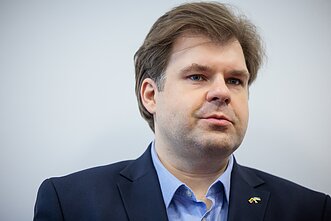
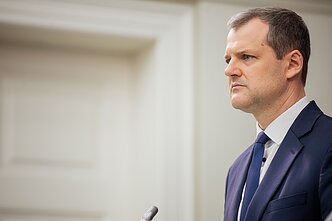
Igor Udovickij is the majority shareholder of Birių Kroviniu Terminalas (Bulk Cargo Terminal), a stevedoring company in Klaipėda Port that used to handle Belaruskali cargo. He has refused to disclose whether he has acquired the remaining 30 percent of BKT from Belaruskali and become the company's sole owner.
"All the necessary permits have been obtained. I do not comment on the transaction details," Udovickij told BNS.
The deal has already been cleared by Lithuania's Competition Council in September, as well as the Lithuanian government's Commission for Coordination of Protection of Objects of Importance to Ensuring National Security. The latter considered Udovickij's application to acquire a 30 percent stake in BKT in August 2021.
"In accordance with the requirements of the Law on the Protection of Objects of Importance to Ensuring National Security, no obstacles to the transaction have been identified," the government press office told BNS.
BKT is yet to submit information on the change of shareholders to the Lithuanian Centre of Registers.
Udovickij directly owns 5 percent of BKT and another 65 percent indirectly through Swiss company Hasenberg. The company belongs to Latvia's Fortis Asset Management owned by Udovickij.

Neither the Latvian nor the Swiss registers show a change in ownership of the BKT.
When approached by BNS, Belaruskali also refused to say whether the transaction had been completed. The Belarusian company bought a 30 percent stake in BKT for 30 million US dollars in the spring of 2013.
BKT used to handle around 11 million tons of Belaruskali products, but had to suspend its operations in February after Brussels and Washington imposed sanctions in the wake of the regime crackdown on opposition in Belarus.
Belaruskali is considered one of the main sources of income for the regime of Alexander Lukashenko.
Subsequently, Lithuania’s state-owned railways had to sever its contract with Belaruskali, as the government deemed it a threat to national security. This then left Belaruskali unable to move its product from Belarus, a landlocked country, to BKT in Lithuania’s port of Klaipėda.
BKT's quays have been empty since February 10, while the company previously announced it would sack all 142 employees by the end of May. According to data from the Lithuanian social insurance fund SoDra, however, the firm now employs 40 people.

Udovickij previously told BNS he expected to handle some 10 million tons of Ukrainian grain by autumn 2023 after buying out the Belaruskali's shares in BKT.
According to him, BKT has offered Ukraine to handle about 1 million tons of grain per month. Now, Udovickij says Ukrainian grain could only be shipped through Lithuania if transit through Belarus is resumed.
"Large volumes of Ukrainian grain can only be transported to Lithuania following the resumption of transit through Belarus," he told BNS.
He also confirmed that the BKT terminal is currently handling cargo.
BKT claims that its terminal is the largest in the Baltic region and can handle up to 16 million tons of bulk cargo per year. Last year, the terminal handled 11.5 million tons of bulk fertilisers, up 15 percent from 2020.
The terminal's revenue stood at 95 million euros last year, up 5 percent from 2020, and it made a profit of 16.1 million euros, up 1.2 percent. BKT also paid 4.7 million euros in dividends for 2021.
Read more: Klaipėda braced for uncertainty after halting Belarusian transit

Newsletter
Every Friday morning.