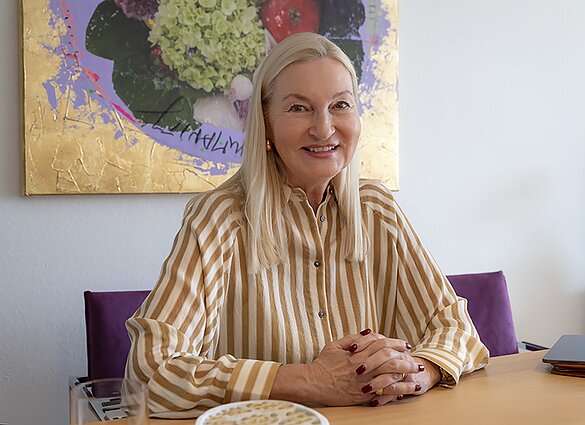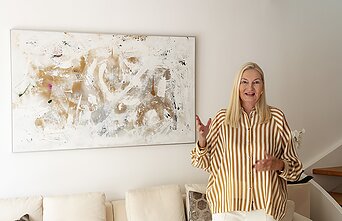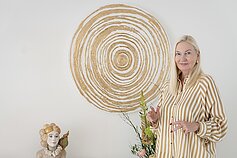









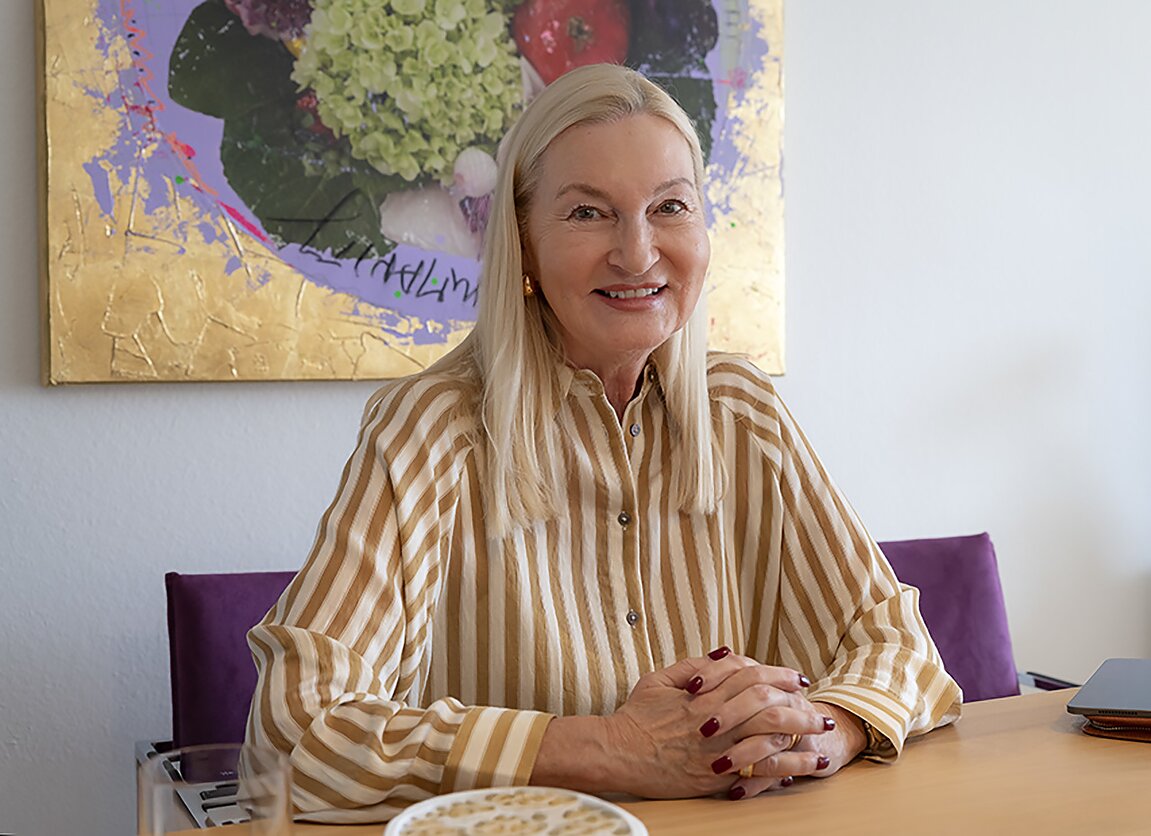
I first met Ulrike Jansen at a house concert in the Dutch Ambassador's residence, a perfect blend of culture and public diplomacy. Behind her glamorous exterior, I soon discovered a completely different world: she spent her days teaching German to motivated teenagers at a local Jesuit Gymnasium. This duality defines Ulrike, whose career spans professional modelling, luxury golf travel, and a late-career pivot to education.
We met at her Hanau home to reflect on her decade in Lithuania, where she bridged disciplined classrooms with Vilnius’s buzzing social circuit. Her warm, honest, and often humorous reflections offer a timely roadmap for the thousands of German soldiers now moving to the Baltics on how to truly fall in love with the Lithuanian soul.
Before the German government posted you to Vilnius, what did you know about Lithuania or the city itself?
To be honest, when I heard that I would go to Vilnius, to Lithuania, I was very interested, but I didn’t know a lot. I was travelling a lot before in the world. Actually, I started travelling when I was very young and explored the world, but I never saw this part. I didn’t know a lot, but I immediately checked the internet and started reading about Vilnius. This was 2012, and in the years that followed, I learned a lot.
Vilnius is often described as some kind of a northern Italian city in its architecture, but Baltic in its soul. What was the first thing that struck you as uniquely Vilnius?
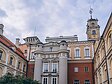
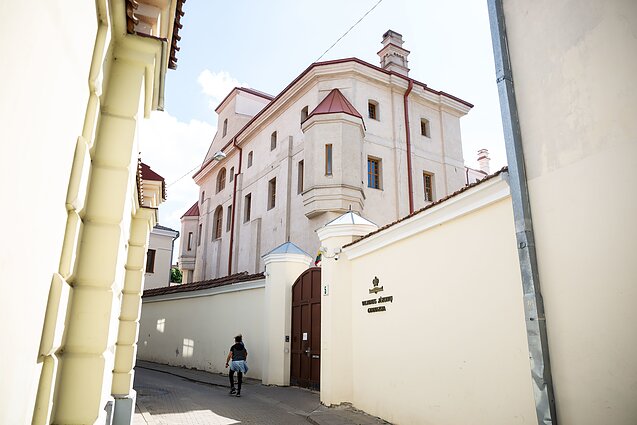
I remember very well the first time I came to Vilnius. It was Easter time and I stayed in the centre, opposite my new working place at the Jesuit School. When I saw this area and I walked around to Aušros Vartai, I had a very good feeling. I was immediately in love. Something happened to me when I came the first time.
The weather was terrible. It was snowing! I went to a concert the evening I arrived and when I came out, it was snowing and I thought, “Aha, Easter time, it’s still snowing in Vilnius.” Still, I liked it very much. So, something happened inside – a feeling. And as I said before, I travelled a lot, but something inside me happened when I came to Vilnius that first time.
You just mentioned your workplace, the Jesuit Gymnasium. Did the reality on the ground at that Jesuit gymnasium align with your initial expectations?
Before, I was teaching in Germany, in Offenbach, in a school that was completely different. With students from many nationalities, it was not easy to teach. But in Vilnius, it was like the students were amazing! They were so motivated. I couldn’t even expect that they would be like this. They were actually sitting in front of me and looking at me, and I thought they were somehow a bit shy. I was used to something completely different. It was a very interesting impression for me; it was the other extreme from what I had before. Also, the little kids in Filaretų School, where I was teaching from the first class, impressed me a lot.
As a German teacher, what was the most difficult cultural concept to translate to your students? Conversely, what did they teach you about the Lithuanian way of thinking?
I really would say they couldn’t imagine sitting in a school with 14 different nationalities (the way it was in Germany). This was something new for them. They looked at me and asked how it can work, and where everyone is coming from. Because they grow up in this homogeneous system, they couldn’t imagine it at all. I tried to bring a little bit of the German culture to my students. For example, Oktoberfest or Carnival in Germany, which is also different to Lithuania. In Lithuania, it’s only one day when the winter is over. But in Germany, we start to celebrate on Thursday evening until Tuesday the following week! I was showing them little videos about this “fifth season” of the year, and students have always been very interested.
They were telling me about basketball, the second religion in Lithuania. And then they said you have to listen to these songs we are singing when we have the basketball, and we watched it on YouTube. They were telling me about the Kaunas and Vilnius basketball and club rivalry. I always wanted to know about things from the students' point of view as well.
You had a long career as a professional model before pivoting to education. How did you balance that personal aesthetic for the eye of design and what we think of as a much more austere, disciplined environment in a Jesuit gymnasium?
The environment of the Jesuit school, everything – the whole building, the interior, the way the furniture and the style is - for me, it’s very beautiful. I mean, it’s not a house of fashion, but in my eyes, it’s very nice architecture and style. It’s something very aesthetic; every day I was very happy to go inside the building. Don’t ask me about the school in Germany, how it looked; it was completely different. This school is very clean, so from an aesthetic point of view, it was very good for my eyes and for my soul. It is more pure – a nice pureness. We had the yard with the flowers and the little gardens. And the technology used was much more advanced than we had in my school in Germany.
Was your fashionable dress style perhaps seen as a kind of silent rebellion, or did they find it inspiring? I’m thinking of your students or even your colleagues.
And you know what I also like? The uniforms they had to wear; for my eyes, it was very nice. The girls were very nicely dressed and the boys too, sometimes even with a tie. This also gives a nice picture. In Germany, it was absolutely different.
So, you spent more than a decade in Vilnius, the Lithuanian capital. You also saw how that city transformed itself over that period. What strikes you the most from the days that you arrived till the days when you left?
I arrived in 2012 and I was teaching for ten years, but I was still living there after those ten years. In this decade, they renovated a lot of buildings and they renovated the streets. More and more restaurants came and more and more shops came. So actually, in the last years, I was impressed because all these different restaurants have very innovative cuisine.
When I came, of course, there were restaurants, but the style was different. Now, Lithuania has three Michelin-star restaurants. So, there is really a big change in this, and I think it’s fantastic. You have everything there. Of course, there was a lot of culture already when I came because I love to go to the opera, and I started immediately when I arrived. The city is getting more and more beautiful. Now they are doing the Vokiečių gatvė, the German Street, with all the renovations. So, for me, it’s a very, very beautiful city.
Since you live here close to the Opera of Frankfurt, which has quite a good name and productions that are being exported, how did the opera in Frankfurt compare to the one in Lithuania?
Indeed, we have very good productions here in Frankfurt Opera. We recently even had Asmik Grigorian here, the star. I just saw her in Lithuania when I was in Vilnius in March, but I saw her also here in our opera production. But the productions in Vilnius, where I went often over the last 13 years, are very good and the variety is very good and often very modern. So, I think they really can compare.
I think even for music, the variety is bigger. Because there’s the Philharmonic, where I used to go very often, and they have a fantastic programme. Many names I can mention. For example, I saw Tetelman. I was so impressed. He’s one of the stars now, the tenor, and I saw him last June in the Philharmonic. And of course, also the Lithuanian musicians. I’m very good friends with some of them. They are fantastic. So, the musicians, the voices, and the productions are very good.
Looking at that massive transformation, what did the city get right and what do you think still needs some improvement?
Improvement? I think if you see the Old Town, then everything is going better and better. The streets sometimes, of course, they are not in the best condition, but in Germany, it’s also like that. But of course, I think if you go a little bit out of the Old Town, then you still have these big Soviet-style houses. And many really need some renovation for the people who live in these houses.
So, in the Old Town, I think they do everything perfect and it looks very nice for the visitors who are coming. But for those who are living a little bit more outside the Old Town, it’s not so nice, I would say. The buildings need more renovation. But we have the parks also, which is great. It’s a green city. So, the city for me is perfect already.
What is it that you liked the most about the city?
For me, it was when I still lived in the Old Town that I could actually walk to school in five minutes. I could walk in the evening to the Philharmonic. You can walk everywhere because everything is so close together. And I never needed a car in the city in the Old Town. Maybe sometimes in the evening I took a taxi when I was going to the Opera House or when I wanted to have some beers and it was a bit further away.
The city has a lot of culture, which I really enjoy. And I have many, many friends; you can meet so many people in one day, even if you sit outside of a restaurant, they pass by and this is the lifestyle. It was fantastic for me and I still love it, and that’s why I’m still coming back and back to Vilnius.
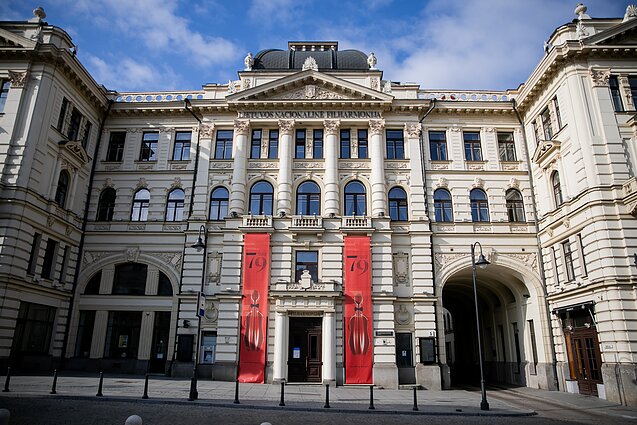
You were quite a prominent figure and involved in the social and charity circuit. In a relatively tight-knit capital, where often everything revolves around about 500 people, did you find the constant visibility and the pressure to be seen at events a pleasant affirmation, or did it sometimes feel like a gilded cage?
No, I loved it! I was always happy when I was invited and going out. I loved getting to know new people from many different parts of the world. I enjoyed it because I love people. During the time I was there, there were many invitations from embassies and very interesting events. I never felt like I was in a cage.
I mean by that, you know, people of a certain level meet in their social circuit – at the Opera or the Philharmonic. It is kind of a bubble where you only meet people in that environment.
In my evening events when I was going out, that is true. But anyway, when I was walking around or shopping, I always liked to talk to Lithuanians from different places. I was also very interested to get to know Lithuanians from all walks of life.
Would you say Lithuanians are, at a certain level, very open once you get to know them, but that it takes a little bit of ice to break first?
I know what you mean. This really was my impression when I came in 2012. I saw people on the street not smiling at me. At that time, also, you were not talking to people sitting in a cafe at the table next to you, which we do in Germany.
But I got to know Lithuanians very quickly. And I think the moment I met them, they were very warm-hearted and very open. On the street, this has changed a lot now. People smile on the street even if you do not know them. I have had this situation many times! I quite often go to cafes in the afternoon, and people at the table next to me have started to talk to me. In general, I think Lithuanians are very warm and open.
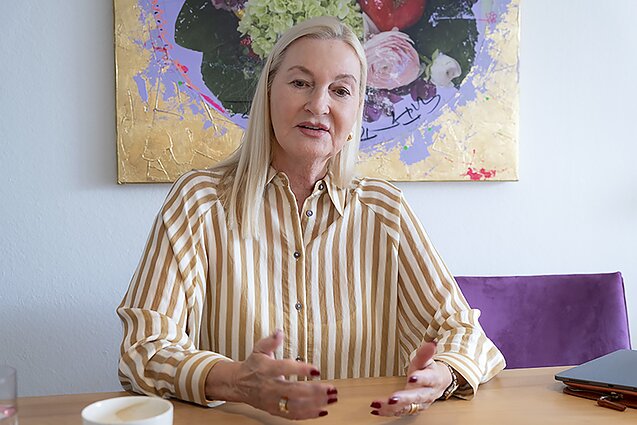
Is it fair to say that you contributed to boosting the local standards of fashion and certainly kept the local hairdressers and visagistes (make-up artists) busy?
Yes, it's true! In Germany, I didn't go so often to the hairdresser. But in Lithuania, in these ten years, I went quite often, especially when there were certain events – and there were a lot! So I started to go to the hairdresser and had my make-up done when I was attending these evening balls. I realised Lithuanian women do that as well. Lithuanian women are very stylish, absolutely beautiful.
Were you actively conscious of being something of a style icon in a city that was still finding its modern, post-Soviet fashion identity as it evolved over the last 20 years?
When I came, I was wondering because the women were wearing high heels day and night. Even when the streets were covered with snow and ice, they went with their high heels! I was wearing my sneakers during the day. But this has changed. They are very stylish now, and they dress very fashionably. Now they wear sneakers during the day, of course, but in the evening they have their high heels and nice dresses. For me, I enjoyed it because I used to work in fashion in Germany. I enjoyed dressing up in Lithuania and keeping a little bit of my old fashion job alive.
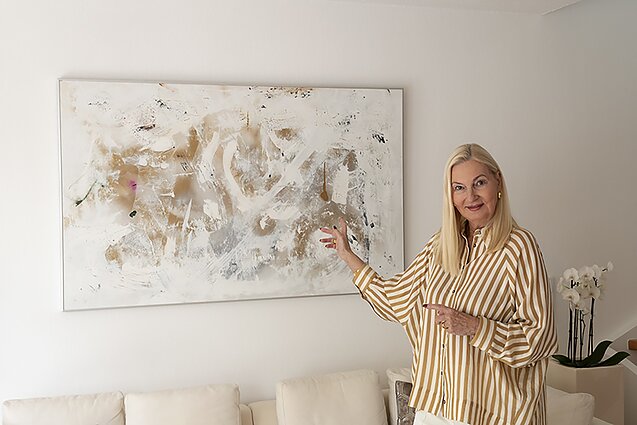
You had a rather interesting life. You started out working for a fashion house as a model, travelled a lot, and then worked your way through university before getting into education.
I was very lucky that when I started to study at university, I could also work in fashion as a model. So, I earned the money for studying and took my time to travel and really see the world. This was a fantastic time for me, and it also helped me when I started to work in school because I saw so many different nationalities and mentalities. At that time, I was really travelling low-budget. That was the way to get to know how people really live.
From that fashion world, I was also in the travel business organising golf tours back in the 90s. I was travelling for a year all around the world and saw all the very nice five-star hotels and golf courses. From low-budget travelling to five-star travelling!
Then I started to work in school in Germany; I went from one extreme to the other, which has been the case all of my life.
You were also very much involved with the Vilnius International Rotary Club and became its president. What was the most significant project or highlight of your involvement that still resonates the strongest with you today?
I joined the Vilnius International Rotary Club, where I was president for a year. The club has three big projects, and when I was president, I started a project together with Renata Marcinkutė-Lesieur, my very good friend and famous organ player, called "United with the Elderly".
I had realised that you mostly see young people out in the city centre. The elderly people you don't see on the street. They are not going out like they do in Germany, and there are many reasons for this. I thought, let's do something for the elderly. Renata liked this idea. We started the project, and we have a concert at Christmas time in St. Casimir Church. We have very famous singers and artists perform. Renata knows all of them because she is an artist herself! We bring the elderly in from all over and the church is full of elderly people. It brings some happiness and a good mood to these people. They are very happy because the stars singing in the church are stars they usually only see on TV, and never so close. It is really a great project.
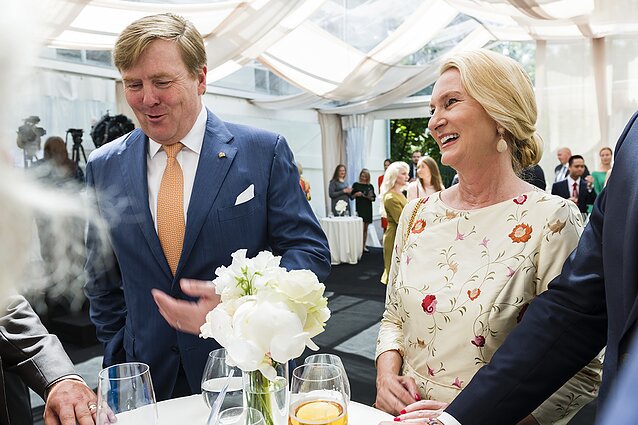
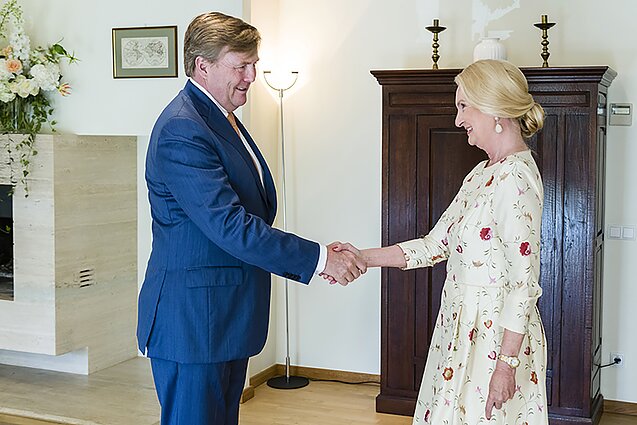
You are a dual German-Dutch citizen and you were invited to meet King Willem-Alexander during his 2018 visit to Vilnius. How did you perceive that relationship between the visiting head of state of the Netherlands and Lithuania?
It was a great event, and I will never forget it because I had the chance to get so close and even had a talk with him. I am very thankful! It felt as if there was a very good relation, and Lithuanians and Dutch people get on well; there are many Dutch people living in Lithuania. It was, of course, very formal on one hand, but on the other hand, the atmosphere was very casual. The King was standing next to me and we were talking, and I almost forgot his title. He was very great, very casual!
What was the most unexpected, graceful aspect of life in Lithuania that became a daily joy and that you found yourself missing once you returned to Germany?
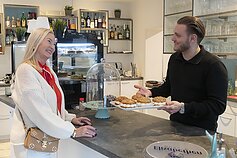
I'm really missing a lot. That's why I'm still coming back now, even though I'm not working there anymore. For me, it's all about the people. It's the people and my friends. If I am in Vilnius, my life is very intensive. I just went there for two weeks because it was the 30th anniversary of the Jesuit School. That was the reason I came in February, when the weather is not nice at all! My time there is very intensive because I meet so many people and I have interesting talks with them. I can sit in the afternoon in a nice coffee shop. It is very beautiful, even if the weather is not so beautiful. I meet former students, which I enjoy so much when they tell me what they are doing now.
Do you keep in contact with some of your former students?
Yes, yes! I saw some of them at the 30th-anniversary event of the Jesuit College in the Congress Hall. I saw one of my students doing the moderation that evening, though she is living abroad now. Another I saw playing in the orchestra on stage. Some students I meet tell me they are studying in Germany and they live there. A lot of them went to other countries, but I think after a while they come back to Lithuania because they are very much in love with their home.
I was recently an online juror of a school project, for debates. One of the others on the jury told me, “Oh, I was also your student!” It’s wow when I see them now. Some are still speaking German! Even the ones who only had German for a year or two. They try, and then they laugh and say, “No, sorry, let’s go on in English.”
Were there any cultural quirks or things that you, being a German with a Dutch father, found a little bit difficult to accept?
Driving in Lithuania! It is really a challenge. It’s getting better now, but this is something you wouldn’t see here in Germany. Some of the drivers really don’t care, and the bigger the car, the more they think they own the road!
You also recorded a German audio guide for a museum in Klaipėda. When you hear your own voice describing the Lithuanian coast, what emotions or memories does it still stir?
I had forgotten I did that. Yes, it was for the historical museum in Klaipėda. I remember doing this now in the studio. I went every year to Nida on the Curonian Spit. That’s why I really enjoyed getting the offer to do this audio guide. Personally, I prefer Vilnius over Klaipėda to live, but I love Nida because it has so much charm. I went every year when school was finished and stayed there for at least a week. And of course, the Thomas Mann House. I always go there with all my visitors and friends who come to Lithuania.
If one of your German friends says they want to go to Lithuania, what do you tell them?
I do this very often. I tell people from the Rotary Club here in my area. I had a presentation about Lithuania a year ago and they decided to come and see it for themselves because I was acting like an ambassador! Now 30 people are coming, and I am organising it for June. I tell people you have to go. I was saying recently to a lady in a shop in Frankfurt, “I was living in Lithuania, go to Vilnius for at least a few days!” You will see it is very charming. It is a capital, but you don't have the feeling that it's huge. If you are in the Old Town, you will feel the charm. It is beautiful architecture with this baroque style and so many churches. It is a young city, full of interesting restaurants, full of culture, and full of very nice people.
With the German brigade now forming in Lithuania, thousands of German soldiers and their families are about to follow in your footsteps. Beyond the military mission, what is the one unwritten rule of Lithuanian life you would share with them to help them feel at home?
Their situation is a bit different from mine, and the reason why they are coming is also different. But I would say: be open. Be open to the people of Lithuania. Because I know the people in Lithuania really appreciate that they are coming. They are very happy that they are coming. Be open to the country and to the people and you will see – you will enjoy it.

Newsletter
Every Friday morning.