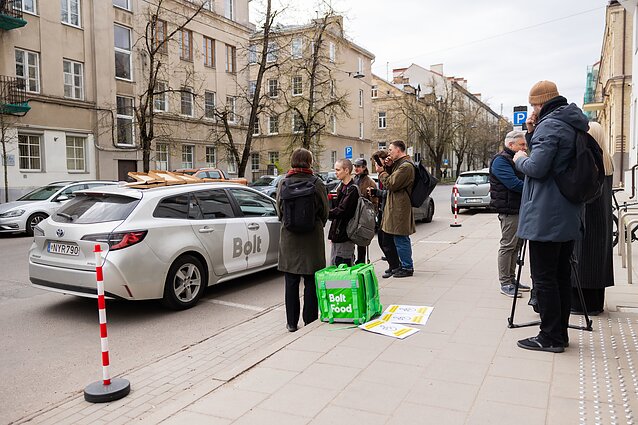














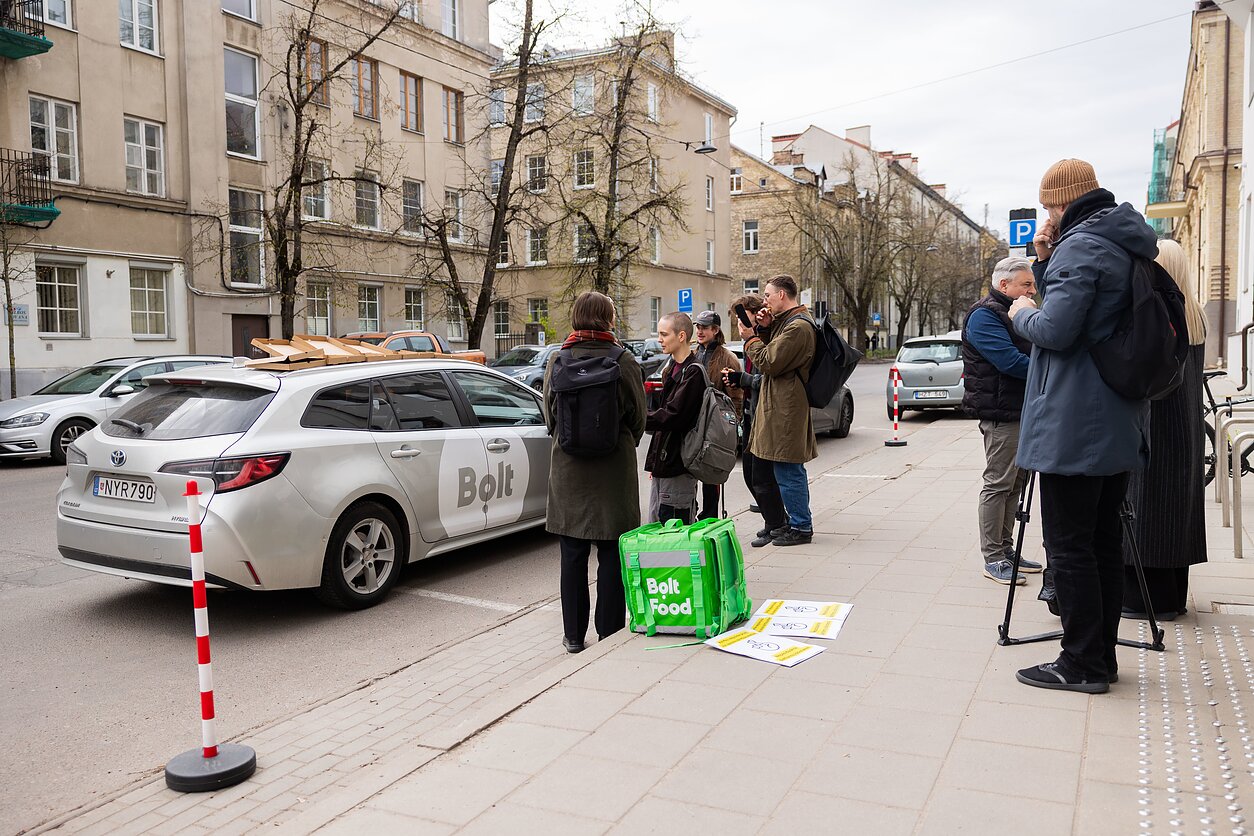
Ride-hailing drivers and couriers staged a small protest in Vilnius on Thursday, calling on authorities and trade unions to address the rights and working conditions of people employed via digital platforms.
Up to 10 people took part in the demonstration outside the Ministry of Social Security and Labour, where members of the Tripartite Council were meeting to discuss the implementation of the EU’s platform work directive.
Protesters said platform workers often face insecurity, unclear legal status and limited social protections, and in some cases earn less than the minimum wage.
Gintaras Rukšėnas, a member of the Lithuanian platform workers’ trade union, said the work of drivers and couriers resembles employment relationships but lacks the corresponding guarantees.
“We hope that when we go out to work, we know how much we can earn,” he told reporters. “Today we don’t know what we will get – you can complete 10 orders and earn 12 euros. A person working eight hours and not earning even the minimum is a tragedy.”
He added that complaints about cold or spilled food deliveries reflect pressure for speed and low costs.
“You cannot have it cheap, fast and productive at the same time,” he said.
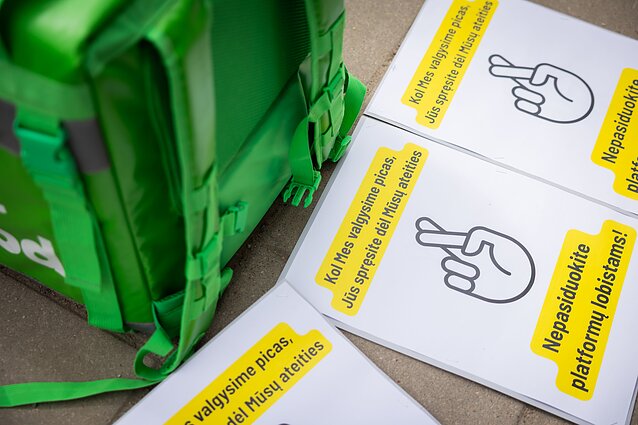
Union chairman Linas Mazgeika said platforms should engage with workers, allow them to reject unsuitable orders and provide full information about deliveries.
“They should also negotiate rates so they reflect our interest in earning a decent income,” Mazgeika said in a statement.
A driver who identified himself as Ignas said working conditions have changed dramatically with the rise of mobile apps, arguing that platforms profit without ensuring proper labour protections.
“Our work is not regulated as employment, and platforms make profit from both local and foreign workers,” he said. “If it were employment, social guarantees would be mandatory and income would be more stable.”
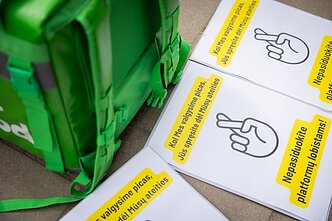
Protesters placed pizzas on a “Bolt” car along with signs reading “While we eat pizza, you decide our future” and “Do not give in to platform lobbyists”.
Government proposes legal changes
Vice Minister of Social Security and Labour Aušra Putk said authorities aim to clarify when platform work should be treated as employment.
“We propose amendments to the Labor Code, including a presumption to determine when a self-employed person is truly independent and when they are effectively an employee,” she told reporters.
She said the changes would also address algorithmic management and data protection, ensuring safeguards regardless of employment status.
Under the proposal, criteria would be set to distinguish between genuine self-employment and disguised employment relationships. If a worker does not meet the criteria for independence, they would be treated as an employee and granted full labour rights.
According to Putk, the amendments to the Labour Code are expected to be adopted by September.

Newsletter
Every Friday morning.