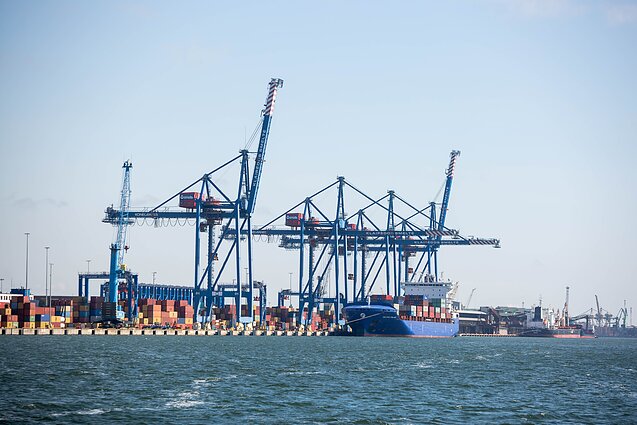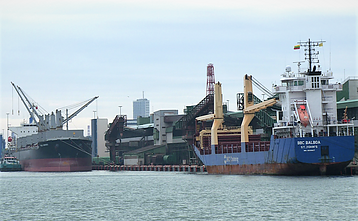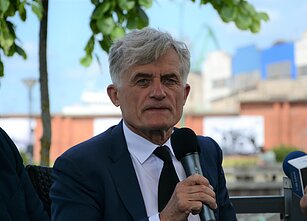















Lithuania's third-biggest city Klaipėda expects significant job losses once the country stops the transit of Belarusian fertilisers, although the “worst-case scenario” can be avoided.
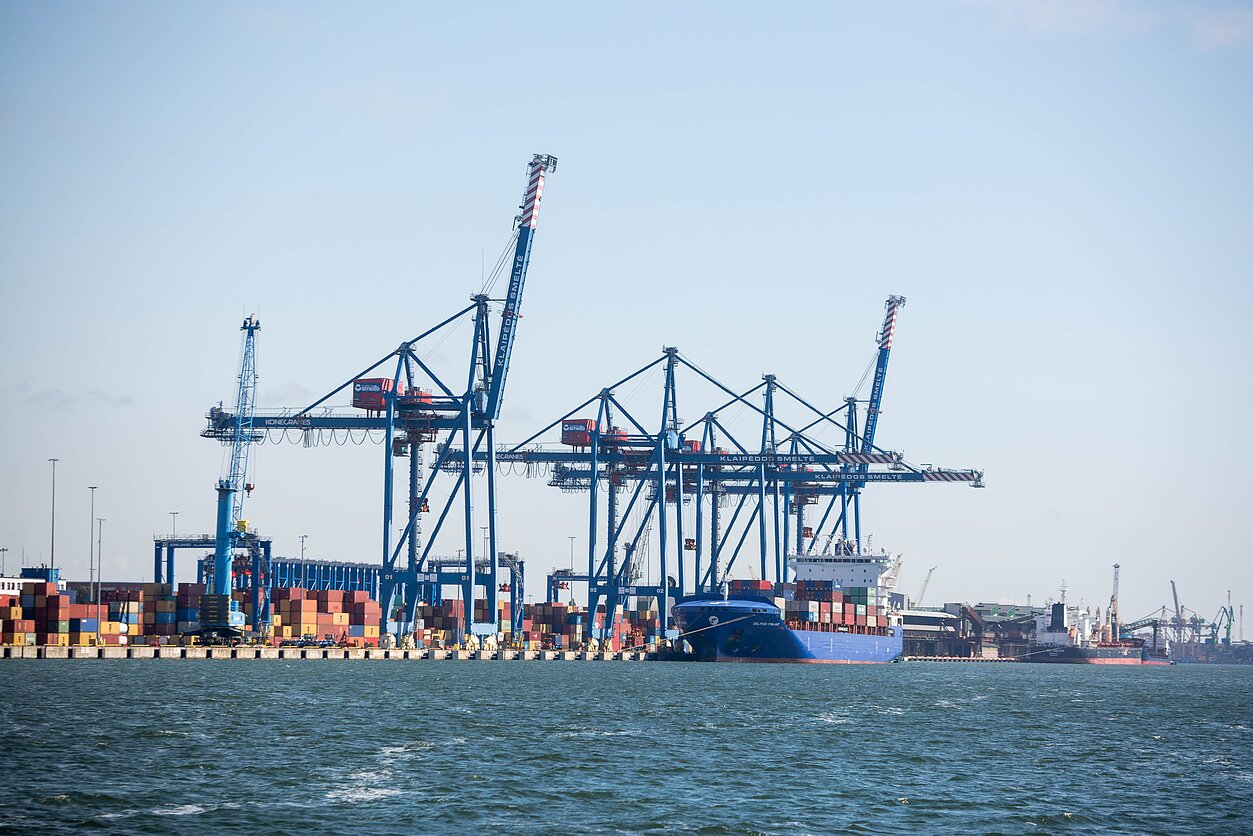
Last week, the government terminated a contract between the state-owned railway company Lietuvos Geležinkeliai (Lithuanian Railways, LTG) and the Belarusian potash giant Belaruskali, which exports around 11 million tons of fertilisers via Birių Krovinių Terminalas (Bulk Cargo Terminal, BKT) in the port of Klaipėda annually.
Moreover, the government expects to draft amendments to the Law on International and Economic Sanctions by the end of January to prevent other companies transporting Belarusian fertilisers through Lithuania. If the cabinet approves the legislation in February, the parliament will vote on it under a fast-track procedure.
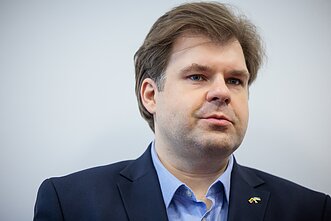
Klaipėda Mayor Vytautas Grubliauskas sees possible redundancies as a key loss for the port city resulting from the measure.
“Job losses in the directly affected stevedoring companies would be the biggest loss,” he told BNS. “These are well-paid and highly valued jobs for highly skilled professionals. We have no specific figures, but it is said that there could be between several dozen and several hundred [job cuts].”

According to the mayor, revenue from Belaruskali shipments has no direct impact on the Klaipėda's budget, but the loss of cargo will primarily affect Lithuania as a whole.
“But what is bad for the country is bad for the city, too,” he noted.
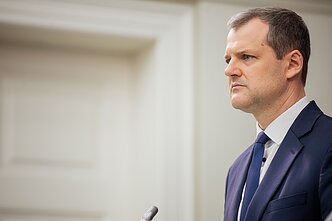
Vaidotas Šileika, president of the Association of Lithuanian Stevedoring Companies, says it is still difficult to predict near-term effects on the port. However, he thinks that the entire transport and logistics sector will feel an impact.
Šileika believes that BKT will be able to adapt its terminal to handling other types of cargo if fertiliser shipments via Klaipėda stop.
“It is a specialised bulk terminal, and apart from fertilisers, it can handle agricultural products and other bulk cargoes. It might require some investment to adapt it to other activities, but it is possible,” he told BNS.

However, the association's president admits that it would take time to replace Belarusian fertilisers with other goods, adding that this could also increase internal competition in the port.
“The terminal handles 10 to 11 million tons annually. Currently, it is practically impossible to find such an amount on the market to offset the loss,” Šileika said.
“In Lithuania and in neighbouring countries, there are no new factories that manufacture products that could be transported through the port. We believe that there may be a redistribution of cargoes, such as Lithuanian grains, within the port,” he added.
Will Belaruskali disappear from port?
Algis Latakas, CEO of the Klaipėda Seaport Authority, says the government's decision on the LTG-Belaruskali contract does not mean that Belarusian fertilisers will disappear from the port.
“In any case, it is very difficult to say, as there are no sanctions on the cargo itself or on trade [in Belaruskali fertilisers],” Latakas told BNS. “We'll see how this situation develops.”

“Probably, we should not make categorical conclusions yet. LTG has yet to answer the questions, because their infrastructure can be used by other carriers as well,” he added.
Latakas reiterated that halting Belarusian fertiliser shipments would represent a major loss for the port.
“If the cargo stops coming to the port of Klaipėda sooner or later, it will undoubtedly have a significant impact, because it accounts for a large part of the cargo traffic. Some 10.5 million to 11 million tons are a significant amount,” he said.
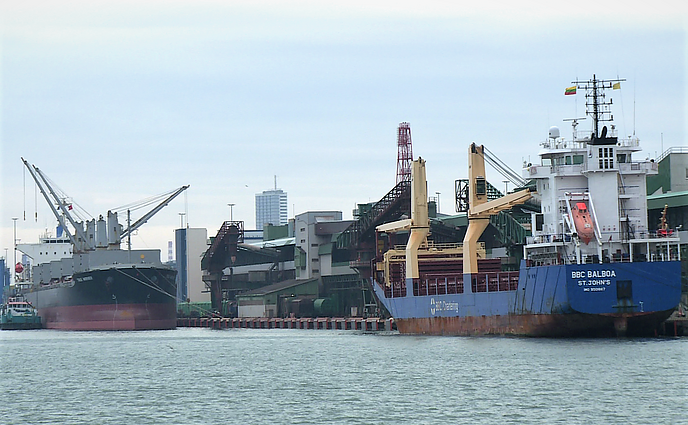
The port's strategic plan envisions such a possibility and has an action plan, according to the CEO.
“We have mapped out a number of scenarios. This is not just about this cargo; it is also about the Chinese issue, and the transit of Belarusian oil products which stopped earlier,” Latakas said.
“We have taken everything into account, and which plan we will use will depend on how the events unfold,” he added.
Faced with a decline in shipments from the east, Klaipėda port operators have to look for new opportunities in the west, according to CEO.
“We are by no means turning away from this direction, but we can see that transit cargo through Lithuania is decreasing, so it is necessary to look for other options oriented toward the sea, toward the west,” Latakas said.
“We are setting ourselves the task of becoming the port of accumulation. Some processes are underway and we already see some results in container transportation,” he added.
For example, Mediterranean Shipping Company (MSC) has included Klaipėda in its shipping route between Europe and India and Pakistan, the CEO noted.

Newsletter
Every Friday morning.