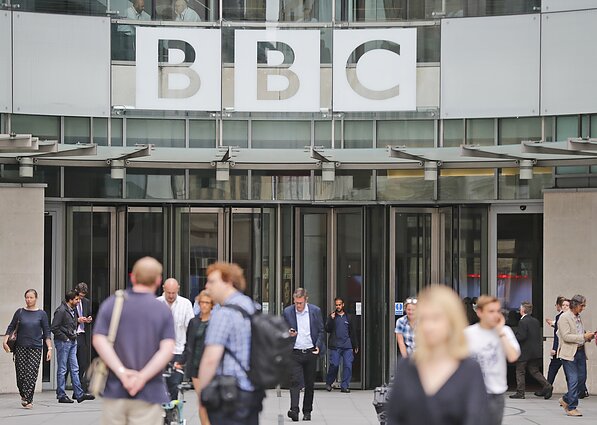













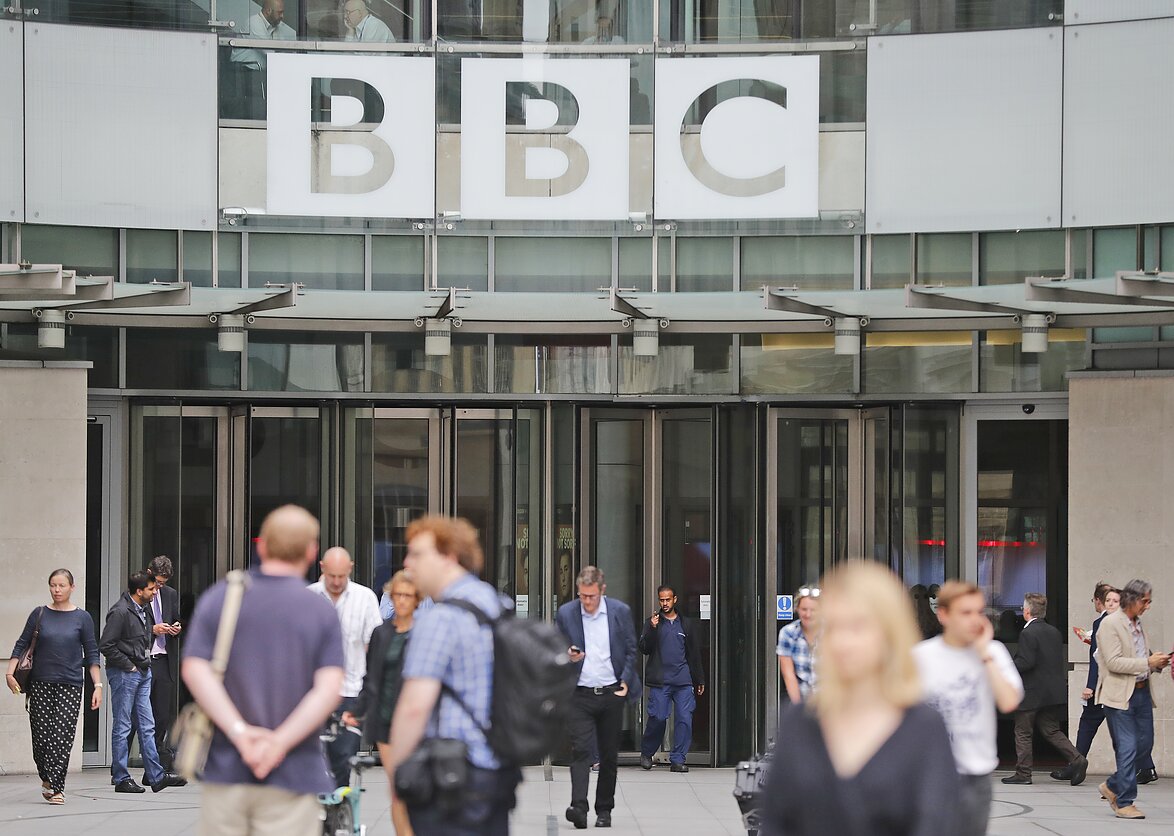
The biggest challenges for public service media are not political – in a world of intense online competition, the key question is whether public media delivers enough value for every household, says Tim Davey, the director general of the BBC.
“I'm obsessed with public service broadcasting not being what I call market failure, where it just does very high-end news [and] things that the public or the private sector could never even get near to,” says Davey in an interview with LRT.
“What we're trying to do is a really vibrant public service media that is used by everyone. The big number for the BBC is that 90 percent of [British] people use it every week. That is our obsession. That's what we need to focus on, the rest is secondary,” he adds.
The challenge, he says, is to be relevant to people and to question whether the content being broadcast is reaching its audience.
"What I want to see is for public service broadcasting to be loved and used by the vast majority of people,” says Davey.

He also notes that the BBC can cover events that other channels or platforms would not be able to cover – for example, UK sporting events or the Queen's funeral.
According to Davey, the BBC has high trust scores.
“I think a couple of things build trust: the people really understand our agenda, which is fighting for the truth,” he says. “And the second thing is, are we doing things in extremely high quality, beautifully delivered, flawlessly executed, so no one in the world can touch us.”
Events, such as the Queen's death and funeral, the coronation of the king or the Eurovision song contest, bring people and the public broadcaster together, Davey notes.
“I think in those moments when a country comes together, or when a community comes together, across class, across political opinions, people absolutely are hungry to celebrate things or remember things together,” he says.
“And one thing public service broadcasters can do is they can be in a world where free speech is under attack, democracy is under attack. We can be a place where people come together, they share views and experiences, and we bring people together,” he adds.
There has never been a time when it was more important to seek the truth and broadcast quality information, according to Davey.

“Public service broadcasters play a unique role in this. What they need to do is innovate furiously so that the delivery mechanisms are not just traditional radio or linear television. You're a digital company, you're funding technology, partnering, rethinking how a news bulletin will look. So don't read this as it's all going to stay the same,” says the BBC chief.
However, editorial values should not change – the public service broadcaster is not in the business of making a profit.
In the UK, there is an ongoing debate about the funding of the BBC. The United Kingdom has a public service licence fee agreement in place for the BBC, which will run until 2027-2028.
Therefore, the key issues are less about politics and more about the role of the public service broadcaster and its relationship with the public, says Davey.
The most important thing to preserve is not the license fee mechanism, but independence and impartiality to political influence.
“Just to be clear, there's no future for the BBC where we are entangled editorially, in terms of how we can report where we're not fully independent and impartial. [...] We've issued very clear principles, it needs to be fair in his protect universality, it needs to protect independence,” says Davey.
Ensuring longevity and stability is also vital.
“So in some ways, the one thing I would recommend on governance is not to change much because you need stability,” he adds.
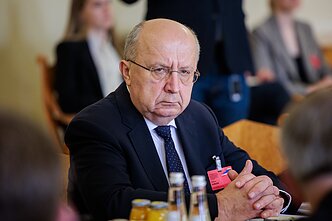
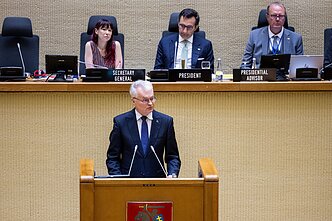
On Tuesday, the Seimas hosted an international conference on "Public Service Media for Democracy", organised by the Council of Europe and the European Broadcasting Union in partnership with LRT. The interview with Davey was broadcast at the conference.
Edited by Domantė Platūkytė.

Newsletter
Every Friday morning.