




Following Russia's war in Ukraine, calls have grown in Lithuania to revamp the country’s Russian-language education. The textbooks used to teach the language have also come under scrutiny – they make no mention of the Kremlin's wars and present Russia as a democratic state.
The textbooks, V Dobryj Putj (Good Journey) by Jelena Brazauskienė and Irena Vološina, are in use by children who choose to learn the Russian language in years 6 through 12. The books were first published in 2009, a year after the Russian invasion of Georgia, and had been in circulation until 2020.
However, they make no mention of Russia’s wars and even highlight the annexed Crimean peninsula as a tourism destination.
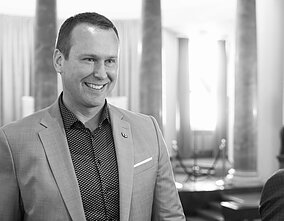
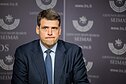
"These textbooks serve as a kind of tourist brochures," said Audronius Ažubalis, member of the Seimas and a former foreign affairs minister. "It's all about 'come and see how good we have it here'.”
“Of course, there is not a word about Sakharov, Solzhenitsyn, the challenges to democracy, not to mention the fact that there is nothing about Russia's aggression against its neighbours,” he added.
The textbooks also say May 9 is the best time to congratulate Russian friends and also issue other advice – for example, how to get visas and what to see in Moscow.

"We have no reason to think badly of Russia, Russia has a wonderful culture and its people should be proud of it,” the textbook includes a quote from an American tourist.
Previously, Lithuania’s Deputy Minister of Education, Science and Sport Jurgita Šiugždinienė said the books have been withdrawn from circulation, but may still be in use by some schools.
Irena Vološina, a Russian teacher at Žvėrynas Gymnasium in the capital and one of the authors of the textbook, said there was no pro-Kremlin propaganda. The books were also written when Russia was still a democracy, she said.
"If you notice, there are no political aspects in the textbooks at all. There is socio-culture, [which] is a methodologically justified part of the development of all foreign language textbooks,” Vološina told LRT.
“Of course, we don't accept the current political regime in Russia, its policies, that's obvious, but we can't rewrite the textbooks one day – we're good at creative teaching,” she added.
According to the teacher, textbooks are only a supplementary educational tool, leaving the teacher free to interpret the content in their own way.

"We are talking about eternal values. It's about people loving each other, understanding each other, helping each other, like Lithuanians help Ukrainians now,” said Vološina. “And teachers will certainly do their best to teach [Russian] without these unnecessary topics."
Meanwhile, Milda Juonė, head of the publishing house Šviesa that circulates the Russian textbooks, said they should be rewritten entirely.
"We have long decided not to publish new Russian language textbooks. We don't think it's enough to update existing textbooks – they all need to be rewritten. We have no plans to do so – we are not and will not create any tools for teaching Russian," Juonė said.
"The same textbooks have been reprinted, without adjusting the content. While we are aware of our contribution to the education process, we acknowledge that we have left it too long for schools to acquire these textbooks and we took them out too late,” she said.
“The lesson is that we have strengthened the control mechanism within the publishing house, and from now on all textbooks that repeat old content will be subjected to an additional review to avoid such situations in the future,” Juonė added.

After the Russian invasion on February 24, the publisher also turned to the government for help removing the existing textbooks from circulation.
“We have additionally appealed to schools not to use these textbooks in their education. We are also calling on bookshops to return to us any publications related to this textbook," Juonė said.
The textbooks have now been earmarked for paper recycling.
Schools in Lithuania ordered some 400 books over their final year before being taken off the shelves in February.
According to Juonė, they had published a test run of a new, updated Russian-language book before the full-scale war in Ukraine.

Following LRT’s enquiries, the country’s Ministry of Education, Science and Sport said it now planned to issue recommendations to all Russian-language teachers.
However, "there is no instrument or mechanism to stop teaching” with the books that have already been released, Ramūnas Skaudžius, Deputy Minister of Education, Science and Sport, told LRT.
Thus, the current books could form the basis of “discussion” about the changed geopolitical situation in the world, as well as in Russia itself, Skaudžius added.
“One of the first recommendations [is to use the book to] discuss the fairness of information in general, the media, etc. This becomes relevant content in a lesson on how to critically assess the situation,” he added.
This year, over 110,000 children, or 75 percent of all high-school students in Lithuania, chose Russian as their second foreign language. In Lithuania, children start learning English in primary school before choosing a second language in year 6.

Newsletter
Every Friday morning.