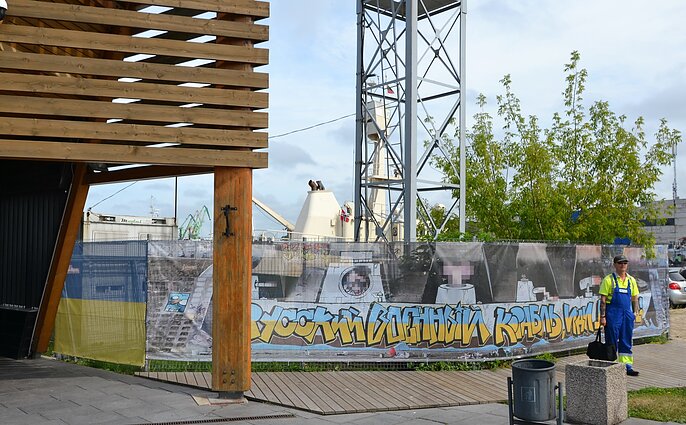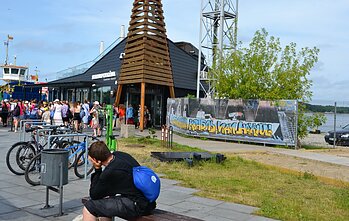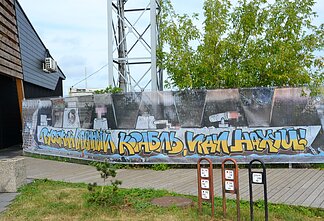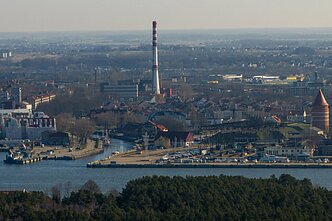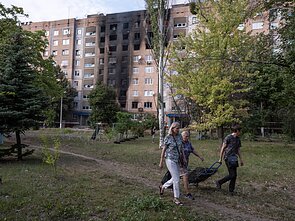










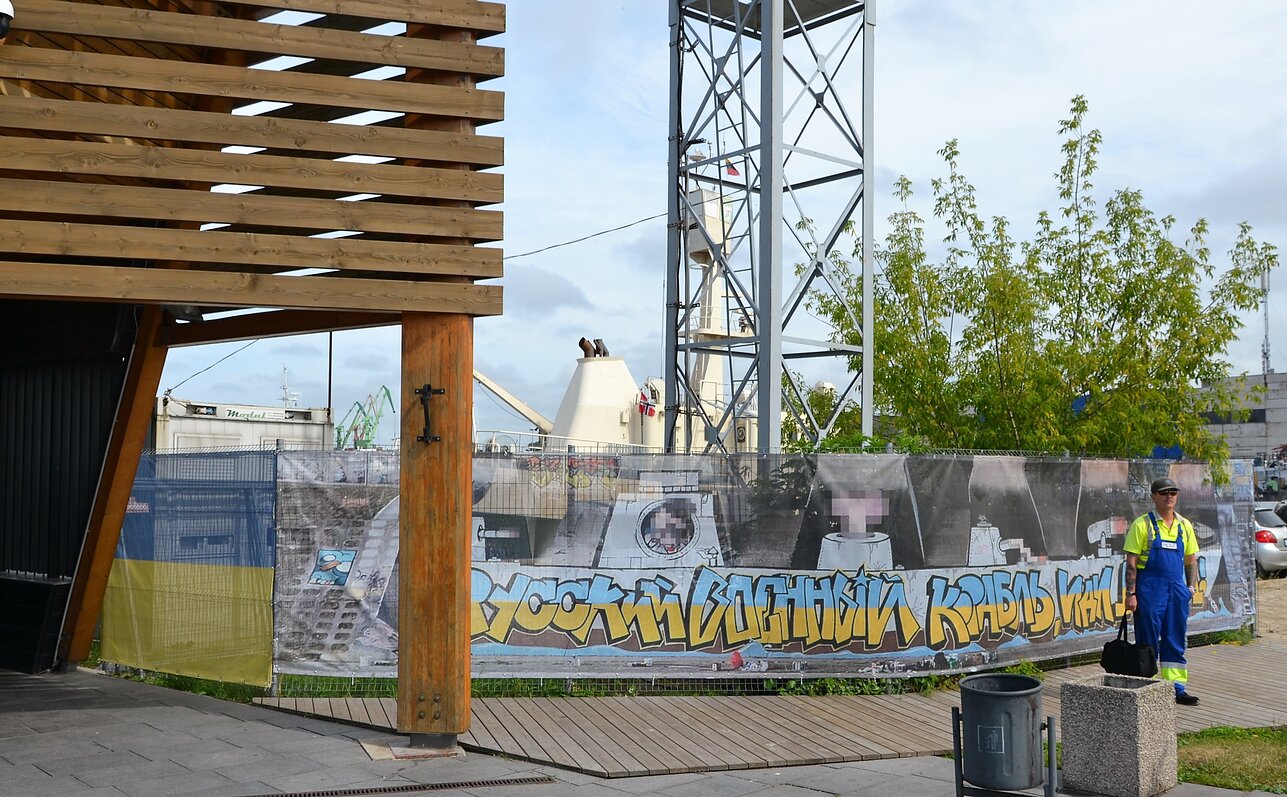
A restaurant in Klaipėda has hung a poster with the phrase made famous at the beginning of the war in Ukraine – “Russian warship, go fuck yourself”. However, this has led to complaints with the police and municipality in Lithuania’s third-largest city Klaipėda.
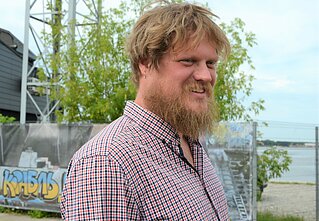
"Against the background of what's happening in the world right now, I still can't believe that someone could be offended by this, by words, when people are dying out there,” says Paulius Bartkevičius, director of the restaurant that hung the poster.
The phrase was uttered as a defiant last-stand to a Russian warship Moskva by a defender on Ukraine’s Snake Island. The saying then reverberated across the world and in Ukraine.
The border guard outfit was reported dead before news emerged of their capture. The servicemen later returned home in a prisoner exchange, while the Russian warship was reportedly sunk by a Ukrainian missile in the Black Sea.
Posters with the phrase have also appeared in Vilnius, with the copy of the original drawing being reproduced in Klaipėda.
According to Bartkevičius, the opposition in Klaipėda is due to the large number of pro-Kremlin people among the substantial Russian-speaking population of the port city.
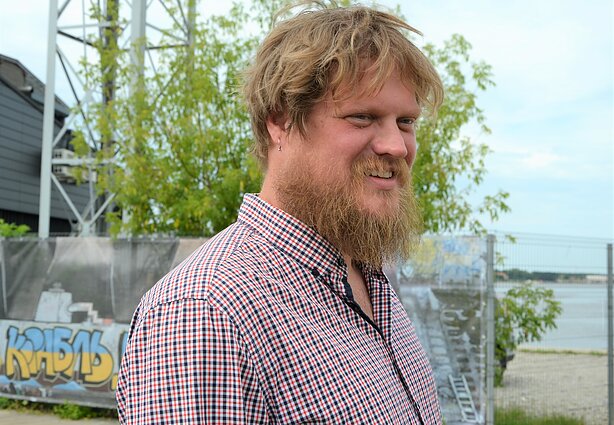
“There is a very strong feeling of the fifth column [pro-Russian people] in Klaipėda, and you can see it in the city – if in Vilnius or Kaunas there are a lot of [pro-Ukraine] actions, in Klaipėda it seems that I am the only one left with this poster now,” he says.
The first poster was taken down soon after it appeared on the wall. Bartkevičius then reported what he thought was theft to the police, only to find it was the officers who had removed it.
“Several reports have been received about the poster,” Asta Kažukauskienė, Klaipėda police spokesperson, tells LRT. “At the time, it was not so much the phrase itself that was disturbing [the people], but the fact that it was accompanied by drawings that were degrading to public dignity.”
After the drawings were removed, the second version of the poster featuring the phrase returned on the restaurant’s wall.
Klaipėda Municipality says it has received over a dozen verbal complaints about the use of the phrase. At the beginning of the war, Lithuania’s language watchdog, Commission of the Lithuanian Language (VLKK), allowed the full sentence with swear words to be used in public.
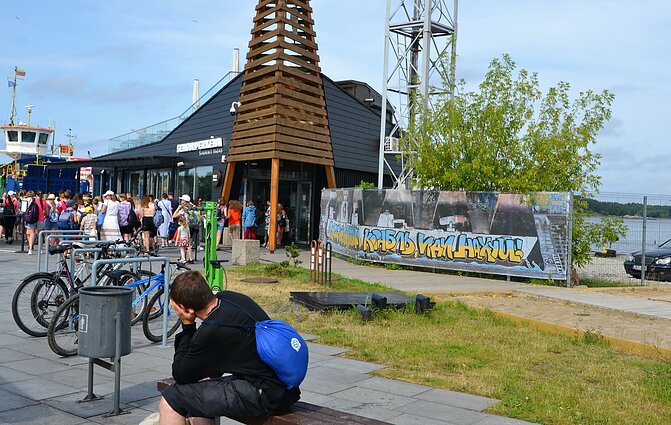
However, swearing is considered a public order offence, hence why the police had to respond, according to the municipality.
“There is a possibility to avoid the full uncensored word by writing the first two letters and putting asterisks. I don't think that would affect the slogan and the whole emotion of it,” says Marius Paimanskis from the public order department at the municipality.
The language commission’s recommendations also do not change the existing laws, according to Paimanskis.
Meanwhile, the restaurant director says he has no plans to take the poster down.
“I think posters like this should be hung in all port cities around the world, so that the ‘orc’ [Russian] fleets know their direction,” says Bartkevičius.

Newsletter
Every Friday morning.