






Despite Lithuania's resolve to ban Belarusian electricity from its grid, the country's has consumed 4-million-euro-worth of power from the Astravyets nuclear plant over the last 10 days, Energy Minister Dainius Kreivys says.
Lithuania has outlawed electricity imports from Belarus in protest of its new nuclear power plant close to the border. However, it is yet negotiating with Latvia and Estonia to effectively implement the ban.
Belarusian electricity flows into Lithuania via the Lithuania-Belarus interconnection, according to Kreivys. Although the law bans it from being sold in Lithuania, the same amount is traded in Latvia, according to Kreivys.
"Latest data show that 50 percent of all electricity – which amounts to 77 million kilowatt-hours – that comes via the Lithuania-Belarus connection is from Belarus, that is, from Astravyets, and the rest is from Russia," he said after a meeting of the parliamentary Committee on National Security and Defence.
Read more: EP committee slams Astravyets nuclear plant as ‘geopolitical project’
"Exactly the same amount of electricity is traded on the Latvian exchange. Physically, [Belarusian] electricity is not flowing to Latvia, but to Lithuania [...]. Since we have a huge power deficit, we consume that electricity and pay for it," he added.
The 77 million kWh of electricity entered Lithuania during the last 10 days, when the Astravyets plant was operating stably, according to the minister.
"If converted into money, that makes almost 4 million euros, and if the current situation continues, that will be 120 million euros per year. This amount will be paid for Astravyets' further construction, so it's important to prevent the second unit, and possibly the third unit in the future, from being financed," he said.

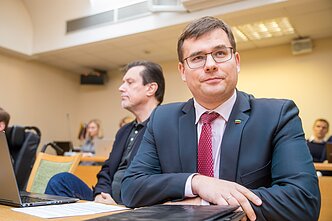
Laurynas Kasčiūnas, the committee's chairman, said Belarusian electricity accounted for about 12 percent of Lithuania's total power consumption.
"Belarusian electricity currently makes up around 12 percent of Lithuania's total power consumption mix. That makes 11 million euros monthly. We can say that [Lithuanian] consumers are paying for the Astravyets plant," he said.
Vilnius is planning to use the data in negotiations with Riga and Tallinn. According to Kreivys, it proves that a trilateral Baltic methodology for electricity trade with third-countries – worked out last year, but not yet approved by Lithuania – doesn't work.
A methodology from 2018 that Lithuania continues to apply would have barred access for Astravyets electricity to the region's market, he said.
Lithuania continues talks with Latvia and Estonia on the methodology and will present its position later in February, according to the minister.
By late February, the Energy Ministry will put forward a plan of economic measures to be taken to stop Belarusian electricity from entering Lithuania, he said.

Newsletter
Every Friday morning.