




Charlie Bauman left Lithuania for Belarus where he had to isolate for two weeks. Perched on a windowsill in a hotel room flanking the central October Square in Minsk, he watched the protests against Alexander Lukashenko’s regime and the subsequent crackdown unfold. Bauman, a now retired writer from the US, reports for LRT English.
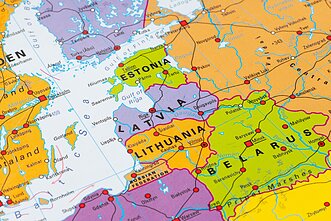
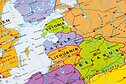
Belarus is only some thirty kilometres from Vilnius, but to cross the border is in some ways to step back in time thirty years; to return to the period of political oppression that accompanied the rule of a corrupt and sometimes violent socialist government.
For much of the post-war period, from the beginning of the second Soviet occupation, until each country declared independence, Lithuania and Belarus shared the common circumstance of oppression by a Soviet invader.
Read more: Belarusian activist: independence from Soviets 'never became a holiday
With the arrival of independence, Lithuania has flourished. It seems that, tragically, Belarus has gotten lost along that same road of respect for human dignity.
The drive from the Lithuanian border to Minsk is a little more than one hundred kilometres. Much like Lithuania, the Belarus countryside is beautiful and relatively unspoiled.
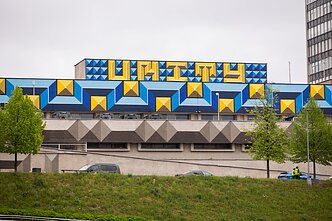
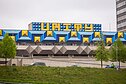
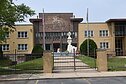
My flat in Minsk was in a remarkable location, with an intriguing view. I was perched above Kastryčnickaja (October) Square in the centre of the city. The huge plaza, bordered by the Palace of the Republic and the Labour Union Palace of Culture, is a common gathering place for celebrations and other large events.
The mood changes
On June 19, following the arrest of one of Lukashenko's leading opponents in the August presidential election, peaceful demonstrations erupted across Belarus. This arrest repeats a pattern of arresting any opposition candidates that extends back many years.
That night in a peaceful protest, thousands of citizens formed a queue – reminiscent of a small-scale Baltic Way – well over a kilometre long. Hundreds of cars driving past the queue honked in support. The only government response was citing some of the drivers for honking.

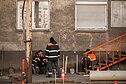
The next night better defined the true repressive spirit of the government. Once again, crowds began to form. Several hundred people gathered below my window in Kastryčnickaja Square. Again, many cars drove by, honking in support of the demonstrators.
The demonstrators responded by clapping their hands. Less than an hour after most of the crowd arrived, a single car was pulled over by the police in front of the square.
Minutes later, a large number of buses, vans and military vehicles arrived and pulled up behind the vehicle that had been pulled over. A single police officer with a bull horn stepped outside and began telling the crowd to disperse. The crowd responded slowly, but they did begin to move away.
After several more minutes, dozens of government agents – some in uniforms, others in civilian clothes – began coming out of the assorted vehicles that had parked in front of the square.

I watched as a group of about 17 burly men wearing masks, civilian clothes and baseball hats walked among the demonstrators. My guess is that they were probably OMON, riot police operatives, or KGB.
Read more: Kidnappings and assaults in Belarus. Inside Lukashenko’s crackdown on independent voices
Several of them suddenly apprehended one young man who was clapping. They forced him to the street, signaled to a waiting van, screamed at their captive and shoved him into the van. He was driven away screaming.
Moments later, they did the same to another young man. I later saw pictures, taken around the corner from my flat, showing this happening to others. These young men were just a few of the 120 protesters, along with reporters, who were detained that evening, often forcibly, according to human rights group Vyasna.
The image that will always remain with me was observing the smallest of the ‘henchmen’, who had been quietly observing the proceedings from a distance, walking rapidly toward a group of men. His intent was to frighten and disperse them.

Though the observers were peaceful, it was probably fortunate that he had 16 burly men standing behind to back him up. He reminded me of a mischievous child who tries to scare pigeons.
This bellicose methodology of violent intimidation was effective. After about ten minutes, it was obvious that most demonstrators were returning home.
Subsequently these same men in civilian clothes reappeared in vans every day, parking in the square and waiting for any additional hints of protests. On occasion, because like most of us I despise the concept of ‘bullies’, I stared at them. They, in turn, sometimes stared back at me, but did nothing.
Because a friend posted a video I had taken of the agents’ arrival, and because the owner of my flat was a very vocal critic of the president, I was concerned that I would find these men, or the KGB, at my door. The regime has a well-documented history of fabricating charges against individuals.

I evaluated the potential risk and decided that although danger was minimal, it would be prudent to erase my photos of the incidents that could be used as possible evidence against me. I also erased any messages referring to the events that I had witnessed.
During my remaining time in Belarus, I never heard anyone else honking (except out of frustration with another driver). No more crowds gathered in the square.
What I learned is what many other people and nations are already keenly aware of – Lukashenko doesn't lead his people, he intimidates and bullies them.
It is apparent that he will not win the election, but that he will steal it from the people of Belarus.
It is unfortunate that Lithuania has such a wonderful neighbour whose citizens must tolerate such a sinister regime. While touring Minsk after self-isolation with a guide, he explained that the current Belarus version of the KGB was similar to the KGB of Soviet times.
With the crackdown against Belarusian protesters ongoing, one only has to tour the KGB Museum in Vilnius to understand the underlying implication of his statement.

As a result of my time in Minsk, I have acquired a renewed appreciation for Lithuania, which I think of as a second home.
I also have a deeper appreciation for the fundamental freedom that, too often, we take for granted in the United States. I wish the good people of Belarus success, without bloodshed, in their pursuit of the priceless freedom that Lithuanians already savour.
Read more: Is Belarus facing a 'slipper' revolution?
The views expressed in this article are the author's own and do not necessarily reflect those of LRT.

Newsletter
Every Friday morning.