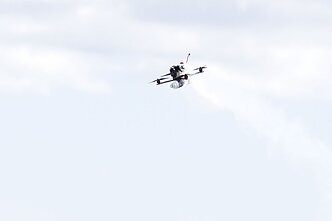











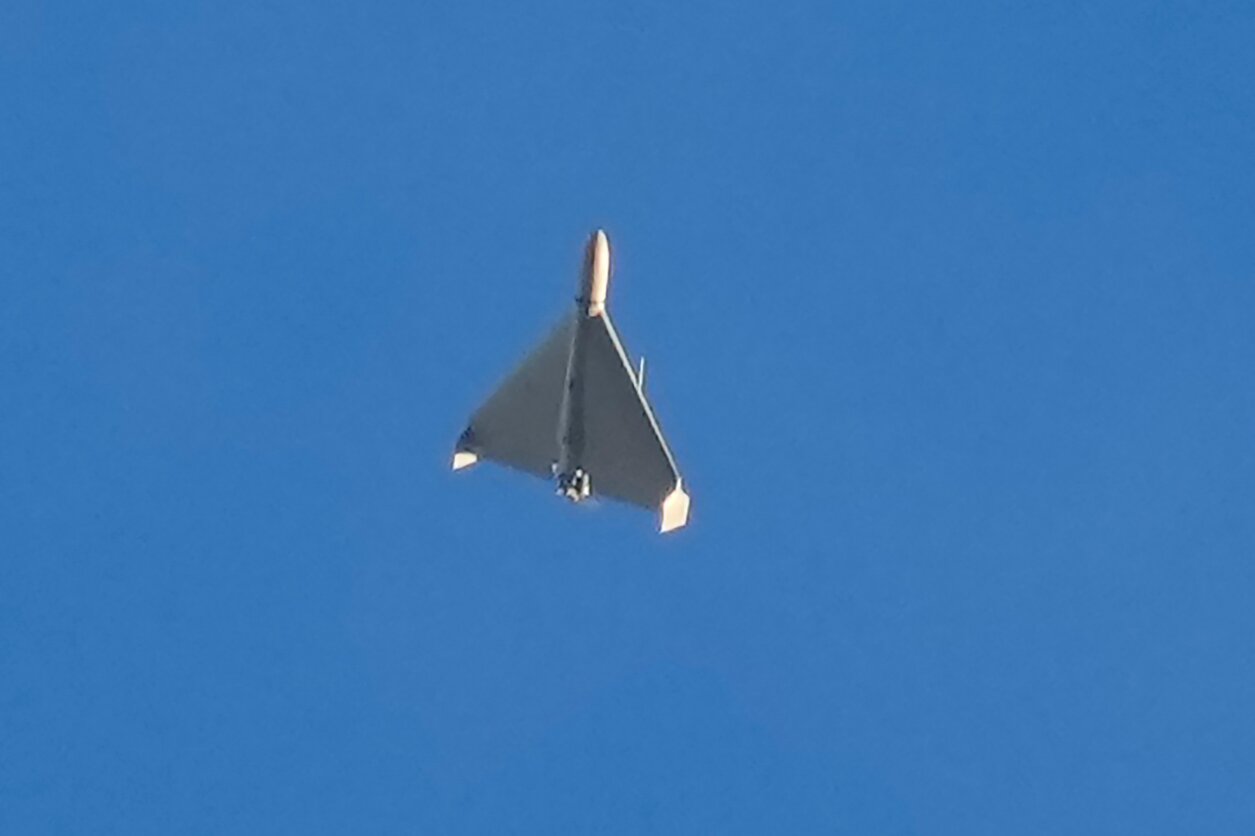
A startup, together with activists, has launched an open-source drone detection system that links data from participating volunteers’ phones, according to a press release from the Drone Rada (Dronuradaras.lt) initiative.
Verified volunteers connect an unused Android smartphone at home to a power supply and place it near a window. An app running on the device continuously analyses ambient sounds, searching for specific low-frequency signatures characteristic of Shahed-type drone engines.
When a suspicious sound is detected, the acoustic signature is analysed by an embedded algorithm. If several nearby devices record the same signal, the system can determine the object's possible location.
"Today we are surrounded by devices that see, hear and record their environment. Our goal is to connect these sensors into a common network that would provide an additional layer of security for society and strengthen the country's resilience," said Audrius Zujus, the founder of the Mainline startup behind the idea.
The initiative consists of two parts: a monitoring platform with an interactive public map, and a dedicated sensor app for volunteers who choose to participate.
The project currently involves a team of 20 specialists as well as partners from the technology and security sectors, including experts from the Lithuanian Artificial Intelligence Association, the Baltic Institute of Technology and members of the Lithuanian Riflemen's Union.
The organisers aim to recruit 10,000 active users and expand operations across the Baltic states and Poland. The goal is to build the largest civic acoustic drone detection network in the Baltic region, with 10,000 active participants.
In future, the Drone Radar network is expected to incorporate not only smartphones but also audio from surveillance cameras used by residents.
The Drone Radar team is also discussing potential cooperation with Lithuania's major mobile network operators, with a view to installing sensors on their telecommunications towers.
"Our first step is to connect hundreds of phones, enabling us to create a real-time map showing locations where sounds associated with drones are detected. As the number of devices increases, we will be able to build a more accurate picture of the situation.
"It is important to emphasise that user privacy remains one of our highest priorities. We aim to identify drones and determine their location using as little data as possible," Zujus said.

Newsletter
Every Friday morning.