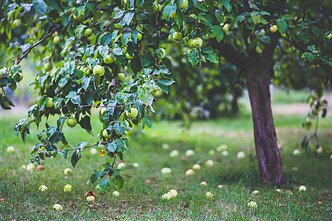













Instead of a bumper harvest, Lithuanian fruit growers are cutting down trees and counting catastrophic losses. Some in the industry say the country has not seen orchards damaged on this scale since the late 1960s, with the vast majority of trees bearing traditional Lithuanian varieties killed outright by the cold.
Arvydas Paškevičius, director of Aukštikalniai Orchards in the Pasvalys district, is facing ruin. Across more than 200 hectares, he is having to fell apple trees that did not survive the winter. Many will have to be removed entirely; others are being given a chance to recover, though it is already clear there will be no harvest from them this year.
"Blossoms get caught by frost – that happens. But trees freezing to death? That's a first. We have trees in the old orchard planted back in 1974, and this year they look tragic," he said.
The orchards resemble a disaster zone, and the financial damage is enormous. Paškevičius estimates that more than 30 hectares of trees have been lost, though the full count is still under way.
"If roughly 30 hectares have been lost on average, that already comes to 1.2 million euros. And that's just replanting a new orchard, before you factor in clearing the old trees or restoration work. It's also clear there won't be enough saplings available, so the whole replanting process could take several years," he said.
The variety that has suffered most is Auksis – Lithuania's most popular apple and, ironically, the one known for its hardiness in cold winters.

In the Alytus district, however, Auksis fared better. Gitana Jonuškaitė, director of Luksnėnai Orchards, said that even there the overall harvest would still only be average, as other varieties had been badly damaged.
"Ligol, Champion and Eliza will yield about a third of a normal crop. In area terms, around 30 hectares out of nearly 200 have been affected," she said.
Not seen since 1976
Vitalija Kuliešienė, president of the commercial orchards association Vaisiai ir uogos (Fruits and Berries), said damage on this scale was last seen in 1976. She said the industry was still trying to understand why varieties that had always withstood the harshest winters had succumbed this time.
Estimates suggest around 90% of trees bearing traditional Lithuanian apple varieties have been lost.
"We are in shock. In all the years of independent Lithuania, we have never seen anything like this. Of course, orchards always have their ups and downs – the climate changes, and a lot can happen over many years. But we never expected anything like this," she said.

Long-term damage
Agriculture Ministry noted that this time it was not the blossoms that were caught by frost, but the trees themselves that froze, meaning the impact will be felt for years. Replanting is expected to take two to three years. The full extent of the damage is still being assessed, and the possibility of seeking support from European Union funds has not been ruled out.
Kuliešienė said growers were currently afraid even to begin tallying their losses.
"Compensation is never enough to cover the actual damage. I wouldn't be surprised if some orchards go bankrupt. We have never had structural frost damage on this scale before. It's hard for growers even to think about how to proceed – how to replant, where to find the money," she said.
Prices set to rise
How much Lithuanian-grown fruit will be available in the shops remains unclear. However, prices are expected to rise significantly. Growers note that the cost of Auksis apples, whose name means "gold" in Lithuanian, may soon live up to it's name.

Newsletter
Every Friday morning.