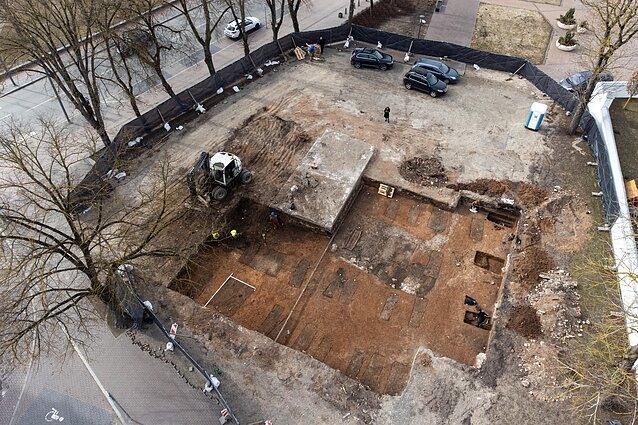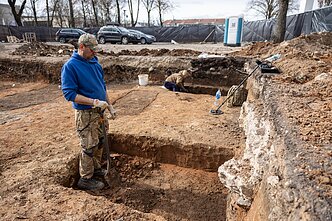





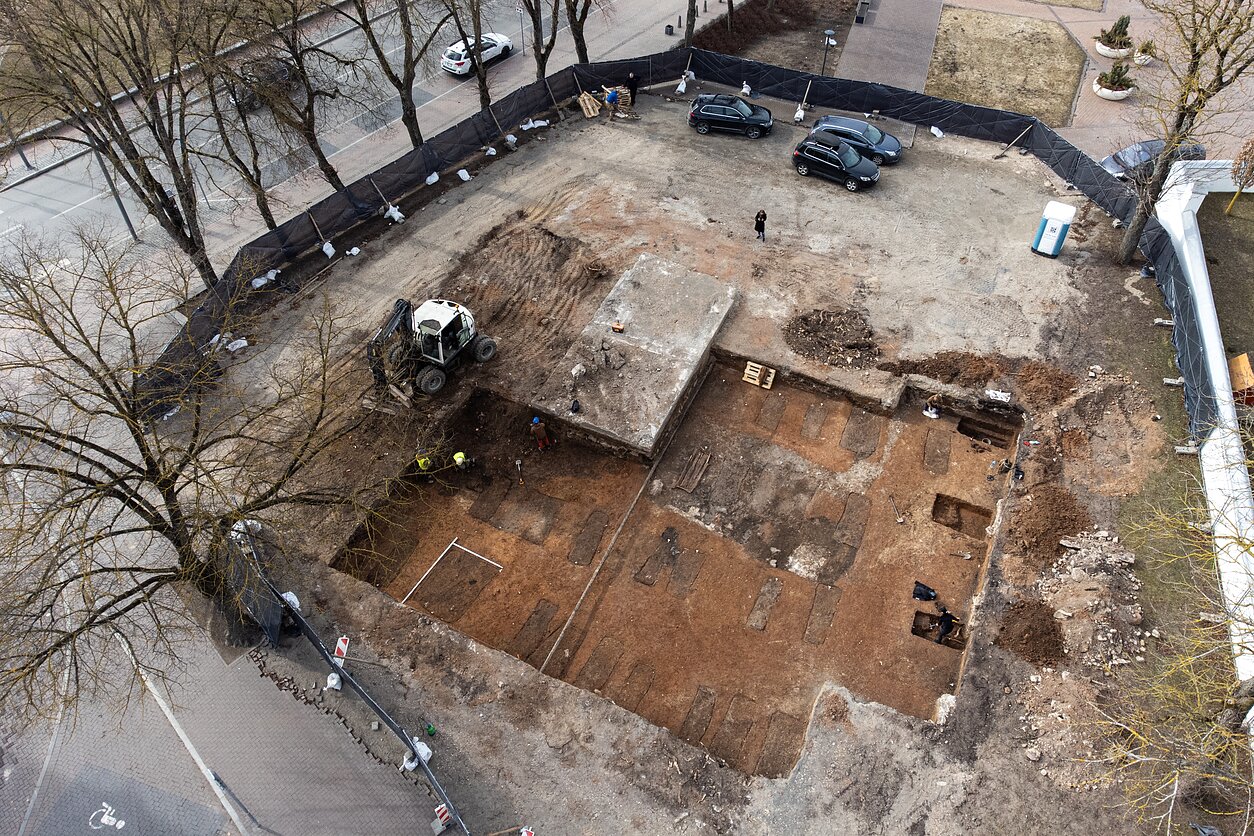
Archaeologists have exhumed the remains of at least 48 Soviet soldiers near St Apostles Peter and Paul Cathedral in Šiauliai, northern Lithuania, fewer than historical sources had suggested.
The excavation follows legislation ordering the removal of Soviet-linked displays from public view.
The excavation was carried out by a team led by archaeologist Rokas Kraniauskas, head of the firm Arksaika. He said all remains believed to be at the site have now been recovered.
“We exhumed all of them, as far as we believe. It turns out there are 48 individuals, possibly 49, as burned remains in one grave could belong to two people. This will be clarified by anthropological analysis,” Kraniauskas told BNS on Thursday.
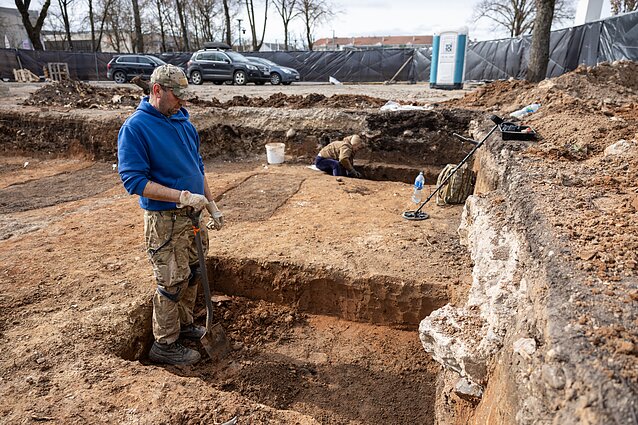
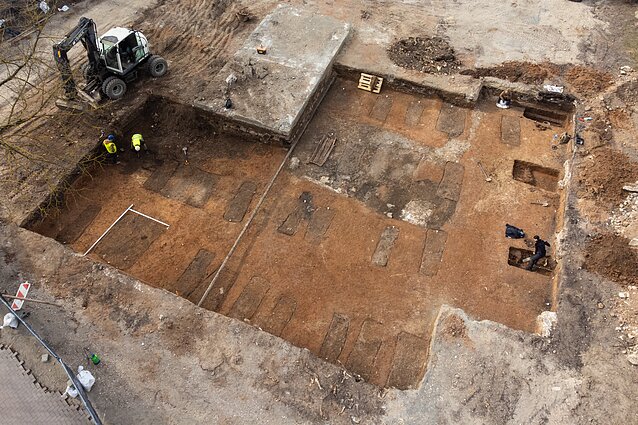
Excavation work concluded Tuesday, though archaeologists plan additional checks to ensure no unrecorded graves remain. Kraniauskas said four burial pits were found empty, likely due to inaccurate Soviet-era records.
“The parameters of the empty pits are the same – depth, size, position – but there are simply no burials there,” he said.
Previous estimates indicated that 52 to 53 Red Army soldiers killed during World War Two were buried at the site. The exact number will be confirmed after further analysis.
Artifacts recovered alongside the remains include fragments of Soviet uniforms such as shoulder boards, buttons, belts and footwear, as well as coins. In one case, archaeologists found a cloth bag containing heavily deteriorated ammunition for a Mosin-Nagant carbine.
Metal detector surveys also uncovered 18th-century coins from Prussian, Swedish and Lithuanian origins, indicating earlier cultural layers at the site.
Researchers observed signs of trauma on the remains, including fractures and evidence of amputations.
The exhumed remains are currently stored in special facilities provided by the Šiauliai municipality. Anthropological studies will determine the individuals’ sex, approximate age and possible injuries.
Excavations are ongoing at the cathedral site, where archaeologists have also uncovered the foundations and basement of an unidentified building, likely destroyed or filled in before or during the war.
The remains are to be reburied at a designated Soviet World War Two burial site near Ginkūnai cemetery.
The relocation follows a 2024 decision by Lithuania’s so-called Desovietisation Commission, which ruled that the burial site in a central location violated a national ban on the public promotion of “totalitarian and authoritarian regimes” and their ideologies.
The commission said the site contributed to the propagation of the Soviet-era “Great Patriotic War narrative”, noting that the burials were secondary, with remains transferred from other locations.
Lithuania enacted legislation in May 2023 requiring the removal of symbols linked to “totalitarian and authoritarian regimes” from public spaces.

Newsletter
Every Friday morning.