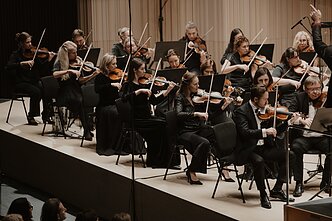















A new study of Lithuania’s music industry has revealed that the sector generates more than €308 million annually. Economists say the industry’s contribution to the national economy is modest but meaningful, and its potential could be boosted by stronger music exports – an area currently lacking consistent state policy.
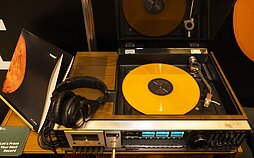
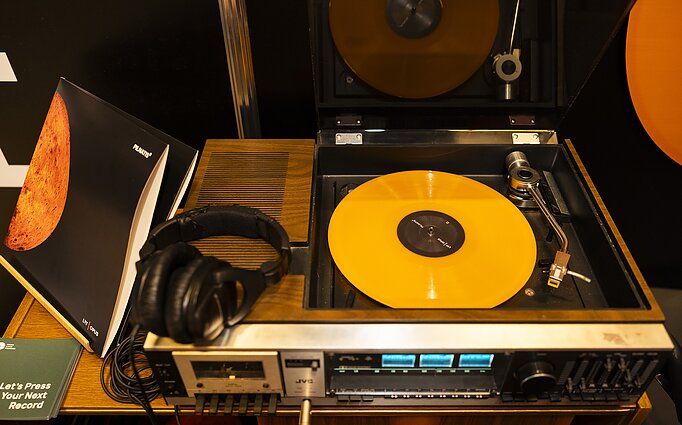
Green Lakes Pressing, the only vinyl pressing plant in Lithuania, produces records not only for local artists but also for clients in 36 countries, including the United Kingdom, France, and Israel. The factory can press up to 1,000 records per day.
“Here we see the vinyl presses, how records are made, and the vinyl granules go in heated, and out of that comes music,” Lauras Lučiūnas, the founder, said while showing the facilities.
A first-of-its-kind study of Lithuania’s music industry examined the economic value of the national music market, which includes education, the public sector, commercial activity, and exports. It found that the sector generated €308 million over the past year.
“Compared with other creative industries, we are bigger than the film sector in Lithuania, similar in size to the gaming industry, and we can also compare with other strong sectors like lasers,” said Agnė Begetė, head of the performance rights organisation AGATA. “When you add it all up, music is just as strong.”
Economists note that the industry’s true impact is best measured as a share of GDP, which, according to preliminary calculations by Aleksandras Izgorodinas, would amount to under 0.2 percent.

“Right now, lasers lead the way because they’ve conquered global markets, with most sales going abroad, including into NASA and NATO programs,” Izgorodinas, an economist with Citadele Bank, said. “The music industry is growing, but mostly from domestic demand.”
The study also highlighted how little of its music Lithuania exports. While Lithuanian music is appreciated abroad, artists face a difficult path if they want to enter foreign markets.
“To expand a career, you first have to travel, make contacts, perform one, two, three concerts, build momentum. That takes a lot of effort and money,” said Justinas Čekuolis of the Music Industry Association. “Lithuania has a highly professional music sector; we just need someone to create songs that resonate equally in Vilnius, Kaunas, Berlin, London, and Madrid.”
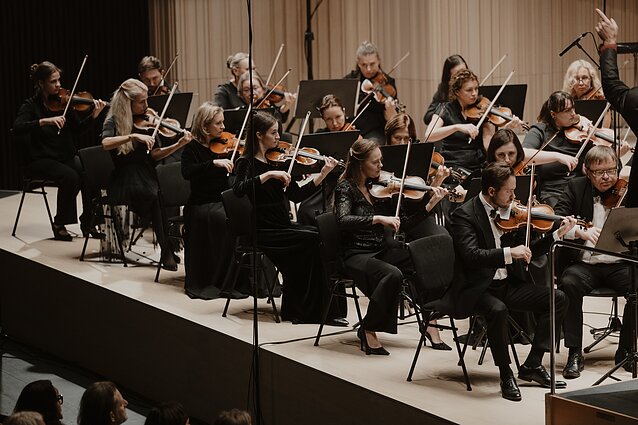
According to Radvile Buivydienė, head of the Music Information Centre, most music export efforts are driven by artists and nonprofit organisations, but the country lacks a coherent government policy to support them.
“The main reason we may not be growing these numbers successfully is that Lithuania is the only Baltic state without a strategy or policy document specifically for export development,” Buivydiene said. “Even Latvia and Estonia have such plans; we are falling behind and need to fix this quickly.”
Data from AGATA show that Lithuania’s primary music exports include classical music, Eurovision entries, and jazz.

Newsletter
Every Friday morning.