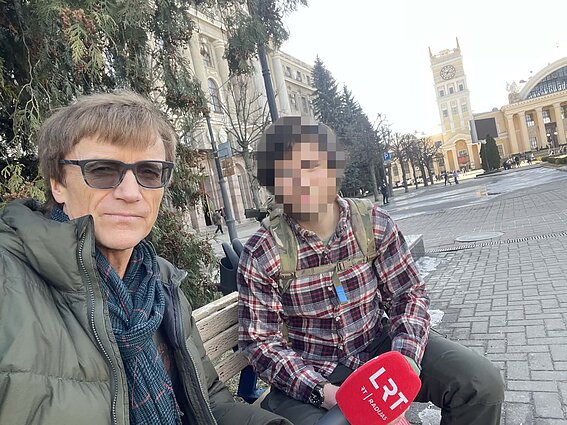













When I saw a long-haired young man in civilian clothes at the square of the Kharkiv railway station, I realized he was a cadet. Three years ago, when the occupiers began “hunting” places where Ukrainian soldiers were gathering, they were instructed to take off their uniforms during their free time.
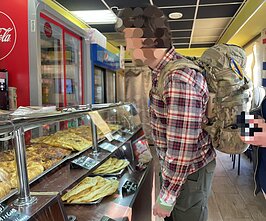
After a few days of rest, the American heading back to his unit was also trying not to stand out. I waited for him to pay at the cashier for the chebureks and soft drinks he had ordered and then approached him, not expecting much, since US soldiers usually refuse to give interviews.
“I’m a journalist from Lithuania. Would you agree to talk and tell me about yourself and what you’re doing in Ukraine?” I asked.
The young man stopped, thought for a moment, and said we could talk – he had half an hour before his bus would depart.
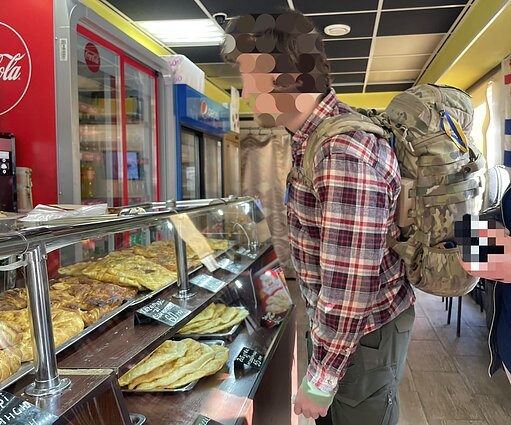
Could you introduce yourself?
I’m an American from the state of Texas. I’m 25 years old. I’ll tell you my name, but don’t write it.
When did you arrive in Ukraine?
I came at the beginning of 2025. I actually wanted to come in 2022, but I had to resolve some personal issues. Once I did that and realised I had no obligations keeping me in the US, I left.”
Why did you decide to help Ukraine? Do you have relatives here?
No, I only have relatives in one Latin American country. Before the war, I knew almost nothing about Ukraine, although I had a childhood friend from there. I knew it used to be part of the Soviet Union and what its flag looked like. I had been to Europe, but not Ukraine.
When Russia invaded, I thought – I have experience, I served in the US military, I have to help. Maybe it’s because I’m from Texas, where the memory of struggles for freedom is preserved. Texas history is about fighting for independence, civil rights, and religious and economic freedom.
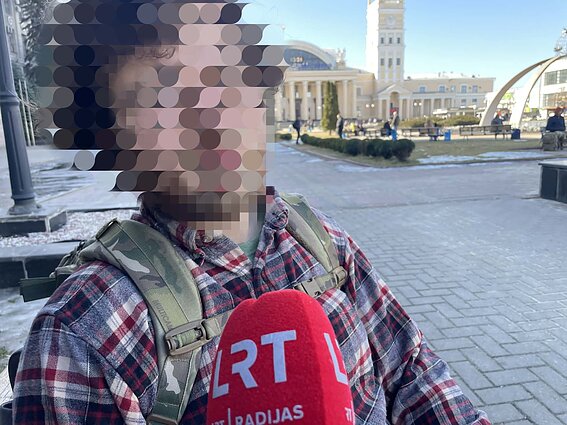
What are your duties in Ukraine?
I serve in a drone unit. I’ve learned not only how to operate drones but also how to build them.
Are you a member of the International Legion?
No, I’ve never served in the Legion or any other foreign unit. I’m in a heavy mechanised unit made up mostly of Ukrainians. Many of my colleagues are amazing people, but there’s a huge difference between those who have served for years and have combat experience and those newly conscripted. The latter have a harder time – they have to quickly transition from civilian to military life. I try to help newcomers, especially when I go to Kyiv to train them.
Have you been injured?
No. So far, I’ve been lucky. Many friends have been wounded, and quite a few have been killed. Of the foreigners I trained with when I first arrived in Ukraine, most are no longer alive. Every day I cross my fingers and pray that it won’t happen to me. My family also prays for me daily. My brother is angry that I’ve stayed here so long and constantly urges me to come home.
Can I ask how much foreign soldiers are paid?
The same as Ukrainian soldiers. It depends on where you serve. If you’re far from the front, you get about $500 a month. Near the front, pay is calculated based on days spent in dangerous areas, about $2,000 per month. Even more is paid for participation in combat, about $3,000 for a month in trenches facing Russian forces.
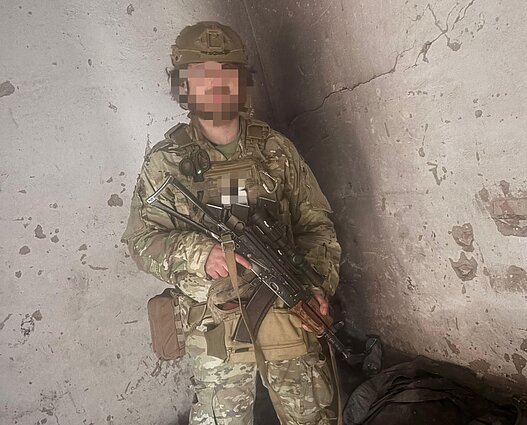
The only privilege foreign soldiers have is that we can terminate our three-year contract at any time after six months. Moscow spreads false propaganda that every foreign soldier in Ukraine is a privileged mercenary. We don’t receive higher pay or special privileges, except the option to end the contract.
How long do you plan to stay?
Until the war ends. I just feel I couldn’t leave and abandon my fellow soldiers. Unless I were seriously wounded and unable to fight. I’m increasingly in more dangerous places, so anything can happen.
Even if I were injured, I’d still want to stay – training recruits or being useful in other ways. I might volunteer, as I did in the US – I worked a lot with refugees. I speak several languages besides English.
I like Ukraine and its people, and I’m thinking of staying even after the war. Maybe I’ll find a wife, start a family, and learn the language. Right now, I don’t have a girlfriend, there’s no time for that, and war isn’t the right time to start a family.
What do you think about US and EU support for Ukraine?
Honestly, I think the West should be ashamed that the war has lasted this long. If there had been a stronger response, especially from the US, the war would have become too costly for Russia and it would have stopped.
I studied economics at university, and I believe Moscow won’t stop because of ideals – it will stop when it’s exhausted and runs out of resources. The war could have been ended with stricter sanctions and greater support for Ukraine, but that didn’t happen.
In my opinion, the US, the EU, and probably the rest of the world also underestimate the role of drones in this war. Drones have become extremely important– their widespread use has greatly expanded the danger zone and made logistics much more complicated.
Why do you think the US president criticises Ukraine’s leader more often than Russia’s?
Personally, I think Donald Trump admires powerful individuals, and Putin is one of them. Putin ignores democratic institutions and norms, and Trump also seeks more power, wanting the executive branch in the US to have more authority while limiting Congress and the judiciary. Trump sees Putin as a model to follow, not a threat. I think the opposite – that liberal democracy is humanity’s greatest achievement and must be preserved at any cost.
Have you served with soldiers from the Baltic states or Poland?
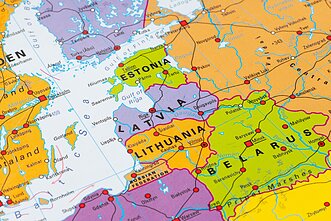
I mostly interact with Ukrainian soldiers, but I’ve met a few Poles and one Lithuanian. He was a front-line medic and left a very good impression – responsible and motivated. That was about six months ago. I don’t remember his name, it was unfamiliar.
Thanks for the conversation, I enjoyed it, but it’s time for me to go. Be careful – journalists are killed in war too.

Newsletter
Every Friday morning.