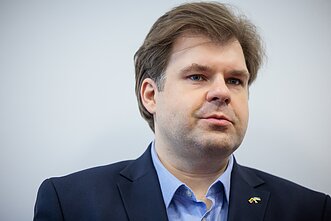













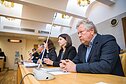

Rising fuel prices linked to the ongoing conflict in the Middle East may prompt the Lithuanian government to take action, Juozas Olekas, speaker of the Seimas, said Tuesday, adding that all options are being considered.
“We will likely have to intervene at some stage. As far as I know, the prime minister has tasked the ministers of energy, finance, and economy to prepare possible measures. The energy minister is working on a European-level response,” Olekas told reporters at the parliament.
He said a range of tools are under discussion, including price caps, excise adjustments, the release of fuel reserves, and coordinated European Union efforts. “One single measure may not immediately solve the situation. We need to look at everything together, aligning our positions with EU colleagues to achieve the greatest effect for the public. Prices may fall temporarily and then rise again,” he added.
Olekas noted that any steps to reduce fuel costs would depend on the pace of oil and fuel price increases. “All options are on the table. This could include price caps, excise reviews, and other measures. Everything depends on how the situation develops and how quickly prices rise, but nothing is being left to chance,” he said.
The Seimas speaker expressed hope that releasing fuel reserves would help stabilise prices. “This is currently one of the most relevant measures. By releasing additional diesel quantities, we may not lower prices outright but could prevent further increases,” he said.
Further reading
Lithuania plans to release part of its industrial fuel reserve over 90 days – roughly 80,000 tons, equivalent to 12 days of supply – to mitigate rising costs.
Finance Minister Kristupas Vaitiekūnas said Monday that using the reserve alone will not fully offset the impact of the Middle East conflict but represents a “good solution that could produce results in the near future”.
Vaitiekūnas has also suggested that if the conflict continues and fossil fuel prices remain high, Lithuania may consider lowering excise taxes on fuel, particularly for sectors heavily dependent on fossil fuels.
Prime Minister Inga Ruginienė indicated last week that price caps are among the options under consideration to ease fuel costs, although Vaitiekūnas described such a measure as short-sighted.

Newsletter
Every Friday morning.