













Recent incidents involving damage to strategically important underwater infrastructure in the Baltic Sea from 2023 to 2025 were not caused by deliberate actions by Russian ships, according to a security threat assessment released Friday.
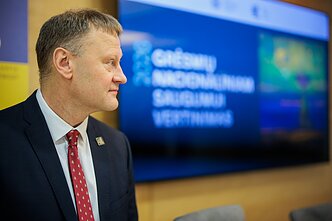
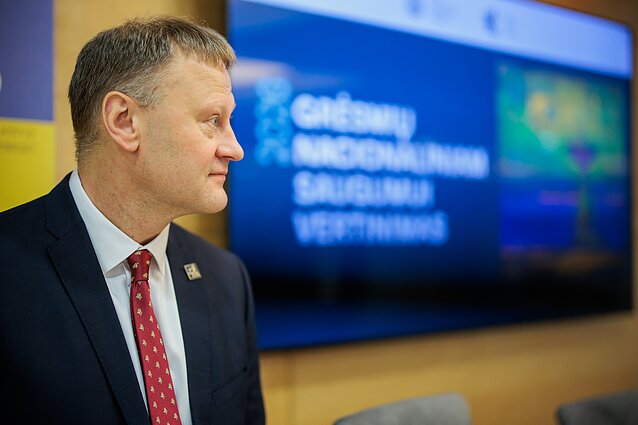
Mindaugas Mažonas of the Second Investigation Department under the Ministry of National Defence said that initial reports after incidents often come from non-intelligence sources, which can create misleading information.
“Intelligence investigations take time, so assessments sometimes come later, after initial reports have already circulated. That can pose a risk, because we may unnecessarily alarm the public. In this case, investigations found that the incidents were accidental, in some cases caused by natural phenomena such as storms,” Mažonas told reporters.

Remigijus Bridikis, head of the State Security Department, agreed. “The investigation was not conducted by our intelligence agency, so I don’t have the specifics of the methods used, but we have confirmation that these were accidental incidents,” he said.
Over the past several years, a number of countries bordering the Baltic Sea, including Finland, Sweden, Latvia, Estonia, and Germany, have reported damage to underwater infrastructure.
Earlier this year, an optical cable between Lithuania and Latvia near Liepāja was damaged. More than a year ago, several underwater telecommunications and power cables were severed.
Lithuanian leaders and the media were quick to suggest that the incidents were linked to deliberate efforts by Russia, labelling them “hybrid warfare”. NATO even launched the Baltic Sea monitoring mission Baltic Sentry.
Intelligence officials warned that the region’s underwater infrastructure remains vulnerable. Accidents caused by a combination of factors – poor weather, technical malfunctions, or negligence in maritime operations – cannot be ruled out.
Mažonas noted that Russia has increased security for its “shadow fleet”.
“Security groups on the ships, escorted by military vessels or aircraft, can raise the risk of incidents. In the near term we do not expect major events, but the likelihood increases when greater military power is concentrated in one area,” he said.
The assessment also highlighted Russia’s use of aging tanker fleets with unclear ownership structures to bypass restrictions on profitable green oil exports imposed after its 2022 invasion of Ukraine. The European Union has blacklisted hundreds of vessels to reduce Moscow’s military budget.

Newsletter
Every Friday morning.