














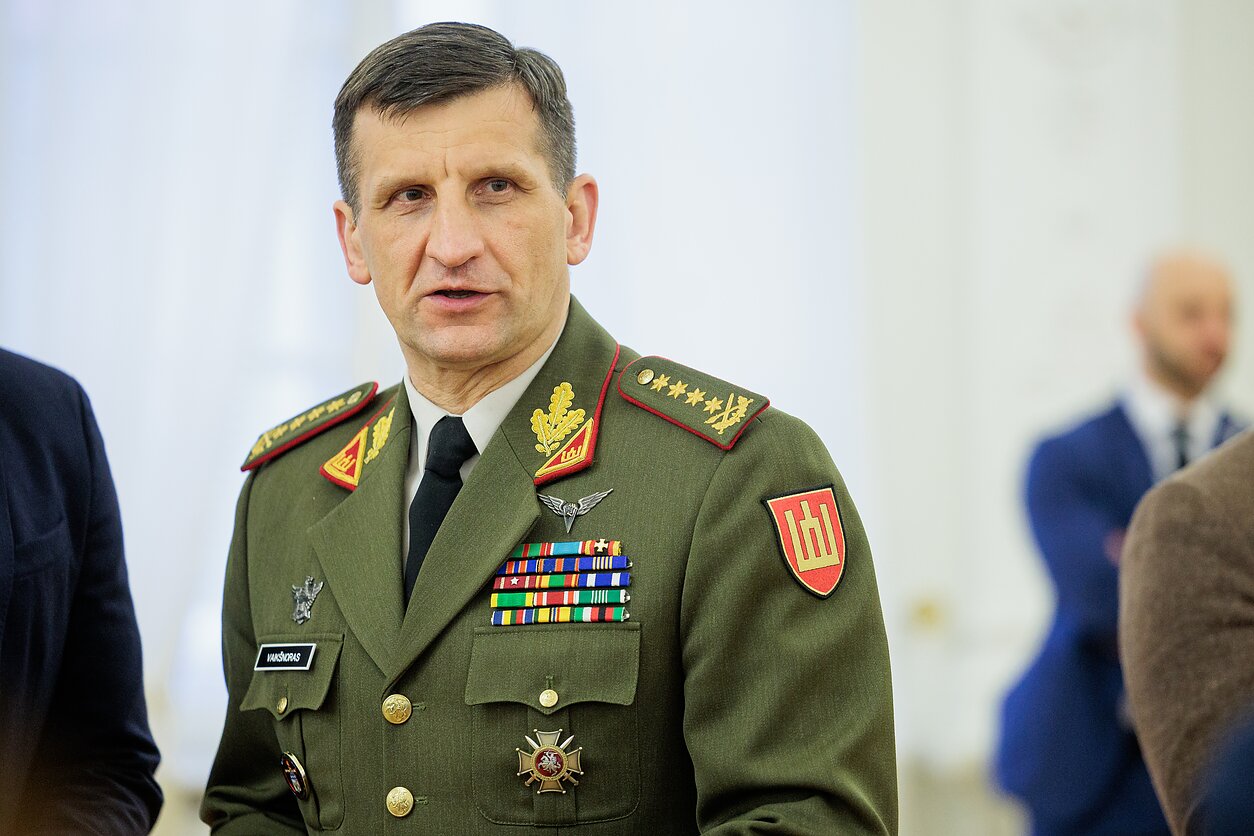
The chief of Lithuania’s armed forces said the country could support US military operations against Iran by allowing the use of its territory, while calling recent US and Israeli strikes against Tehran a “timely decision”.
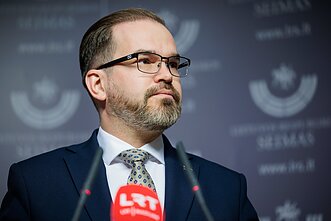
Raimundas Vaikšnoras, commander of the Lithuanian Armed Forces, said in an interview with LRT RADIO that military actions by the United States and Israel against Iran were justified in order to curb Tehran’s nuclear ambitions.
The US and Israeli strikes on Iran began while Tehran – which maintains its uranium enrichment program is intended for civilian use – was engaged in negotiations with Washington over its nuclear and missile program. Iran had acceded to a nuclear deal (JCPOA) in 2015 that would have limited and monitored its nuclear program, but the US withdrew from it in 2018 under the first administration of President Donald Trump and reimposed sanctions. Meanwhile, it is widely believed that Israel has a nuclear weapon.
According to Vaikšnoras, however, Iran is part of the so-called “axis of evil” and has been strongly supported by Russia. “Iran has increasingly become a threat to all of us – to the entire Western and democratic world,” he said.
“I would say this was a timely decision before the threat took hold and began to dominate the Middle East. It had to be suppressed in order to make the world safer,” Vaikšnoras said.
He also suggested that Lithuania could support US operations against Iran in ways beyond direct military involvement, including diplomatic, economic and informational measures.
Support could also include granting access to Lithuanian territory for US military aircraft, he said.
“It could be support, and it could also involve granting our territory for bombers or fighter jets, because some countries refused – and we know which ones,” Vaikšnoras said.
He emphasised that such decisions would ultimately be up to the country’s political leadership to make.
The Lithuanian military chief acknowledged that the conflict in the Middle East could risk diverting attention from the war in Ukraine, particularly in terms of air defence supplies. However, he said it remains the responsibility of Western allies to continue supporting Kyiv.
“Air defence is one of the most important elements,” he said. “Deliveries of missiles, especially long-range surface-to-air systems, could have an impact if sufficient stockpiles were not accumulated. But I do not want to speculate. It is the responsibility of the collective West to help close capability gaps by transferring systems from their own arsenals.”

Newsletter
Every Friday morning.