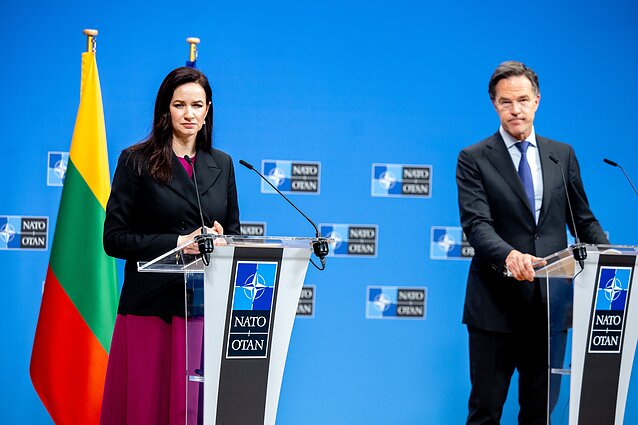










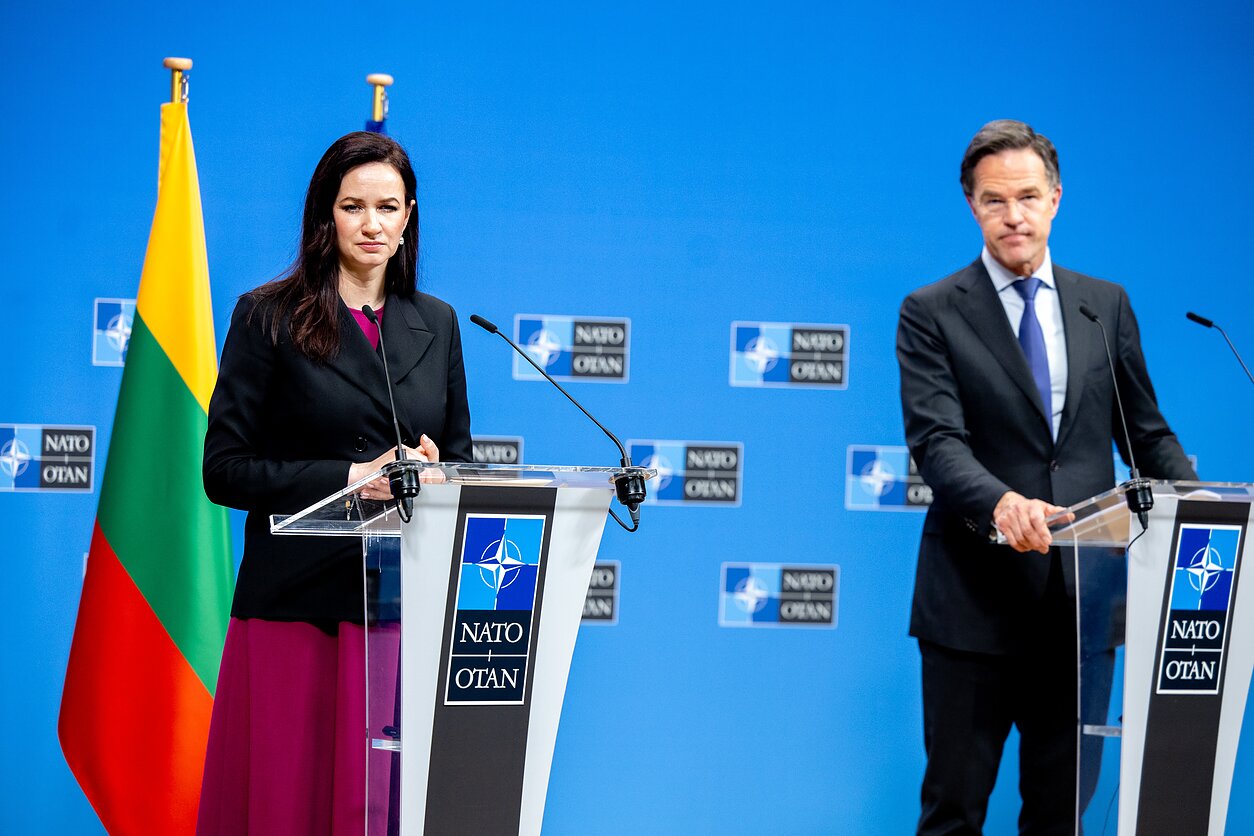
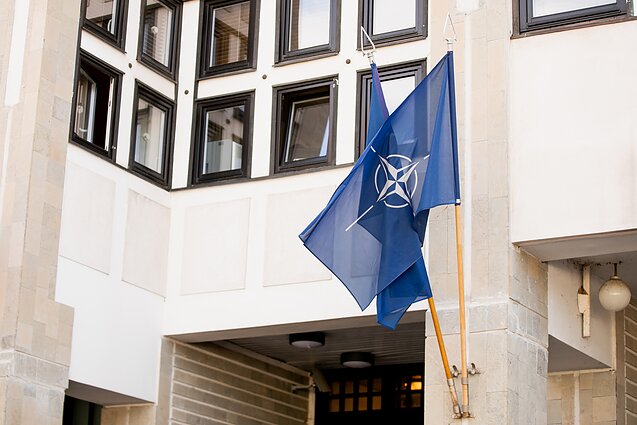
NATO makes Lithuania safer, and Lithuania makes the alliance stronger, NATO Secretary-General Mark Rutte said during a meeting with Lithuanian Prime Minister Inga Ruginienė at NATO headquarters in Brussels.
Rutte also sought to reassure allies, saying the United States does not plan to reduce its role in Europe’s defence.
“There is no doubt that the United States is fully committed to NATO and to Article 5,” Rutte said. “Not only for historical reasons, but also because the United States clearly understands that its own security depends on a secure and stable Europe, a secure Arctic and a secure Atlantic.”
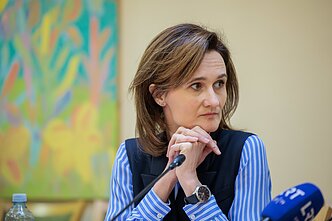
The meeting on Thursday marked Ruginienė’s first visit to NATO headquarters as prime minister. She said Lithuania comes to the table not only with requests, but also with achievements.
“We are a leading country that takes action first, invests in defence and does not wait for others to act,” she said.
Lithuania currently allocates the largest share of GDP to the military among NATO members. Still, officials stress that national spending alone is not enough and that collective defence, especially the support of major allies, remains essential.
Earlier this month, during an official visit to Germany, Ruginienė told foreign media that Europe should consider a “Plan B” in case the United States decided to withdraw its troops from the continent. The remarks reportedly drew criticism from the US delegation to NATO.
Speaking in Brussels on Thursday, Ruginienė said she had not heard any reproaches and stood by her position.
“We must always prepare for the worst-case scenario and hope for the best,” she said, adding that strengthening trans-Atlantic ties remains a priority. “Those ties must be reinforced, but we must also have an action plan if the worst happens.”
Ruginienė said she expects NATO to pay greater attention to frontline states bordering Russia and Belarus.
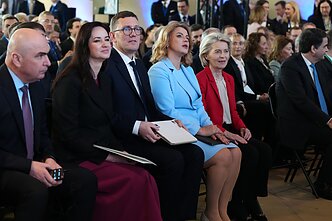
On the same day, the European Commission unveiled a new investment strategy for EU countries bordering Russia, Belarus and Ukraine.
European Commission President Ursula von der Leyen said Russia’s invasion of Ukraine has affected all of Europe, but most acutely the bloc’s eastern member states.
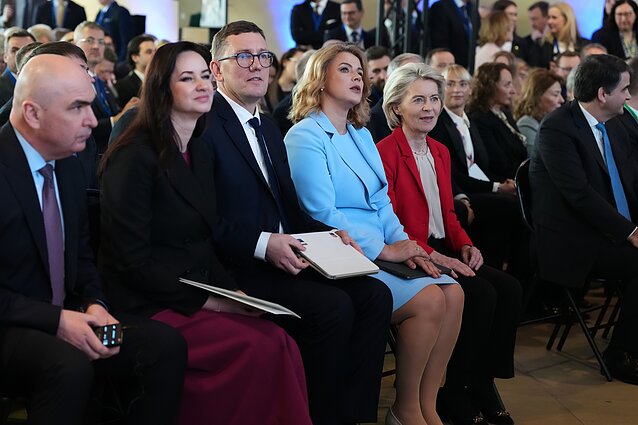
“Russia’s invasion has divided communities and affected economies, jobs and infrastructure,” von der Leyen said. “Transport and tourism have been disrupted, and people face daily threats – hybrid attacks, instrumentalised migration and drones.”
Under the so-called EastInvest program, border regions are expected to benefit from easier access to financing and support to attract investment. Officials estimate the initiative could mobilise at least 28 billion euros in investments.
Latvian Prime Minister Evika Siliņa said many border countries had longstanding trade, transport and tourism ties with Russia and Belarus that were largely severed after Moscow’s full-scale invasion of Ukraine.
“Since Russia’s invasion of Ukraine, this cooperation has been almost completely cut off, leaving a negative mark on the economies of eastern regions and on our people,” Siliņa said, noting slower GDP growth and higher inflation than the EU average.

Newsletter
Every Friday morning.