















The average monthly wage in Lithuania rose by 107 euros over the past year to 1,514 euros, after tax, in the fourth quarter of 2025, the state social insurance fund Sodra said Tuesday.
Meanwhile, gross (before tax) average earnings increased by about 189 euros, or roughly 8% year over year, meaning a full-time employee now earns an average of 2,480 euros before taxes per month.
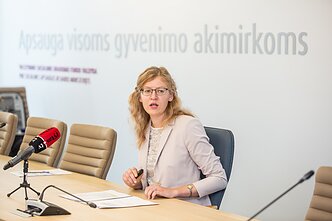
“We calculate that the income of an average employee increased by 107 euros and reached 1,514 euros net,” Kristina Zitikytė, an adviser at Sodra’s Statistics, Analysis and Forecasting Unit, told reporters.
However, although wages continue to rise, the pace of income growth has slowed compared with previous years. With annual inflation at 3.8%, real income growth moderated in 2025, Zitikytė said.
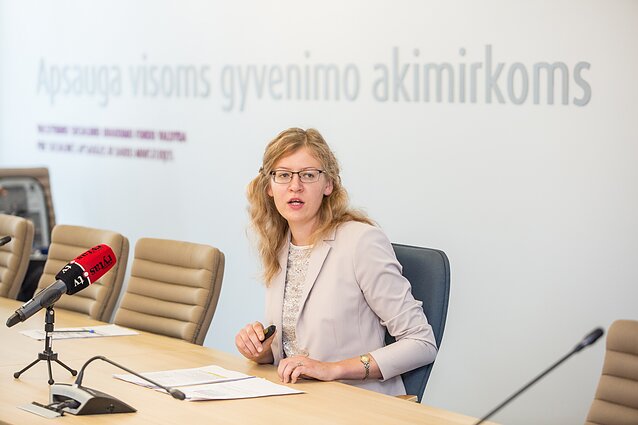
“It must be acknowledged that real income growth in 2025 was slower than in previous years,” she said.
The median gross wage rose 8.7% year over year to 1,934 euros before taxes. That means half of all insured employees earned less than 1,232 euros net per month, while the other half earned more. One in four workers earned between 1,000 and 1,500 euros gross. The income of six out of 10 insured employees increased over the year.
Wages grew fastest among unskilled auxiliary workers, whose earnings rose nearly 10%, or about 68 euros net. They were followed by clerical workers, service sector employees and sales staff.
Skilled workers and craftspeople saw their earnings increase by around 9%, while managers’ incomes rose about 8%, or roughly 128 euros more net per month.

According to Sodra’s November 2025 data, wages grew most in administrative and support services (12.7%), construction (11.2%), and transportation and storage (10.5%). However, wage levels in those sectors remained below the national average, meaning the strong percentage growth did not make them the highest-paying fields.
In contrast, average earnings in financial and insurance activities and in the information and communications sector significantly exceeded the national average, reaching 3,380 euros and 3,600 euros gross per month, respectively. Annual growth in those sectors was more moderate, at about 5% to 6%.
Zitikytė noted that the share of people whose wages did not change increased slightly, and in some cases incomes may have declined.
The lowest wages continued to be recorded in the accommodation and food services sector, where employees earned around 900 euros net per month, she said.
Summing up labour market trends, Zitikytė said slower economic growth contributed to the deceleration in wage growth.

Gender pay gap narrows
Sodra said the gender pay gap narrowed by nearly 10 percentage points over the past decade. In 2016, the difference between men’s and women’s wages stood at 18.2%; by 2025, it had fallen to 8.5%.
“Over the past three years, the indicator has declined consistently. This shows that the reduction in the income gap is no longer a one-off fluctuation but is becoming a more sustainable trend in the labour market,” Zitikytė said.
Still, women on average earned 108 euros less per month than men. Men’s average net wage stood at 1,530 euros, compared with 1,422 euros for women.

Newsletter
Every Friday morning.