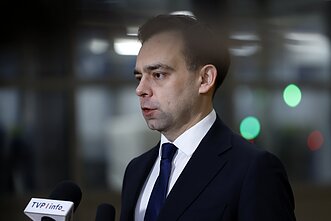












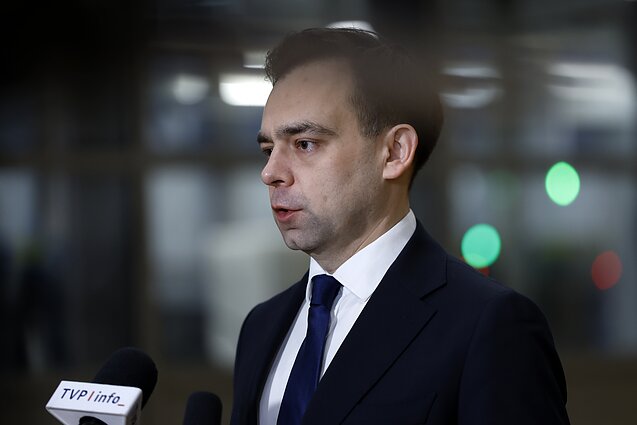
Poland is considering introducing a windfall tax on energy companies to offset revenue losses from fuel tax cuts aimed at cushioning the impact of rising oil prices driven by the conflict in the Middle East, Finance and Economy Minister Andrzej Domański said.
“We are considering various options for a windfall tax,” Domański said, adding that a proposal could be ready by late April or early May. “The situation is clear – some companies are benefiting. It is not their fault, it is market conditions, but it is obvious that companies are taking advantage of very high refining margins.”
“It should not be that Polish citizens or the state budget alone bear the cost, so we are trying to find a balance,” he said.
The proposed levy comes as Poland implements temporary measures to limit fuel prices, including reduced VAT and excise duties, as well as price regulation mechanisms. These steps aim to shield households and businesses from surging energy costs tied to US and Israeli military action in the Middle East.
The European Commission has cautioned that such broad measures could raise questions about compliance with European Union rules, which generally favour targeted support.
Domański said Poland’s approach is temporary and flexible, allowing the government to respond to changing market conditions.
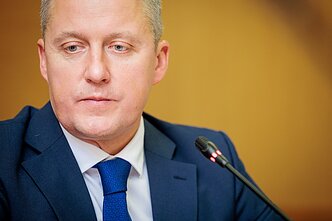
Neighbouring Lithuania is closely monitoring the situation. Energy Minister Žygimantas Vaičiūnas said last week that Vilnius would coordinate with Warsaw if additional taxes were imposed on Orlen, Poland’s largest energy group, which also operates in Lithuania.
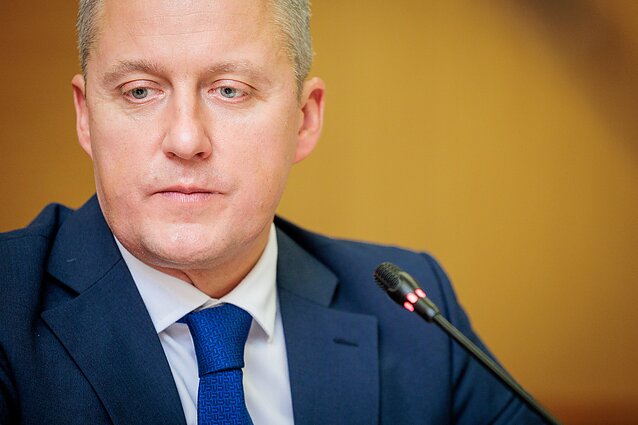
Domański confirmed ongoing contact with Lithuanian authorities and said the dialogue would continue.
At the EU level, policymakers are also considering taxing windfall profits of energy companies as a way to ease pressure on consumers.
Despite the short-term measures, Domański said Poland remains committed to long-term investments in defence and energy transformation, including renewable and nuclear energy projects.
He added that Polish banks and companies could expand into Lithuania, provided such moves are economically viable, and said a proposed free economic zone near Suwałki and Lazdijai would be assessed on its merits.
On the Rail Baltica project, Domański acknowledged financial challenges, noting that defence spending is also a priority. Polish officials have previously said completing the project by 2030 could be difficult, and that partial infrastructure upgrades may serve as an alternative.

Newsletter
Every Friday morning.