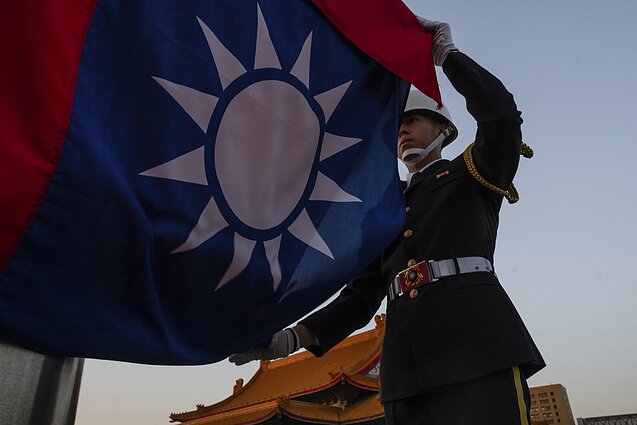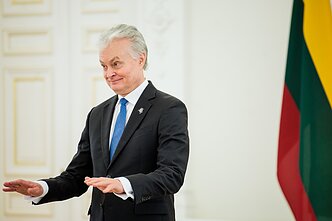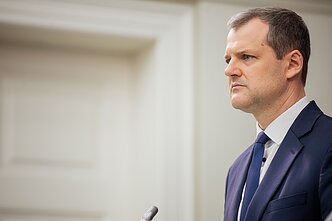
















Lithuania’s president, Gitanas Nausėda, has said any decision to change the name of the Taiwanese Representative Office in Vilnius rests primarily with Taiwan, not Lithuania.
“We are talking about Taiwan’s representative office in Lithuania. It is not Lithuania’s representative office, for which we chose a name and could now change it. It is Taiwan’s representative office, and it is up to Taiwan to decide what it is called,” Nausėda told LRT on Thursday ahead of an informal meeting of the European Council in Belgium.
He said Lithuania could raise the issue with Taipei, but cautioned that any request to alter the name might be rejected.
“Of course, we can discuss with them a possible change to the office’s name, but before starting such a discussion, we should understand that the answer could also be ‘no’ and the name might remain unchanged,” he said.

His comments followed remarks by Prime Minister Inga Ruginienė, who said on Wednesday she saw no reason why the Taiwanese Representative Office could not be renamed the Taipei Representative Office.
Relations between Vilnius and Beijing have been strained for several years over diplomatic representation and the naming of the Taiwanese office. Since mid-May 2025, there have been no accredited Chinese diplomats in Lithuania. Bilateral trade also fell sharply following the office’s opening.
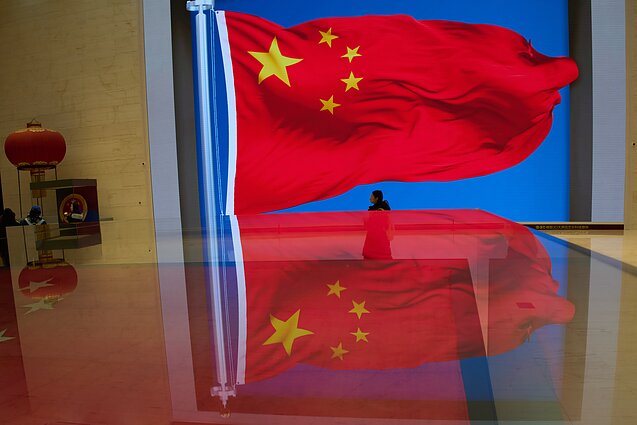
China regards Taiwan as a breakaway province that must eventually be reunified with the mainland, by force if necessary. Beijing insists that countries developing ties with Taipei must adhere to the “one China” policy.
In an interview with BNS last week, Ruginienė said Lithuania had “jumped in front of a train and lost” by allowing the office to open in 2021 under the name Taiwanese rather than Taipei, without coordinating the move with the EU and the United States.
Beijing has urged Vilnius to correct what it calls mistakes in its approach to Taiwan as a precondition for normalising bilateral relations.
Taiwan’s Foreign Ministry said on Tuesday it was not discussing any name change with Lithuania and would continue to strengthen co-operation in areas including lasers, semiconductors and finance.
Lithuania’s Foreign Ministry declined to comment on the prospect of a renaming, but said restoring ties with China would require time and mutual respect.
The government’s programme includes a pledge to restore diplomatic relations with China to the same level as other European Union member states.

Newsletter
Every Friday morning.